

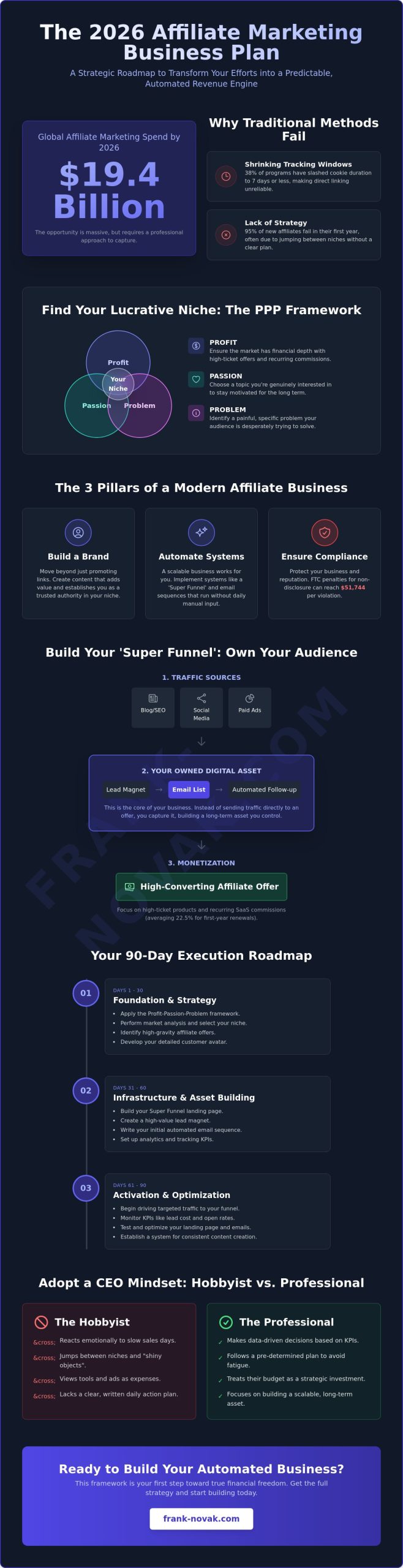
With global affiliate spend hitting $19.4 billion in 2026, the opportunity for digital growth is larger than ever, yet many find that a traditional affiliate marketing business plan no longer works when 38% of programs have slashed tracking windows to seven days or less. If you feel like the old methods of simply sharing links aren’t cutting it anymore, you aren’t alone. Many aspiring entrepreneurs find themselves overwhelmed by endless niche options or losing money on ads that don’t convert. To succeed in this competitive environment, you need a strategy that prioritizes automation and audience trust over short-term tactics.
If you’ve ever felt stuck without a clear daily action plan, it’s helpful to remember that every successful professional started exactly where you are. This article provides the exact framework required to transition from a casual link-poster to a profitable, automated entrepreneur. We’ll explore a repeatable system for selecting high-value products, provide a clear 90-day execution roadmap, and show you how to build a business that offers true financial freedom. Each step is designed to be a building block, guiding you toward a sustainable system that works even when you’re away from your screen.
Key Takeaways
- Shift your perspective from viewing affiliate work as a simple side hustle to treating it as a strategic digital asset for long-term growth.
- Learn how to apply the ‘Profit-Passion-Problem’ framework to discover lucrative niche opportunities that others are overlooking.
- Discover why a professional affiliate marketing business plan relies on building a ‘Super Funnel’ and owning your email list rather than just posting direct links.
- Use our 90-day execution roadmap to move methodically from your initial product selection to a fully operational automated system.
- Develop a CEO mindset to help you manage systems effectively and push through the common challenges that cause most affiliates to stop early.
What is an Affiliate Marketing Business Plan?
An affiliate marketing business plan is far more than a simple checklist of daily chores or a list of products you hope to promote. It’s a strategic roadmap designed to transform a series of disconnected actions into a predictable revenue engine. While many resources describe a business plan as a guide for merchants to manage their partners, your personal plan is the operating manual for your own growth. It outlines how you will attract an audience, which systems will handle the heavy lifting, and how you’ll scale your income without tethering yourself to a desk for twelve hours a day.
In the 2026 market, the industry has shifted away from the “side hustle” mentality. With global affiliate marketing spend projected to reach $19.4 billion this year, successful practitioners are treating their work as a digital asset rather than a temporary gig. If you don’t have a structured approach, you’re likely to join the 95% of affiliates who fail within their first year. These individuals often jump from one niche to another without a clear direction, eventually burning through their budget before they see a return. A written plan acts as your North Star, keeping you focused when the initial excitement of a new project begins to fade.
The Core Components of a 2026 Affiliate Plan
Modern success requires moving beyond the goal of just “making money” and toward building a recognizable brand. Your plan should define your long-term vision, ensuring every piece of content you create adds value to your name. Automation is another critical pillar; if your system requires you to manually post links every day, it isn’t a scalable business. You also need a dedicated compliance strategy. With FTC civil penalties for non-compliant posts reaching up to $51,744 per violation in 2026, your affiliate marketing business plan must include clear guidelines for disclosures to protect your reputation and your finances.
Hobbyist vs. Professional: Why Planning Matters
The primary difference between a hobbyist and a professional is how they handle the first 90 days. A written plan significantly reduces decision fatigue by pre-determining your path. If you’ve already decided on your traffic sources and tools, you won’t waste precious energy wondering what to do next. Professionals also operate with a defined budget for tools and traffic, treating these as investments rather than expenses. By establishing Key Performance Indicators (KPIs) like lead acquisition costs and email open rates, you can make logical adjustments based on data rather than reacting emotionally to a slow sales day. This methodical pace ensures that every action you take is a building block for future success.
Market Analysis and Niche Selection Strategy
Choosing the right corner of the market is perhaps the most critical decision in your affiliate marketing business plan. If you select a niche based solely on high commission rates, you might find yourself losing interest before the first sale arrives. To build something sustainable, we recommend the ‘Profit-Passion-Problem’ framework. This approach ensures your chosen market has enough financial depth to be profitable, enough personal interest to keep you motivated, and a specific, painful problem that your audience is desperate to solve. When these three elements overlap, you’ve found a foundation for long-term growth.
Once you have identified a potential niche, the next step is to evaluate the available affiliate networks. In 2026, the industry is seeing a shift toward high-ticket offers and recurring SaaS commissions, which averaged 22.5% for first-year renewals this year. Rather than chasing small one-off sales, look for vendors who provide proven conversion assets. A high-quality partner will offer more than just a link; they will provide a full conversion environment. If you want to see how a professional setup looks, exploring the ClickBank Super Funnel can give you a clear idea of the infrastructure required to turn traffic into consistent revenue.
Before moving forward, take the time to develop a detailed customer avatar. If you know exactly who your reader is, what they fear, and what they hope to achieve, your marketing will feel like a personal conversation rather than a sales pitch. This level of empathy is what separates the professional entrepreneur from the casual link-poster. It’s the difference between shouting into a crowd and speaking directly to a friend in need.
Identifying High-Gravity Offers on ClickBank
When you’re browsing ClickBank, you’ll often see a ‘Gravity’ score. This number is a vital part of your business plan because it indicates how many unique affiliates have made a sale in the last twelve weeks. While a high score proves the product converts, you should also look at the vendor’s marketing assets. Does their sales page address the modern consumer? If you’re looking for a deeper dive into this process, you can learn more about finding profitable ClickBank products to refine your search criteria.
Competitive Analysis for the Modern Affiliate
Analyzing your competition isn’t about copying their work; it’s about finding the ‘blue ocean’ opportunities they’ve missed. You can ‘spy’ on successful funnels by joining their email lists and observing their follow-up sequences. Look for gaps in their strategy, such as a lack of video content or a failure to address a specific sub-segment of the audience. By identifying where your competitors are leaving money on the table, you can position your own brand as the superior solution for that underserved group. Your entry point into a crowded market is simply being the one who solves the specific problem that leaders are currently ignoring.
Building Your Conversion and Traffic Infrastructure
Once you’ve identified your niche, the next step in your affiliate marketing business plan is constructing the digital infrastructure that turns casual visitors into loyal subscribers and buyers. Many beginners make the mistake of “Direct Linking,” which involves sending traffic straight to a merchant’s sales page. This is the amateur way. If the merchant’s page converts at 2%, you’ve lost 98% of your traffic forever. A professional entrepreneur understands that every click is an investment, and they build a system to capture that value before sending the visitor onward.
The professional approach relies on a “Super Funnel” to build an email list, which is the only traffic source you truly own. In a landscape where social media algorithms change overnight and 38% of affiliate programs have moved to attribution windows of seven days or less, owning your data is essential. By capturing an email address first, you gain the ability to follow up with your audience for years, promoting multiple relevant offers without paying for that traffic a second time. This shift from a single transaction to a long-term relationship is what creates a sustainable business asset.
Your 2026 tech stack should focus on efficiency and accuracy. This includes a reliable landing page builder, an email automation platform, and robust server-to-server (S2S) tracking. As third-party cookies continue to phase out, S2S tracking ensures you receive credit for every sale you generate. When you’re budgeting for your launch, it’s wise to allocate funds for these essential tools first, then split your remaining budget between organic content creation and paid traffic sources to ensure a steady flow of new leads.
The Anatomy of a High-Converting Affiliate Funnel
A successful funnel begins with a Lead Magnet, which is a piece of high-value content given away for free in exchange for an email address. After the user opts in, they reach the Bridge Page. This is where you pre-sell the offer, build trust through a personal recommendation, and explain how the product solves their specific problem. If you’d prefer to skip the technical hurdles of building this from scratch, you can utilize The ClickBank Super Funnel as a ready-made solution that’s already optimized for conversions.
Strategic Traffic Generation: Facebook Ads and Beyond
While organic traffic is excellent for long-term growth, Facebook Ads remain the gold standard for scaling a business quickly. However, it’s vital to use a “Safety-First” approach. This means avoiding “get-rich-quick” language and ensuring your bridge page provides genuine value. If you’re concerned about compliance, our guide on Facebook Ads for Affiliate Marketing offers specific tips to help you keep your account safe while driving consistent traffic to your offers.
Your 90-Day Affiliate Launch Roadmap
An effective affiliate marketing business plan is only as good as the action you take to implement it. To help you move from theory to practice, we’ve broken the initial launch into a structured 90-day roadmap. Remember that the primary goal of your first three months isn’t just immediate profit; it’s data collection. You’re testing which headlines resonate, which bridge pages convert, and which audiences are most responsive to your message. By prioritizing these insights early on, you build a foundation that can support massive growth later.
Phase 1: Foundation and Offer Validation
The first two weeks are dedicated to niche and product selection. You’ll apply the ‘Profit-Passion-Problem’ framework to narrow your focus. Once you’ve chosen your path, the remaining two weeks of the month are spent on technical setup. This includes establishing a professional business entity and a dedicated email address for your brand. You’ll also need to secure a domain name and reliable hosting. During this time, apply to the top three affiliate programs in your niche to ensure you have a variety of offers to test and compare.
Phase 2: Building the Automation Engine
With your foundation in place, you can begin constructing your conversion infrastructure. This month is about setting up your autoresponder and drafting your first seven days of follow-up emails. Your goal is to provide value and build trust automatically. You’ll also design your bridge page, ensuring it aligns perfectly with the vendor’s sales page to create a seamless experience for the visitor. Before you send a single person to your funnel, test every link and form to ensure the tracking is working perfectly. If you find yourself needing more personalized guidance during this setup, our Online Success Coaching can help you navigate the technical hurdles.
Phase 3: Traffic and Scaling
The final 30 days are when you begin driving traffic. Start with an ‘Engagement’ campaign on Facebook. This allows you to build pixel data and see how people interact with your content without spending a fortune on conversion ads immediately. Once your funnel is validated and you’re seeing leads come through, you can transition to ‘Conversion’ ads. At this stage, your focus shifts to analyzing your Cost Per Lead (CPL) versus your Earnings Per Click (EPC). If your EPC is higher than your CPL, you’ve found a profitable system that is ready to be scaled. This methodical pace ensures you don’t waste money on unproven strategies.
Scaling and the Success Mindset
As you move beyond the initial 90 days, your focus must shift from building the engine to tuning it for maximum performance. This is where the “CEO Mindset” becomes your greatest asset. Instead of spending every hour writing copy or tweaking landing pages, you begin to manage the systems you’ve created. This transition allows you to step back and look at your affiliate marketing business plan from a higher perspective; it helps you identify where your time is best spent and where you can delegate tasks to others. Success at this level is less about your personal output and more about the efficiency of your automated processes.
It’s common to encounter what many call the “Valley of Disappointment” during this phase. This is the period where your effort is high, but the financial results haven’t yet caught up to your expectations. Most affiliates quit right before their breakthrough because they mistake this quiet growth phase for failure. If you’ve followed a structured plan, you can trust the data over your emotions. Professionals don’t just spend their first commissions on personal luxuries. They reinvest those profits into higher-quality tools and specialized guidance to shorten their path to the next milestone.
Automation: The Key to Sustainable Growth
True freedom comes when you stop being the only employee in your business. You can start by identifying repetitive tasks to outsource, such as basic graphic design or initial content research. While AI tools are excellent for speeding up funnel creation, it’s vital to maintain a personal touch so your audience continues to trust your recommendations. If you’re ready to move toward a hands-off approach, exploring a proven Automated Marketing Funnel can provide the scaling strategies you need to grow without increasing your workload.
Why Professional Coaching is Your Shortcut
The most expensive mistakes in this industry are the ones you don’t see coming. Having a seasoned practitioner review your affiliate marketing business plan can save you months of trial and error. A mentor helps you bypass technical hurdles, navigate complex ad account issues, and stay ahead of regulatory changes like the 2026 FTC disclosure requirements. If you want to accelerate your progress and ensure your systems are optimized for the long term, Online Success Coaching serves as the ultimate scaling tool. This level of support provides the clarity and confidence needed to turn a promising start into a lasting digital legacy.
Building Your Sustainable Digital Legacy
Implementing a structured affiliate marketing business plan is the definitive step that separates those who simply “try” digital marketing from those who build lasting assets. We’ve explored how a clear roadmap, combined with a professional conversion funnel and a CEO mindset, provides the stability needed to navigate industry shifts. By focusing on data collection during your first 90 days and prioritizing audience trust, you’re setting the stage for a business that works for you rather than the other way around.
If you’re feeling ready to bypass the common technical hurdles and compliance risks that slow most people down, professional mentorship can be your greatest shortcut. With over eight years of digital marketing experience and as the creator of the ClickBank Super Funnel, I specialize in helping entrepreneurs master Facebook Ad automation and modern compliance standards. Ready to skip the trial and error? Join Frank Novak’s Online Success Coaching today.
The path to financial freedom is a methodical journey, not a race. If you stay focused on your long-term vision and trust the systems you’ve built, you’ll find that success becomes a predictable outcome of your daily actions. Keep building your future, one block at a time.
Frequently Asked Questions
Do I really need a written business plan for affiliate marketing?
Yes, having a written plan is essential because it serves as your operational manual and prevents you from becoming part of the 95% of affiliates who fail. A structured affiliate marketing business plan keeps you focused on long term goals and reduces the daily decision fatigue that often leads to burnout. It ensures that every action you take is a building block for a scalable digital asset rather than a series of random tasks.
How much money do I need to start an affiliate marketing business in 2026?
You’ll need enough capital to cover essential infrastructure like your domain, hosting, and a reliable email autoresponder. While you can start with a modest budget, it’s important to treat these costs as investments in your business’s automation engine. Successful entrepreneurs often set aside a specific monthly amount for testing paid traffic once their funnel is validated, ensuring they have the data needed to scale effectively.
Can I start affiliate marketing without a website?
While you can technically promote links on social media, a professional approach requires at least a landing page or bridge page. Relying solely on third party platforms is risky because you don’t own the traffic or the audience data. Building a simple funnel allows you to capture email addresses, which is the only way to ensure your business remains sustainable regardless of algorithm changes or platform bans.
What is the best affiliate network for beginners?
ClickBank remains a top choice for those just starting out because of its transparency and high gravity offers. The platform provides clear data on which products are currently converting, making it easier to select a proven offer for your first campaign. Many vendors on ClickBank also provide extensive marketing assets, which can help you set up your initial affiliate marketing business plan with less technical friction.
How long does it take to see the first commission with this plan?
Most practitioners begin to see results during the third phase of the 90 day roadmap, typically between days 61 and 90. The first two months are dedicated to building a solid foundation and setting up the automation that handles your follow up. By waiting until your infrastructure is ready before launching paid traffic, you ensure that your first commission is the result of a repeatable system rather than a one time stroke of luck.
Is affiliate marketing still profitable with all the new AI tools?
Affiliate marketing is actually more efficient in 2026 because AI has helped reduce fraudulent traffic from 11.2% in 2024 to 7.7% today. These tools allow you to create content and build funnels at a much faster pace, though the core of the business still relies on human trust. If you use AI to handle repetitive technical tasks while maintaining a personal touch in your recommendations, your profit potential is higher than ever.
How do I avoid getting my Facebook ad account banned as an affiliate?
The best way to protect your account is to use a “Safety-First” approach that prioritizes value over hype. Avoid using aggressive “get rich quick” language and always send traffic to a high quality bridge page rather than a direct affiliate link. Staying compliant with the 2026 FTC disclosure requirements is also vital, as clear transparency builds trust with both the platform and your potential customers.
What should I do if my chosen niche feels too competitive?
If a niche feels crowded, you should look for “blue ocean” opportunities by identifying specific problems that the market leaders are currently ignoring. You don’t need to reinvent the wheel; you just need to provide a better or more specific solution for a sub segment of that audience. In 2026, creator led partnerships grew by 47%, proving that a personal and authentic voice can still win in even the most competitive markets.

Article by
Frank Novak
Frank Novak is an online marketing professional and coach who focuses on affiliate marketing and business automation. Through his website, frank-novak.com, he shares insights and strategies for leveraging social media platforms like Facebook to generate traffic and commissions.
Affiliate / Sponsored Content Disclaimer
This [website/post] contains affiliate links. If you click through and make a purchase, we may receive a commission at no additional cost to you. We only recommend products or services we believe will add value to our readers.