
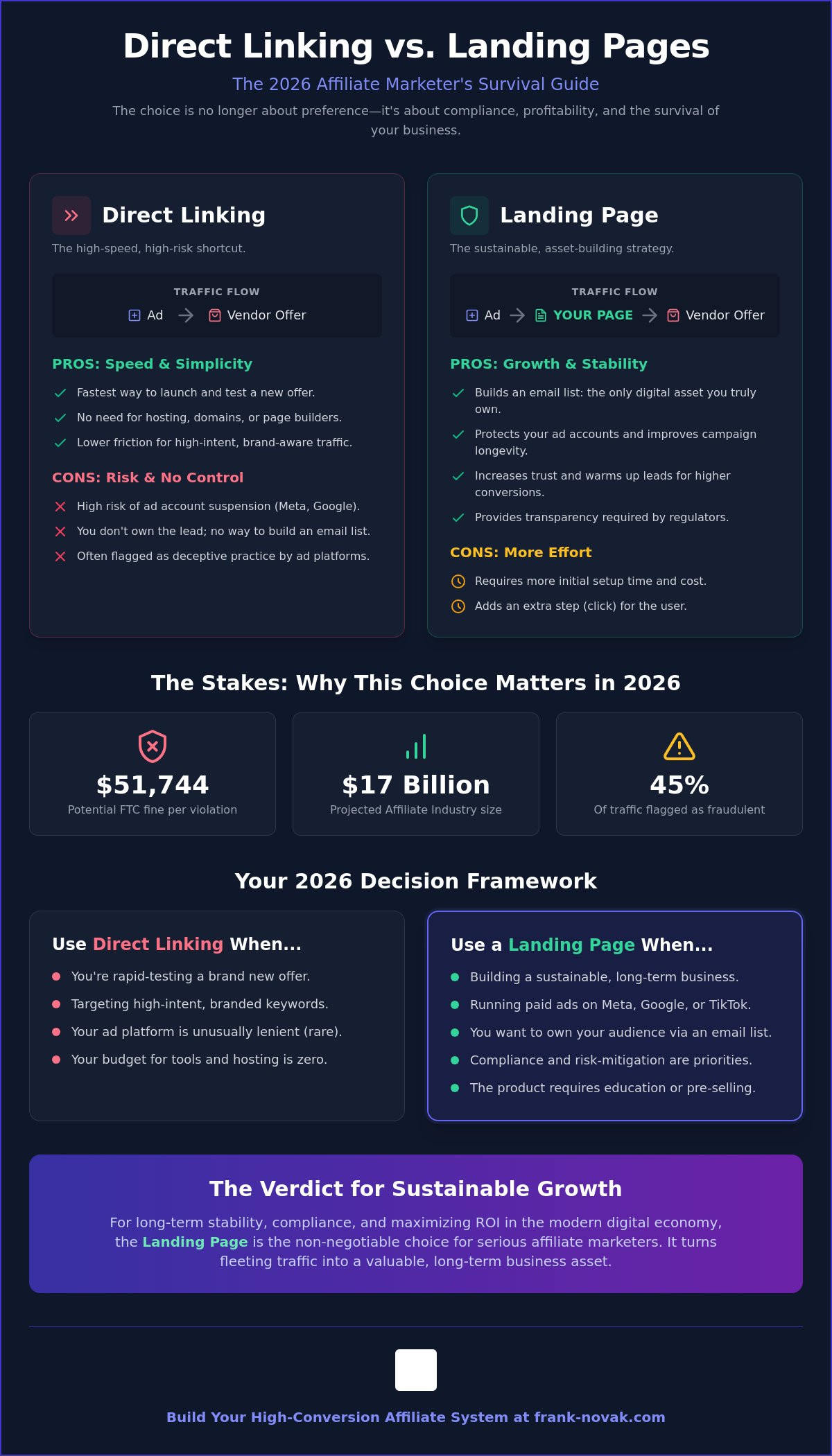
Would you risk a $51,744 fine just to save a few hours of work on a webpage? In 2026, the choice between direct linking vs landing page for affiliate offers isn’t just about conversion rates anymore. It’s about whether your business survives the next round of platform updates. It’s completely normal to feel overwhelmed by the technical side of page builders or the constant fear of getting your ad account banned by Meta or Google. You want a clear path to higher ROI without the constant stress of wasted ad spend. With the affiliate industry projected to reach $17 billion this year, there is plenty of opportunity if you know how to handle the 45% of traffic that platforms now flag as fraudulent.
If you’ve struggled with low conversions or felt like you’re gambling with your traffic, you aren’t alone. This guide is designed to help you discover the critical differences between these two methods so you can choose the right path for sustainable affiliate commissions. We will walk through the latest 2026 compliance rules, compare the ROI potential of each approach, and help you decide which strategy fits your specific niche. By the end, you’ll have a roadmap for a resilient business model that thrives in the modern digital economy.
Key Takeaways
- Understand the fundamental differences between sending traffic straight to a merchant and using a dedicated page to warm up your leads.
- Identify the specific, low-friction scenarios where direct linking still serves as a useful tool for rapid testing and feedback.
- Learn why high-quality landing pages are essential for building a mailing list, which remains the only digital asset you truly own.
- Apply our 2026 strategic framework to decide the direct linking vs landing page for affiliate offers debate for your specific traffic source.
- Discover how to transition from manual, one-off links to a fully automated system that ensures long-term business stability and growth.
Understanding the Core Conflict: Direct Linking vs. Landing Pages
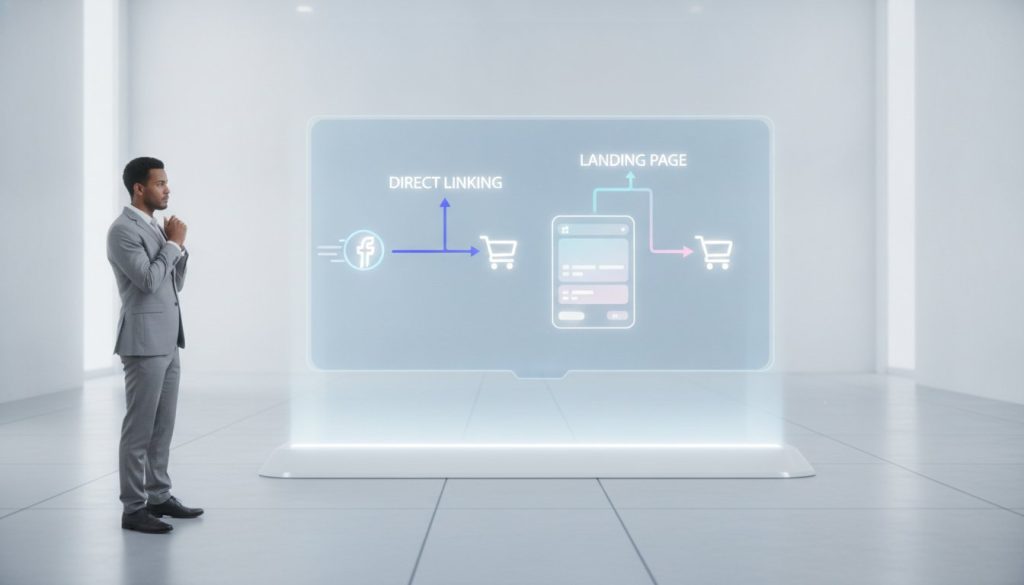
The central tension in affiliate marketing has always been about speed versus stability. In 2026, the discussion around direct linking vs landing page for affiliate offers has shifted from a matter of preference to a matter of survival. Direct linking means sending your traffic from a source like a Facebook ad or a YouTube video directly to the vendor’s checkout or sales page. Conversely, a landing page acts as a “middle-man” designed to educate and qualify your audience before they reach the merchant. It’s a strategic crossroads that every digital entrepreneur must eventually face.
To better understand this concept, watch this helpful video:
Why does this choice matter so much right now? With the Federal Trade Commission enforcing civil penalties of up to $51,744 per violation as of mid-2026, how you bridge the gap between an ad and an offer is critical. You can’t just throw links at people and hope for the best anymore. The “Bridge Page” has emerged as a vital tool in modern marketing cycles. It provides the transparency that regulators demand while giving you a chance to build a relationship with your visitor. If you don’t provide value before the click, you’re likely leaving money on the table.
What is Direct Linking?
This method is the simplest path from a technical perspective. When a user clicks your link, your unique affiliate cookie ID is carried directly to the merchant’s site. It’s easy to see why beginners love this “no-website” approach. You don’t need to worry about hosting, web design, or buying a domain. You just grab your link and start driving traffic. However, this simplicity often comes at a high price. Many major platforms now flag direct links as “bridge pages” or deceptive practices, which can lead to immediate ad rejection.
What is an Affiliate Landing Page?
A landing page is a specialized funnel component designed to capture attention and data. Unlike a full website, it focuses on one specific goal: preparing the visitor for the offer. If you use a system like the ClickBank Super Funnel, you’re essentially building this middle-man structure to protect your ad accounts. The primary objective is to capture an email address or provide a review before sending the lead away. This ensures that even if they don’t buy immediately, you still own the lead and can follow up later.
The Case for Direct Linking: When Speed Trumps Strategy
While we’ve established that landing pages are often the gold standard for long term growth, direct linking remains a tactical tool in your arsenal. It is the ultimate “low friction” strategy. By removing the middle step, you reduce the number of clicks a potential customer must take before reaching the checkout page. In high intent scenarios, such as when you’re bidding on specific brand name keywords in search engines, this speed can actually increase your conversion rate. If someone is already looking for a specific solution, they might find an extra bridge page annoying rather than helpful. When weighing direct linking vs landing page for affiliate offers, it helps to see where the fast lane actually leads.
Direct linking is also the fastest way to validate a new offer. Instead of spending days building a complex funnel, you can send a small amount of traffic straight to the merchant to see if the product even converts. If the data shows a 0% conversion rate after a few hundred clicks, you’ve saved yourself the time of building a landing page for a dud. It’s a quick way to test the waters before you commit to a full campaign.
The Benefits of Immediate Redirection
Speed to market is the primary driver here. You can find an offer, grab your link, and have an ad running in under thirty minutes. You won’t need to spend money on domain names, hosting, or complex funnel software. This helps many new marketers avoid the “analysis paralysis” that comes with trying to design the perfect webpage before they’ve even made their first dollar. It’s a lean way to start, provided you understand the environment you’re playing in.
The Significant Risks of Direct Linking
However, the risks in 2026 are substantial. Ad platforms like Meta and Google have tightened their grip. If you aren’t using Meta’s Partnership Ads format as of June 2026, your affiliate promotions are likely to be rejected as “Deceptive Practices.” Google’s updated Terms of Service, effective July 1, 2026, also gives them more power to automatically reformat or block destinations that don’t meet their quality standards. Furthermore, the FTC now enforces civil penalties of up to $51,744 per violation for improper disclosures, making the “hidden” nature of some direct links a legal liability.
Beyond compliance, you face the “One-Shot” problem. If a visitor doesn’t buy immediately, they are gone forever. You haven’t captured an email address, and you haven’t built any personal brand equity. You’re effectively paying to build the merchant’s business while taking all the risk yourself. If you’re tired of these high-risk gambles, you might find a more stable path through resources like Never Succeed Online, which helps clarify the technical hurdles that often lead to these shortcuts.
Why Landing Pages are Non-Negotiable for Sustainable Growth
If you want to build a business that lasts longer than a single ad campaign, you need to shift your focus from making a quick sale to building a long-term asset. While we previously discussed the speed of direct linking, the reality is that high-quality landing pages offer a level of stability that shortcuts simply cannot match. This approach centers on the concept of “pre-selling,” where you warm up your visitors by addressing their pain points before they ever see the merchant’s checkout page. By the time they click your affiliate link, they’ve already been convinced of the solution’s value, which significantly boosts your conversion rates compared to cold traffic.
In the current regulatory environment, a landing page also serves as a critical compliance buffer. Platforms like Meta and Google are increasingly restrictive about where they allow advertisers to send traffic. A well-designed page that includes clear disclosures, a privacy policy, and genuine value helps you stay on the right side of platform policies and FTC guidelines. Using a structured system like the ClickBank Super Funnel allows you to implement these safety features automatically, ensuring your business model remains resilient against sudden algorithm changes.
List Building: The Secret to Recurring Commissions
The most significant advantage of using a landing page is the ability to capture an email address. When you send traffic directly to an offer, you’re a “traffic buyer” who loses the lead the moment they leave the page. By adding an opt-in step, you become an “audience owner.” This simple change allows for seven to ten follow-up touches through automated email sequences. If a lead doesn’t buy the first product you recommend, you can introduce them to other related offers over the following weeks. This turns a single click into a potential lifetime of commissions, which is the only way to achieve true scalability in the direct linking vs landing page for affiliate offers debate.
Building Trust and Authority
A bridge page gives you the space to introduce yourself and share why you’re recommending a specific product. You can differentiate yourself from thousands of other affiliates by adding personal reviews, case studies, or exclusive bonuses that add real value to the user’s journey. This builds a sense of authority that a cold merchant page never could. Much like how the Unique Model & Talent Network fosters professional connections and trust in the creative industry, a bridge page is the psychological handshake between your traffic source and the merchant’s offer. It sets the stage, manages expectations, and builds the trust necessary for a visitor to feel comfortable making a purchase through your link.
The 2026 Decision Framework: Which Strategy Fits Your Goal?
Choosing between direct linking vs landing page for affiliate offers isn’t a binary choice between right and wrong. It’s a strategic decision based on your current resources and your long-term goals. Direct linking offers a path of least resistance, making it attractive if you have a limited budget or want to test a new niche quickly. However, it often results in lower ROI because you’re missing the opportunity to capture leads. A landing page requires a bit more technical setup, but it acts as a professional storefront that builds trust. If you’re looking for a sustainable business, the extra effort of building a funnel usually pays for itself through higher conversion rates and the ability to follow up with your audience.
The Traffic Source Filter
Your choice of traffic source often dictates which strategy you should use. Facebook Ads in 2026 have become incredibly sensitive to destination URLs. If you send traffic directly to a merchant, you risk your ad being flagged as a deceptive practice, which can lead to a permanent account ban. For social platforms like Meta, a landing page is a mandatory safety net. Conversely, if you’re using TikTok or Instagram bio links, your organic content has already done the heavy lifting of warming up the lead. In those specific scenarios, a direct link can work because the user already feels a connection to you. Paid search traffic is a middle ground; while direct linking to brand-name keywords is possible, cold traffic always converts better when it lands on a page that addresses the visitor’s specific problem first.
Offer Price Point and Complexity
The complexity of the product also plays a major role in your decision. A $27 digital download is often an impulse buy that doesn’t need much explanation. If the merchant’s sales page is high-quality, a direct link might be all you need to see results. But if you’re promoting a $997 high-ticket investment, your audience will have significant questions and hesitations. They need a guide to help them bridge the “education gap” before they feel comfortable spending that kind of money. This is where a bridge page becomes essential to explain the benefits and offer personal bonuses. If you want to master these nuances without the expensive trial and error, you’ll find that Why Online Success Coaching is Your Shortcut to Growth in 2026 provides the exact roadmap you need to scale effectively.
If you’re ready to stop guessing and start building a system that delivers consistent results, it’s time to take the next step. You can explore our Online Success Coaching to get personalized guidance on which strategy fits your specific affiliate niche and goals.
Beyond the Choice: Building Your High-Conversion Affiliate System
If you’ve been weighing direct linking vs landing page for affiliate offers, you’ve likely realized that neither is a magic button. Real success comes when you stop thinking about individual links and start viewing your work as an automated business system. By integrating smart automation, you can reclaim your time and scale your efforts without being tied to your computer every hour of the day. This transition is where professional mentorship becomes invaluable. A seasoned guide helps you avoid the common pitfalls that cause most beginners to quit before they see their first commission check.
Moving toward a system-based approach allows you to build a business that is resilient. Instead of worrying about a single ad getting rejected, you focus on the health of your entire funnel. If you’re ready to move beyond the theory and start building a real digital asset, our Online Success Coaching program is the next logical step. We provide the steady guidance and technical roadmap you need to navigate the complexities of the 2026 affiliate landscape with confidence and clarity.
The ClickBank Super Funnel Approach
For many, the technical overwhelm of building a website from scratch is the biggest barrier to entry. This is why a “done-for-you” approach like the ClickBank Super Funnel is so effective for those starting out. Instead of spending weeks on design, you leverage pre-built landing pages that have already proven their value in the marketplace. You can focus your energy on selecting high-converting offers while the system handles the heavy lifting of lead nurturing. These pre-built email sequences maximize the value of every lead, ensuring that your traffic spend works harder for you over the long term.
Your First 90 Days: A Roadmap to Profit
Success in affiliate marketing is rarely accidental; it’s the result of a structured plan. If you follow a methodical pace, you can build a solid foundation in just three months. Consider this three-phase approach:
- Phase 1: Select a profitable niche and choose a primary traffic source that fits your current budget and skill level.
- Phase 2: Set up a “Compliance-Friendly” bridge page to protect your ad accounts and begin building your mailing list.
- Phase 3: Use data-driven automation to scale your winning campaigns while pausing anything that isn’t delivering a positive ROI.
By focusing on these building blocks, you move away from the “launch and pray” mentality. You’re no longer just buying traffic; you’re building an audience and a brand. This structured journey is the most reliable way to ensure your affiliate business thrives well into the future, and for those who want to bolster their brand with a strong organic search foundation, you can learn more about KD Interactive and their specialized SEO outreach services.
Mastering Your Affiliate Future in 2026
Success in this landscape requires a shift from short-term tactics to long-term systems. We’ve explored how direct linking works for rapid testing, while landing pages provide the essential compliance and list-building power needed for sustainable growth. Settling the direct linking vs landing page for affiliate offers debate for your own business means choosing stability over temporary shortcuts. By prioritizing trust and following platform rules, you protect your ad accounts and your income.
If you’re ready to move past technical overwhelm and start building a resilient business, we’re here to help you every step of the way. Join the ClickBank Super Funnel and Automate Your Success to leverage ready-to-use digital assets and proven Facebook ad compliance strategies. Our structured coaching packages provide the mentorship you need to scale your digital business with confidence. You have the knowledge to make an informed decision, and the tools for your next chapter are ready when you are. Keep moving forward; your professional growth is well within reach.
Frequently Asked Questions
Is direct linking allowed on Facebook Ads in 2026?
Direct linking is largely restricted on Facebook and Instagram due to Meta’s 2026 Partnership Ads mandate. If you’re promoting a brand for commission, you must use the designated Partnership Ads format to avoid being flagged for deceptive practices. Failing to use this format or a high-quality bridge page often leads to immediate ad rejection or permanent account suspension. It’s much safer to use a landing page that provides clear value and transparency to the user.
How much does it cost to set up a professional affiliate landing page?
The cost typically includes a domain name, secure hosting, and a subscription to a page-building tool. While prices vary across the industry, most practitioners find that investing in a reliable system is more cost-effective than losing ad spend on rejected links. If you’re looking to minimize technical hurdles, using a structured system can provide all the necessary assets without the need for custom web development or expensive third-party designers.
Do I need a domain name if I use a landing page?
Yes, a custom domain name is essential for building authority and maintaining ad compliance. Using the default subdomain provided by a free page builder often looks unprofessional and can trigger security filters on major advertising platforms. A dedicated domain allows you to build a recognizable brand and ensures that your tracking pixels function correctly. It’s a small investment that provides a significant foundation for your long-term affiliate marketing strategy.
Can I direct link to ClickBank products safely?
While ClickBank allows direct linking, most premium traffic sources like Google and Meta do not consider it a safe practice in 2026. Sending traffic straight to a vendor’s page without a “compliance buffer” often results in your ads being blocked. If you want to promote ClickBank offers successfully, it’s better to use a bridge page. This approach satisfies platform requirements and protects your accounts from the high risks associated with direct linking vs landing page for affiliate offers.
What is the average conversion rate difference between direct links and funnels?
Funnels and landing pages generally deliver much higher returns than direct links because they allow for lead capture and pre-selling. According to June 2026 industry data, partnership ads on Meta platforms deliver a 19% lower cost-per-acquisition and a 13% higher click-through rate compared to standard ads. By warming up your audience before the offer, you ensure that the traffic you pay for is more likely to convert into a sale.
Which landing page builder is best for affiliate marketing beginners?
Beginners often find that “done-for-you” systems are the most effective way to start without getting bogged down in technical details. A system like the ClickBank Super Funnel is specifically designed for those who want ready-to-use assets that are already optimized for conversions. If you choose a builder that includes pre-written email sequences and compliance-ready templates, you can focus your time on driving traffic rather than troubleshooting code or design issues.
How do I track sales if I use a landing page?
Tracking is best handled through server-to-server (S2S) methods or by placing merchant-specific pixels on your bridge page. Since third-party cookies have been phased out, relying on older tracking methods is no longer effective. Most modern funnel systems integrate directly with affiliate networks to provide real-time data on clicks and conversions. This allows you to see exactly which parts of your landing page are performing well and where you might need to make adjustments.

Article by
Frank Novak
Frank Novak is an online marketing professional and coach who focuses on affiliate marketing and business automation. Through his website, frank-novak.com, he shares insights and strategies for leveraging social media platforms like Facebook to generate traffic and commissions.
Affiliate / Sponsored Content Disclaimer
This [website/post] contains affiliate links. If you click through and make a purchase, we may receive a commission at no additional cost to you. We only recommend products or services we believe will add value to our readers.