

Affiliate income can create a tax filing obligation even when it’s a side activity. According to the Internal Revenue Service, an individual who earns over $400 from affiliate marketing within a tax year needs to file taxes. For most people earning affiliate income, the self-employment tax rate is 15.3%, and those who expect to owe $1,000 or more annually must make estimated tax payments using Form 1040-ES, according to the Internal Revenue Service.
It’s understandable to be unsure how commissions, bonuses, and other affiliate payments are treated, or whether a tax form from a program determines what you owe. The tax implications for affiliate marketers in the US depend on more than whether a program sends you a form: taxable income, eligible business expenses, and self-employment tax all matter.
This guide explains which affiliate earnings are taxable, which business expenses may be deductible, and how estimated payments work. You’ll also learn how self-employment tax fits in, so you can understand your main obligations and plan your next steps with more confidence.
Key Takeaways
- Affiliate commissions, goal-based bonuses, and click payments can all count as taxable income, so track each type of payment.
- For a sole proprietor, affiliate income is generally reported on Schedule C of the personal tax return.
- Business-related costs such as software, web hosting, advertising, and qualifying home-office expenses may reduce taxable income.
- Keep clear records of income, contracts, and expenses to support your tax reporting and deductions.
- Self-employment tax is separate from income tax, so account for both when planning around affiliate earnings.
When Do Affiliate Marketers Start Paying Taxes?
Affiliate income can create tax obligations even when it is a side activity. In the United States, an individual earning over $400 from affiliate marketing within a tax year needs to file taxes, according to the Internal Revenue Service.
Affiliate Earnings as Contractor Income
Affiliate commissions are generally treated as business income when a program pays you for referrals rather than as wages from an employer. That distinction matters because you’re responsible for reporting the income and considering estimated tax payments, rather than relying on an employer to withhold taxes from a paycheck.
A U.S. sole proprietor generally reports affiliate marketing income on Schedule C of the personal tax return, according to the Internal Revenue Service. A program may send Form 1099-NEC, but the form is a record of payments, not a complete accounting of your earnings. Keep track of commissions and other payments even if you don’t receive a form.
Income Tax and Self-Employment Tax
Federal income tax applies to taxable income, while self-employment tax covers Social Security and Medicare taxes on qualifying self-employment earnings. These are separate obligations, so an estimate based only on income tax can leave out an important part of what you may owe.
The standard self-employment tax rate for most people earning affiliate income is 15.3%, according to the Internal Revenue Service. State income tax obligations depend on the rules where you live and conduct business. Affiliate marketers generally don’t collect sales tax themselves because they promote products rather than make direct sales, though promotional activity can affect a brand’s sales tax obligations.
Local business tax requirements also depend on the locality and how the activity is classified there. Common mistakes include treating a missing Form 1099-NEC as proof that income is not taxable, overlooking payments, or missing estimated payments. IRS penalties depend on the filing or payment error, so accurate records and timely reporting help reduce avoidable problems.
Business Income Versus Hobby Income
Business income comes from affiliate activity carried on to earn income, while hobby income comes from an activity not operated as a business. The distinction matters because business classification can involve reporting and self-employment tax obligations, while hobby income is treated differently.
Consider the substance of the activity, not just the label attached to it. Regular promotion, commission tracking, and managing affiliate relationships are examples of businesslike activity. Calling recurring commission work a hobby doesn’t determine how the earnings should be reported. Keep records showing what you did and how you earned each payment.
Affiliate Income Reporting Thresholds
The $400 filing threshold and a program’s Form 1099-NEC threshold answer different questions. The first concerns an individual’s filing requirement; the second concerns when a payer must issue a form. For a single affiliate program, the Form 1099-NEC reporting threshold was $600 through 2025. For payments made in 2026, an affiliate program issues the form when it pays an affiliate $2,000 or more.
Neither form threshold means that smaller payments are automatically tax-free. Track earnings from every affiliate program and compare the total with your filing and payment obligations. This helps avoid a common mistake: waiting for a tax form before recording commissions or planning for taxes.
Deductible affiliate business expenses
Business deductions can reduce the profit you report by subtracting eligible costs from affiliate income. Understanding the tax implications for affiliate marketers in the US starts with separating expenses that support your business from personal spending.
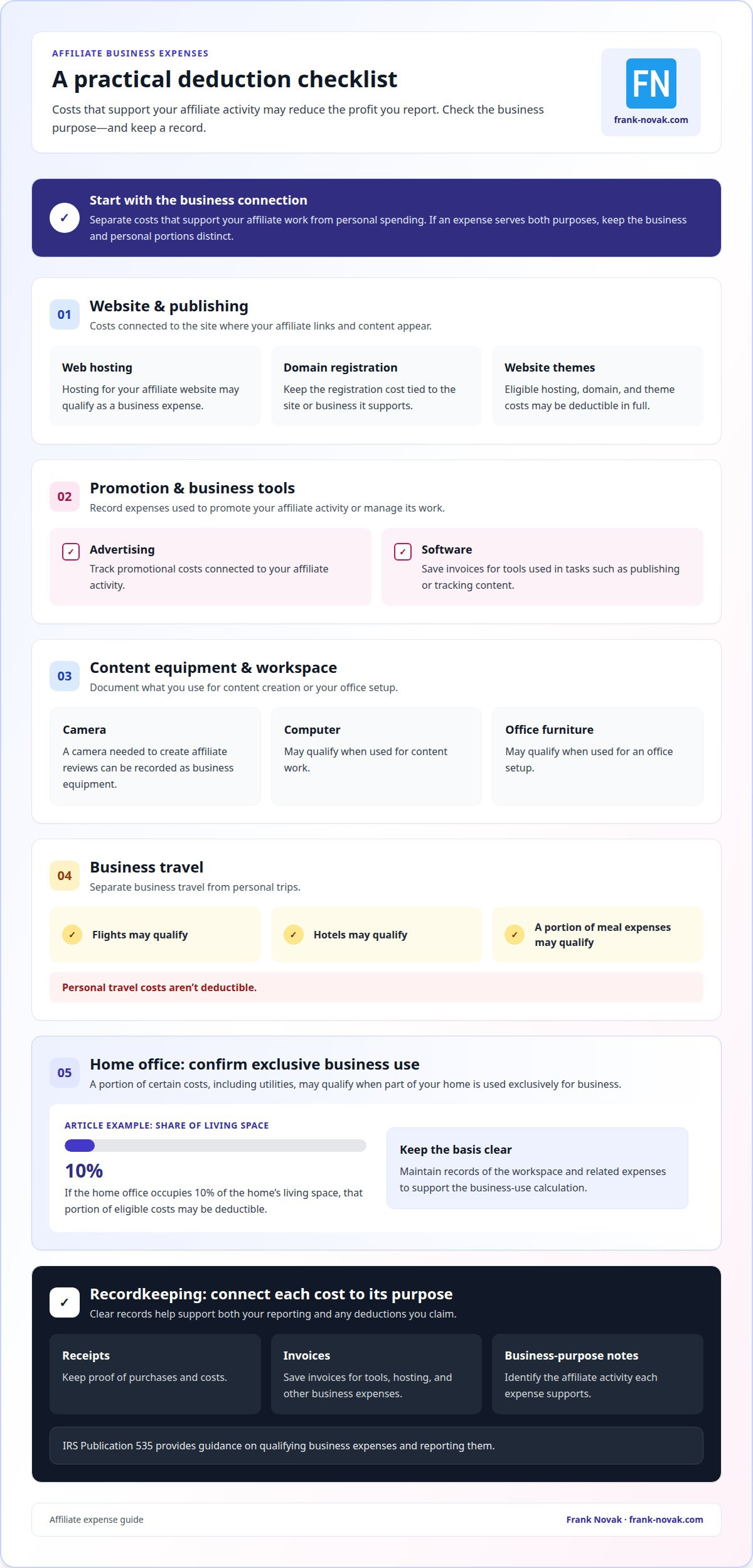
For example, website hosting, domain registration, and website theme purchases can qualify as business expenses. These costs support the site where affiliate links and content appear. Eligible hosting, domain, and theme costs may be deductible in full. Keep invoices and identify the site or business activity each purchase supports.
Other common expense categories include advertising, software, and equipment. If you buy a camera for affiliate reviews, you can record it as a business equipment expense when it’s needed to create content. Computers and office furniture may also qualify when used for content work or an office setup. Save software invoices and note how each tool supports affiliate tasks, such as publishing or tracking content.
- Advertising: Record promotional costs tied to your affiliate activity.
- Software and hosting: Save invoices for business tools, web hosting, domain registration, and themes.
- Equipment: Document cameras, computers, or furniture used for content creation and office setup.
- Travel: Separate business travel from personal trips. Eligible costs can include flights, hotels, and a portion of meal expenses; personal travel costs aren’t deductible.
Home-office costs require a clear business-use basis. If part of your home is used exclusively for business, a portion of certain costs, including utilities, may qualify. For example, if a home office occupies 10% of the home’s living space, that portion of eligible costs may be deductible. Keep records of the workspace and related expenses to support the business-use calculation.
Good records connect each deduction to its purpose. Keep receipts, invoices, and notes identifying the business activity behind each cost. IRS Publication 535 provides guidance on qualifying business expenses and reporting them. If an expense serves both personal and business purposes, separate the business portion rather than treating the entire cost as deductible.
Consider how a deduction affects taxable income, not just the amount spent. In an illustrative example, $1,000 of annual affiliate earnings minus $350 of eligible expenses leaves $650 of taxable income. The expense reduces income used in the tax calculation, not tax owed dollar for dollar. Clear records make the tax implications for affiliate marketers in the US easier to assess when estimating profit and planning for income and employment tax obligations.
If you’re developing the wider skills behind an online business, Online Success Coaching can support that learning alongside your affiliate work.
Quarterly estimated tax payments
Affiliate marketers may need to make estimated tax payments during the year rather than pay all federal tax at filing time. The amount depends on taxable income, eligible expenses, and self-employment tax.
Planning Estimated Tax Payments
Estimated payments are advance payments toward expected tax on income that isn’t covered by withholding. U.S. affiliate marketers who expect to owe $1,000 or more annually must make estimated tax payments using Form 1040-ES, according to the Internal Revenue Service. Planning helps spread payments across the year and reduces the chance of a large unpaid balance.
The listed quarterly deadlines are April 15, June 15, September 15, and January 15 of the next tax year. One planning approach is to estimate annual tax, then divide that estimate by 4. Revisit the estimate when commissions or expenses change, rather than basing every payment on an outdated income forecast.
Self-Employment Tax and Estimated Payments
Estimated payments can cover both income tax and self-employment tax on affiliate earnings. That matters because a calculation that includes income tax alone may underestimate the total due.
If your commissions rise, your expected tax bill may rise too. Set aside part of each payment as it arrives, then revise your estimate when your income pattern changes. If earnings fluctuate, use current records to update your estimate rather than assuming each quarter will match the last.
Schedule C and Estimated Payments
Schedule C reports a sole proprietor’s affiliate business income and expenses, helping determine business profit for tax planning. That profit is one input when estimating tax payments, so organized records of commissions and deductible costs can make your estimate more useful.
For example, record commissions alongside hosting fees and other eligible expenses. Your net business result gives you a clearer basis for estimating taxable income than gross deposits alone. Keep payment calculations and business records together so your estimates reflect current figures.
Setting Aside Estimated Tax Savings
Setting aside tax savings means reserving a share of affiliate receipts for upcoming tax payments. The page recommends saving 25 to 30% of income for taxes in 2026. Treat this as a planning reserve, not a guaranteed final tax rate, because taxable income and deductions affect the amount due.
A separate account can help distinguish money reserved for taxes from funds available for business or personal spending. When commissions arrive, transfer your planned share to that reserve and adjust it as income or expenses change. This can help prevent you from spending money set aside for estimated payments.
If you’re employed as well as an affiliate marketer, your wages may have tax withheld, but that doesn’t automatically cover tax on your separate affiliate income. Include both income sources in your estimate, then compare the tax already withheld with what you expect to owe on affiliate earnings. If your estimate changes, adjust later payments rather than waiting until filing to discover a shortfall.
What Counts as Income for Affiliate Marketers?
Good records show how you earned affiliate income, when it arrived, and which expenses supported your work. Tracking commissions and related documents throughout the year also makes estimated tax planning more practical.
Record every payment from an affiliate program, including commissions, performance bonuses, and payments for clicks. Log the payer, payment date, gross amount, and any adjustments shown on a statement. If you earn through several programs, keep a separate entry for each and then total them for your tax records.
A spreadsheet or accounting software can organize these details by date and category. For example, use separate columns for program name, payment type, amount, deposit date, and supporting document. Keep contracts and program statements with the matching entries. This makes it easier to trace each deposit to its source instead of relying on memory when preparing your affiliate tax records.
Track expenses alongside income, but keep them clearly separate. For example, record a hosting invoice as a business cost, retain the receipt, and note which site it supports. If an expense serves both personal and business purposes, record the business portion separately. This helps explain how you calculated profit and supports the figures used for tax planning.
Quarterly planning works best when your records are current. Update income and expense totals as payments and bills arrive, then revise your tax estimate when earnings change. If a commission statement differs from the amount deposited, keep both documents and note the reason. An accountant can use organized records to review the totals and discuss how they apply to your return.
Retain records long enough to support filed returns and tax payments. Keep tax records for at least 3 years from the date you filed your tax return, and for at least 2 years from the date you paid the tax. Store digital copies of receipts, contracts, and statements together, with clear file names that identify the year and affiliate program.
For a clear year-end review, reconcile program statements with bank deposits, then compare your income and expense totals with the records used for estimated payments. If you use accounting software, export a copy of the year’s transactions and keep the source documents. These steps help you find missing entries before filing, explain the figures on your return, and carry reliable records into the next tax year.
Self-employment tax
Self-employment tax is separate from federal income tax on affiliate earnings. For an independent affiliate marketer, both can affect the amount owed, so treating income tax as the only liability can leave the return incomplete. This distinction matters whether affiliate marketing is your main business or an additional source of income alongside a job.
Track affiliate commissions and other business earnings in the records you use to prepare your return. A sole proprietor generally reports affiliate business income and expenses on Schedule C of the personal return. This calculation shows business profit, which is relevant when working out self-employment tax. Keep program statements, payment records, and receipts together so you can support the amounts reported.
Self-employment tax and income tax are not interchangeable. Income tax applies to taxable income under the relevant federal rules, while self-employment tax applies to qualifying self-employment earnings. A deduction that reduces business profit can affect the figures used in tax calculations, but it doesn’t automatically eliminate every tax obligation. Reviewing income, expenses, and prior payments together gives you a more complete picture.
If you’re also employed, tax may be withheld from your wages, but that withholding relates to employment income. Affiliate earnings are separate, so wage withholding may not cover the tax associated with your affiliate activity. Include both income sources when planning, and keep wage statements separate from affiliate records. This helps an accountant distinguish withheld amounts from business earnings when preparing your return.
For tax reporting, use your records for the year to report affiliate activity on the appropriate return. A sole proprietor’s Schedule C summarizes business income and eligible expenses; those figures then inform the wider personal return. Match totals against affiliate program statements and bank deposits, and keep explanations for differences such as adjustments or payment timing. Complete records make it easier to spot omissions before filing.
Common mistakes include confusing a reporting-form threshold with whether income is taxable, overlooking affiliate payments, and mixing business and personal expenses. Filing thresholds are separate from calculating self-employment tax. Keep a running income total, categorize expenses by purpose, and track estimated payments alongside your return documents. If an accountant prepares your return, organized records help clarify how each figure was calculated.
Use your filed return and payment records to plan for the next tax year. If your affiliate income changes, update your business records and estimated tax calculations instead of relying on an old projection. Regular review helps keep tax planning tied to your actual earnings, deductions, and payments already made.
Explore support for building your online business
Frank Novak
Frank Novak helps online entrepreneurs build their businesses through Online Success Coaching and Never Succeed Online. If you’re developing an affiliate marketing business, these offerings can support your broader understanding of online business growth, while the tax guidance above explains the reporting and payment responsibilities that come with affiliate income.
Make tax records and payment planning part of the business foundation you’re building. For help applying tax rules to your personal return, consult a qualified tax professional; business coaching is not a substitute for tax advice.
Build Tax Planning Into Your Next Stage
As your affiliate work develops, make financial organization part of your business routine, not a task reserved for filing season. Consistent recordkeeping helps you understand how business decisions affect cash flow and what your operation can support.
The tax implications for affiliate marketers in the US are easier to manage when your business model and financial habits develop together. If you add programs, change your content approach, or create new income sources, revisit how you organize business finances. Considering these choices together can help you grow with greater awareness and fewer surprises.
If you’re ready to consider your next step in building an online business, start a conversation with Frank Novak.
Steady progress comes from building a business thoughtfully, one informed decision at a time.
Frequently Asked Questions
Are there any Allowable Expenses for the self-employed?
Yes. A self-employed affiliate marketer may deduct eligible expenses connected to business activity, such as advertising, software, and equipment. The key question is whether a cost supports the work or is personal. For example, if a subscription serves both personal and business purposes, identify the business portion rather than treating the full bill as a business expense. Keep receipts and briefly note the business purpose.
Do Nexus Tax Apply to Affiliate Marketers?
Affiliate nexus laws can affect a brand’s sales tax obligations, even though affiliate marketers generally don’t collect sales tax themselves. Affiliate nexus laws exist in 30 states. The distinction is that an affiliate promotes a brand’s products, while the brand makes the sale. For example, an affiliate’s promotional activity may be relevant to a company’s state tax responsibilities without making the affiliate the seller responsible for collecting sales tax.
How are Affiliate Income earners classified?
Affiliate income earners are commonly treated as independent contractors rather than W-2 employees. Their income comes from program payments such as commissions, rather than wages paid through an employer’s payroll. For example, a marketer who earns referral commissions from an affiliate program generally handles tax reporting as a self-employed person. The payment arrangement helps explain the reporting context, but it doesn’t make the income tax-free if no form arrives.
How do I know if my income is taxable or not?
Affiliate commissions, performance bonuses, and click payments count as taxable income in the United States. Record each type of payment, including amounts that arrive without a tax form. A missing form doesn’t make a commission nontaxable. For example, if one program pays a bonus while another pays referral commissions, record both so your income total reflects all your affiliate activity.
What are the allowable expenses for Affiliate Marketers?
Potentially deductible costs include advertising, software, web hosting, equipment, and qualifying travel or home-office expenses. The business connection matters: a camera used for affiliate content is different from a personal purchase unrelated to the work. Business travel costs, such as flights and hotels, may qualify, while personal trip costs don’t. Keep invoices and receipts, and distinguish business from personal use when an expense serves both purposes.
How is affiliate marketing income classified for US federal tax purposes?
A sole proprietor generally reports affiliate marketing business income on Schedule C of the personal tax return. A single-member LLC is generally taxed like a sole proprietorship, with earnings flowing through to the owner’s personal return. Other business structures use different returns: a multi-member LLC files Form 1065, while an LLC electing S corporation treatment files Form 1120S. The entity structure determines the reporting route.
When must US affiliate marketers report income and file a tax return?
In the United States, an individual earning over $400 from affiliate marketing needs to file taxes, according to the Internal Revenue Service. This filing threshold is different from a program’s obligation to send a payment form. Report affiliate earnings as part of the appropriate return, and consider estimated payments separately if you expect to owe enough tax. Keep payment records organized by program and tax year for accurate reporting.
Do affiliate marketers receive Form 1099-NEC or 1099-K, and what are the reporting thresholds?
Affiliate programs use Form 1099-NEC to report nonemployee compensation when the applicable threshold is met. For a single program, the threshold was $600 through 2025; for payments made in 2026, the program issues the form at $2,000 or more. A form’s threshold doesn’t decide whether income is taxable. Track all affiliate payments, including amounts below these reporting levels.

Article by
Frank Novak
Frank Novak is an online marketing professional and coach who focuses on affiliate marketing and business automation. Through his website, frank-novak.com, he shares insights and strategies for leveraging social media platforms like Facebook to generate traffic and commissions.
Affiliate / Sponsored Content Disclaimer
This [website/post] contains affiliate links. If you click through and make a purchase, we may receive a commission at no additional cost to you. We only recommend products or services we believe will add value to our readers.