

A commission is never a substitute for a trustworthy recommendation. In the United States, ethical affiliate marketing practices mean clearly disclosing affiliate relationships, supporting promotional claims with evidence, and following applicable program terms and privacy rules. The Federal Trade Commission’s Endorsement Guides offer relevant guidance for affiliate marketing.
It’s reasonable to wonder how to earn commissions while staying transparent. Readers need to understand when a recommendation may benefit you. Clear disclosures and honest, balanced content help them make informed decisions and build trust over time.
This article explains affiliate marketing compliance and how to put it into practice. You’ll learn where and how to disclose affiliate links, how to support your claims, and how to follow program rules while recommending products that genuinely suit your audience.
Key Takeaways
- Build lasting audience trust by choosing recommendations that fit your values and genuinely serve your readers.
- Make your affiliate relationship easy to notice wherever you share a recommendation, including on social media and in videos.
- Keep promotional claims factual and support them with firsthand experience or reliable feedback.
- Use program terms as a practical guide for how you promote, and review your content as products or terms change.
- Ethical promotion is about more than disclosure: balanced reviews and clear information help readers make informed choices.
1. What is affiliate marketing compliance?
Affiliate marketing compliance means promoting products in line with applicable advertising, privacy, and program rules. In the United States, the Federal Trade Commission’s Endorsement Guides offer relevant guidance for affiliate marketing. Compliance also means following each program’s terms and describing products accurately. A tracking link may record a click or sale, but it doesn’t remove your responsibility for how you present the recommendation.
Long-term audience relationships depend on recommendations that fit readers’ needs and your brand values. Before joining a program, consider whether its product suits your subject matter and whether you can explain its benefits honestly. For example, a pet-care publisher can show how a relevant grooming tool fits into a reader’s routine. Promoting unrelated offers just because they pay commissions can weaken the connection with your audience.
Brand alignment matters on both sides. Affiliates should keep promotional content consistent with a brand’s official messaging, while brands should set expectations for transparency, disclosure, and conduct. Clear written guidelines help prevent mismatched claims or tone. If a brand describes a product as suitable for beginners, an affiliate shouldn’t present it as an advanced professional solution without evidence.
Every recommendation affects your reputation. A poor product experience, an exaggerated claim, or an undisclosed commercial relationship can damage audience confidence. Ethical affiliate marketing practices put useful information ahead of a quick commission. Balanced descriptions, clear explanations of limitations, and careful product selection help protect both affiliate and brand reputations over time.
Branded affiliate links and brand bidding are specific areas where program terms matter. A branded link may use a company name or branding in its destination or presentation. Brand bidding usually means buying search ads that target a brand’s name or related terms. Programs may restrict either practice, so follow the written rules instead of assuming every promotional method is allowed. Brands can also set affiliate expectations and review promotional materials for alignment.
In the United States, privacy and consent expectations depend on what tracking data is collected, how it is used, and which laws apply to the audience. Ethical affiliates should explain data collection clearly and avoid tracking users without consent. Programs targeting California residents should align their privacy policies and data handling with CCPA/CPRA requirements.
Compliance is an ongoing process, not a one-time approval. Brands can support lasting relationships by setting clear terms, offering ongoing guidance, and reviewing affiliate content. Affiliates can protect audience trust by choosing aligned offers and treating each link as part of a relationship, not just a route to commission.
2. Clear and prominent affiliate disclosures
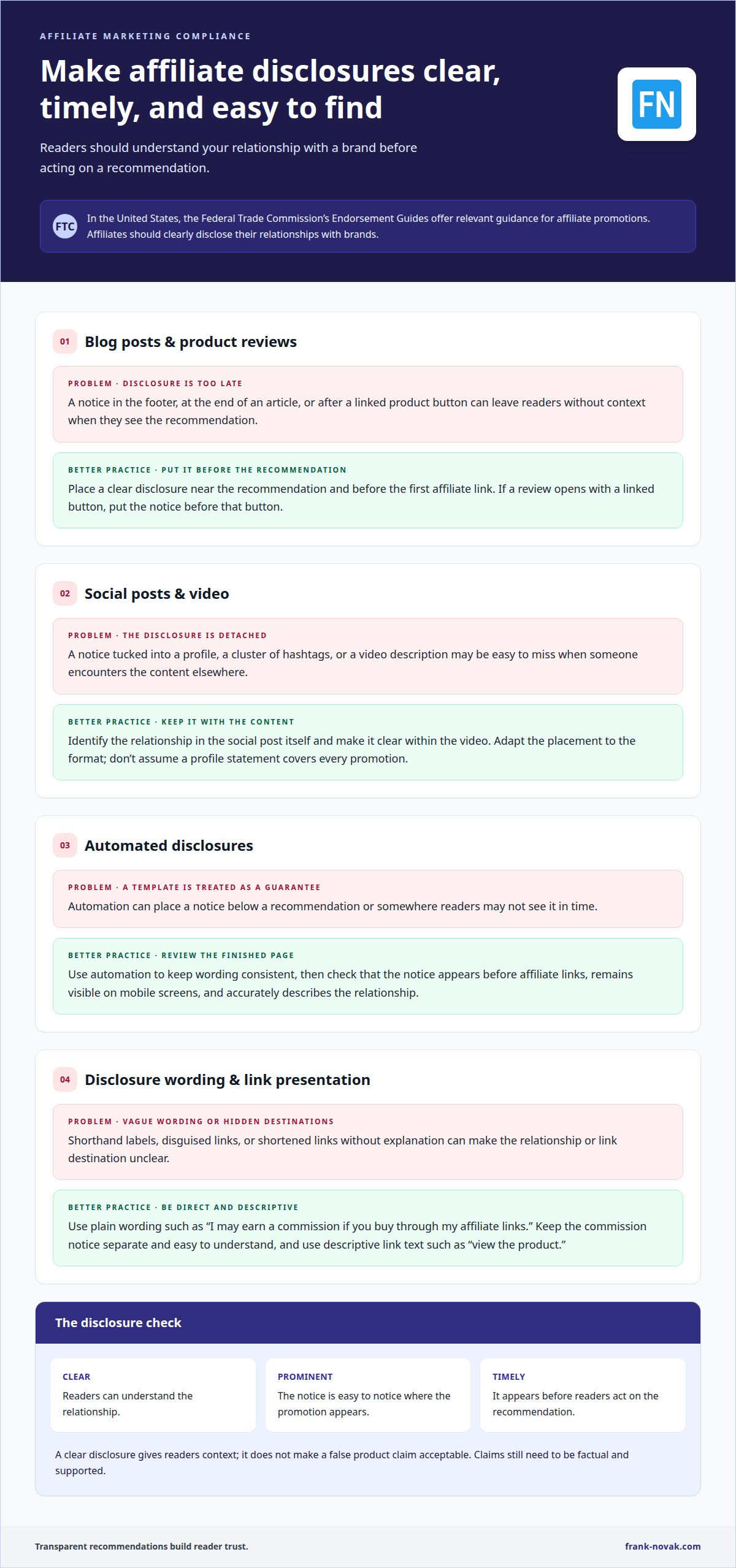
A disclosure should help readers understand your relationship before they act on a recommendation. The Federal Trade Commission (FTC) says affiliates must clearly disclose their relationships with brands. A practical disclosure might say, “I may earn a commission if you buy through my affiliate links.” Use direct wording rather than vague labels or shorthand.
Placement matters as much as wording. On a blog, place the disclosure near the recommendation and before the first affiliate link, not just in the footer. If a product review starts with a linked button, put the notice before that button. Readers shouldn’t have to scroll through the full article or open a separate policy page to learn that you may earn a commission.
Disclosure should travel with the content across formats. Identify the relationship in the social media post itself, and make it clear within a video. A disclosure tucked into a profile, a cluster of hashtags, or a video description may be easy to miss when people encounter the content elsewhere. Keep the message clear and accessible on every platform.
Disclosure expectations can vary by platform and format, while FTC guidance is relevant across U.S. affiliate promotions. Adapt placement to the format, such as putting a concise notice beside a blog link or within a social post. Don’t assume one statement in your profile covers every promotion.
Automated affiliate disclosures can help keep wording consistent across pages, product cards, and campaigns. Treat automation as a publishing aid, not a replacement for reviewing the finished page. Check that the notice appears before affiliate links, stays visible on mobile screens, and accurately describes the relationship. A template placed below a recommendation, for example, still fails to give readers timely context.
Clear labeling also supports a better user experience. Use descriptive link text, such as “view the product,” and keep the commission notice separate and easy to understand. Don’t disguise affiliate links as ordinary navigation or use a shortened link that hides its destination without explanation. Clear presentation lets readers consider the recommendation with the right context.
Failing to disclose can mislead readers, weaken audience trust, and put an affiliate relationship at risk. It may also invite regulatory scrutiny or consequences under a program’s terms. The response depends on the circumstances and applicable rules. Clear disclosure helps reduce those risks, but it doesn’t make a false product claim acceptable.
For a consistent approach to online promotion, explore practical online business guidance as you build your affiliate efforts.
3. Factual and verifiable marketing claims
Every product claim should match evidence you can explain. If you say a tool saves time, identify what supports that statement. A product demonstration, reliable research, or customer feedback may support a claim when it reflects its scope. One positive review, for example, can show a customer’s experience, but it doesn’t establish that everyone will get the same result.
Testing a product firsthand helps you describe its actual use, strengths, and limitations. If you can’t test it, rely on trusted user feedback and make that basis clear. Separate what you observed from what others reported. For example, say that a reviewer praised a feature rather than presenting their experience as your own.
Match the strength of a claim to the strength of its evidence. A broad statement such as “works for everyone” needs much more support than a limited description of a specific feature. Avoid guaranteeing outcomes unless you have evidence to substantiate the guarantee. A commission shouldn’t turn a possibility into a promise or make advertising sound more certain than the facts allow.
Before publishing, review each claim in context. Check that the headline, image, comparison, and linked product page create the same accurate impression. A technically true sentence can still mislead if nearby content suggests a greater benefit. For example, describing a course as “beginner-friendly” while showing advanced results without explanation may give readers an incomplete picture.
A simple claim review can make this process practical:
- Identify each measurable or comparative claim, such as “faster” or “easier.”
- Record the evidence behind it, including testing, research, or customer feedback.
- Make the wording specific to what that evidence actually shows.
- Remove or qualify claims that lack support, including implied guarantees.
These ethical affiliate marketing practices also mean resisting brand-supplied promotional language when it overstates the evidence. If a product description promises a particular result, don’t repeat it as fact unless you can substantiate it. Keep records of the materials behind important claims so you can explain why your wording is accurate.
Brands can help prevent misleading promotions by reviewing affiliate content and auditing activity. Reviews can compare an affiliate’s claims with approved product information and flag unsupported statements before they spread. If a claim changes or new evidence alters its meaning, update the content. Accurate advertising protects readers from false impressions and helps affiliates earn commissions through genuinely useful recommendations.
4. Affiliate program terms and monitoring
Program terms turn broad standards into practical rules for each partnership. Before promoting an offer, review the agreement for approved channels, prohibited tactics, brand-use rules, and tracking conditions. A program may set different expectations for email, paid search, or social posts. Follow the terms for each placement and keep a copy of the current guidelines for reference.
Brands can make expectations easier to follow by setting written standards for transparency, brand alignment, and regulatory compliance. The Federal Trade Commission’s Endorsement Guides offer relevant guidance for endorsements, while program rules can explain how that guidance applies to specific campaigns. Clear instructions help affiliates avoid deceptive promotions, such as turning approved product language into unsupported promises.
Monitoring should connect promotional activity with the program’s actual rules. Affiliate tracking tools can help brands review links, clicks, conversions, and commissions. Those records may highlight a broken link or an unexpected performance change, but numbers alone don’t show whether an advertisement is accurate. Pair tracking data with reviews of the content surrounding each link.
For instance, a brand can regularly review affiliates’ social media posts and promotional materials. A review might check whether a post uses current brand messaging, makes a supported product claim, and presents the offer accurately. If a post departs from program standards, explain the specific issue and the correction needed. Documenting the exchange supports consistent oversight and protects the partnership’s integrity.
Privacy practices also matter when affiliate activity involves personal data. Programs targeting California residents should align privacy policies and data-handling practices with CCPA/CPRA requirements. Companies should have data processing agreements with third parties, including affiliates, when those affiliates access and process personal data on their behalf. A program should clarify these responsibilities before sharing data.
Ongoing communication can prevent avoidable errors. Brands should proactively share updated guidelines and provide affiliates with continuing support and training. If a link format changes, for example, a brief update can help affiliates replace outdated links before more visitors encounter them. Regular reviews also help brands identify recurring questions and clarify confusing terms.
A practical monitoring routine can include these checks:
- Compare active affiliate links with current program terms and approved destinations.
- Review recent promotional materials for deceptive wording or inaccurate brand representation.
- Track clicks, conversions, and commissions, then investigate meaningful irregularities.
- Record guideline updates, training, and follow-up actions for consistent program oversight.
For affiliates, the same routine offers a practical way to stay aligned: revisit program terms when a campaign changes, keep links current, and raise questions about unclear instructions before publishing. Consistent monitoring helps programs maintain their standards while giving affiliates a clear path to promote with integrity.
5. What ethical affiliate marketing looks like
Ethical affiliate marketing treats each recommendation as help for a consumer, not merely a route to commission. Ask yourself whether you’d still discuss the product if it didn’t earn a commission. If not, the offer may not belong in your content. Recommendations work best when they connect clearly to your audience’s needs and your subject area.
Honest reviews show readers how a product performs and where it may fall short. A software review, for example, could explain which tasks a tool handles well and which still require manual work. That balance helps readers decide whether the product suits their situation. A review that lists only benefits may leave out details that could change a consumer’s decision.
Give readers the information they need to understand an offer. If a subscription renews, say so clearly; if extra fees may apply, describe them. Avoid bait-and-switch promotion, where an advertised price differs from the final cost. When terms change, update the page so an old recommendation doesn’t direct readers to outdated pricing or product availability.
Ethical affiliate marketing practices also consider what happens after a reader clicks. A recommendation should solve a real problem, not encourage unnecessary purchases. A guide to choosing a budgeting tool, for example, can explain who may benefit and who may not need one. This approach may mean recommending no product when none fits the reader’s needs.
Privacy is another part of responsible promotion. Explain how a link or campaign uses personal data, and don’t track users without consent. Choose programs that take data protection seriously, and keep the explanation understandable. Readers should be able to tell what information is collected and why, without having to infer it from confusing technical language.
A practical editorial review can keep each promotion grounded in the reader’s perspective:
- Explain who the product suits and the problem it addresses.
- Include relevant drawbacks alongside benefits, such as a learning curve or limited use case.
- Present subscription terms, possible extra fees, and refund policies clearly.
- Update recommendations when product availability or pricing changes.
- Remove endorsements that rely on fake experiences or unsupported results.
These choices make affiliate advertising more than a transaction. They help consumers compare options with context and give publishers a consistent way to promote products genuinely. The takeaway is simple: recommend only what you can explain honestly, and make the reader’s decision easier, even when that means fewer clicks.
Frank Novak
Frank Novak can be a next step if you want support applying these principles to your online business. Through Online Success Coaching and Never Succeed Online, he offers options for people developing their online business direction. That support may suit you if you’re deciding how to shape recommendations, build audience trust, or make ethical affiliate marketing practices part of your broader approach. The focus here is on helping you think through your next steps, not replacing the careful review of program terms and applicable rules. If you’d like to discuss your goals and explore whether this support fits, contact Frank Novak.
Build your next step around trust
Affiliate marketing can grow with a business when recommendations serve readers as well as your goals. Let ethical affiliate marketing practices guide how you choose opportunities, explain your approach, and build relationships with your audience. You don’t need to solve everything at once. Start with one decision you can make more intentionally, then keep learning as your business develops.
If you’d like guidance on your next steps, Frank Novak offers Online Success Coaching, ClickBank Super Funnel, and Never Succeed Online. These offerings can support you as you develop an online business and consider how affiliate marketing fits your direction.
Keep your readers’ interests in view as you move forward. Consistent, thoughtful choices can help you build a business you feel confident sharing.
Frequently Asked Questions
What is affiliate marketing compliance?
Affiliate marketing compliance means meeting the rules that apply to advertising, disclosures, privacy, and each program you join. In practice, that means explaining commercial relationships, using accurate product information, and following promotion terms. For example, if a program restricts paid search or certain link formats, your campaign should respect that condition. Compliance is an ongoing part of publishing because offers and program terms can change.
What are ethical affiliate marketing practices?
Ethical affiliate marketing practices put the reader’s interests alongside the marketer’s business goals. Choose offers that fit your audience, explain relevant limitations, and avoid recommendations based only on commission potential. A review, for example, can explain that a product suits a particular use case but may not meet the needs of someone looking for different features. This helps readers assess the recommendation in context and decide whether it addresses their needs.
What are the FTC rules for affiliate marketing disclosures in the United States?
The Federal Trade Commission’s Endorsement Guides offer relevant guidance for affiliate promotions in the United States. Disclose affiliate relationships clearly so consumers understand that a recommendation may earn the publisher a commission. A direct statement such as “I may earn a commission if you buy through this link” explains the relationship more plainly than an unexplained abbreviation. Make sure the wording accurately describes the arrangement.
Where and how should affiliate links be disclosed to consumers?
Place the disclosure where readers encounter the recommendation, before or near the affiliate link. On a review page, for example, put the notice before the first linked product mention, not just in a footer. Use clear words to explain the possibility of earning a commission. A separate policy page can provide more context, but it shouldn’t be the only place readers can find the disclosure.
What disclosures are required on social media, blogs, videos, podcasts, and email?
Disclose the relationship in the content where the promotion appears, adapting the placement to the format. A blog can place a notice near its first affiliate link, and a social post can include a clear disclosure in the post itself. Video disclosures should appear within the video, not just in its description. For podcasts and email, state the commercial relationship alongside the recommendation so it makes sense in context.
How can affiliate marketers make honest product reviews and recommendations?
Describe your personal experience and distinguish it from information shared by other users or the brand. A review can explain which feature worked well, then note a limitation that may matter to some buyers. If you haven’t tested the product, don’t imply that you have. Balanced details help consumers judge whether the recommendation fits their circumstances instead of relying on a blanket endorsement.
How should affiliate marketers verify product claims and avoid misleading advertising?
Connect each claim to evidence that supports its exact wording. Product testing, credible research, or relevant customer feedback can inform a claim, but don’t stretch evidence beyond what it shows. One customer’s positive experience, for instance, doesn’t prove every buyer will get the same result. Review headlines and images too, since the overall presentation can imply a stronger benefit than the text supports.
How can marketers choose ethical affiliate programs and assess merchant practices?
Start by reviewing the program’s written terms, promotional rules, privacy approach, and guidance for affiliates. Consider whether the product genuinely fits your audience and whether the merchant’s official messaging supports claims you can explain accurately. Look for clear expectations around disclosures and content standards. If the offer depends on exaggerated promises or concealing important terms, it may not suit your audience.

Article by
Frank Novak
Frank Novak is an online marketing professional and coach who focuses on affiliate marketing and business automation. Through his website, frank-novak.com, he shares insights and strategies for leveraging social media platforms like Facebook to generate traffic and commissions.
Affiliate / Sponsored Content Disclaimer
This [website/post] contains affiliate links. If you click through and make a purchase, we may receive a commission at no additional cost to you. We only recommend products or services we believe will add value to our readers.