

Your next affiliate marketing mentor may be closer than you think: through an affiliate network, business partner, employer, or practitioner community. Learning how to find affiliate marketing mentors starts with knowing what you need help with. Look for someone who can clarify your goals, pinpoint campaign challenges, set priorities, and suggest practical next steps. The right fit depends on your experience, traffic channel, audience, and current bottleneck.
If you’re unsure whether you need a mentor, a course, or a more experienced peer, start by identifying the decision you’re trying to make. A mentor should help you think through your choices and review your work, not just repeat generic advice.
This guide explains what affiliate marketing mentors do, how to find one who fits your channel and experience, and where to look through networks and communities. You’ll also learn how to assess a potential mentor and make each conversation practical, so you can choose your next step with confidence.
Key Takeaways
- Choose a mentor whose niche knowledge and experience match the decisions you need to make, not just someone with broad affiliate marketing expertise.
- Match the mentor’s practical skills to your traffic channel and current stage, then bring real campaign details to make their guidance specific.
- Use a course for structured learning, a community for peer feedback, and one-to-one mentorship when you need ongoing review of your work.
- Look for potential mentors through affiliate networks, managers, partners, employers, and practitioner communities, where relevant relationships can develop naturally.
- Before committing, ask how the mentor reviews campaigns and supports independent decision-making, and be cautious of guaranteed outcomes or unrealistic income claims.
What Is an Affiliate Marketing Mentor?
An affiliate marketing mentor helps you clarify business goals, identify campaign problems, and choose practical next steps. The global affiliate marketing industry is valued at over $17 billion and growing 15.2% annually, so advice should connect to the work you actually plan to do. A mentor can help you reduce avoidable risks and improve your return on investment, but you remain responsible for decisions, testing, and budget.
A practical way to find affiliate marketing mentors is to start with your niche and your current bottleneck. If you publish product comparisons for home equipment, look for someone experienced with review content, search traffic, and affiliate program terms in that space. Someone who mainly buys paid traffic may offer useful ideas, but might not know how readers discover and trust detailed reviews. Ask what campaigns they’ve worked on and how that experience relates to your audience and content format.
Choose expertise that addresses a specific need, not an impressive-sounding general promise. If visitors click but few buy, you may need help assessing the offer, landing page, and tracking. If you’re still choosing a strategy, compare search-focused content, email recommendations, and paid campaigns against your skills, resources, and audience. A network manager can explain program rules and commission structures; a mentor can help you decide how those details fit your plan. Identify one problem before you seek guidance.
For FTC disclosures, ask whether the mentor teaches clear, understandable disclosure of affiliate relationships near recommendations. They should explain how to make disclosures noticeable in formats such as written reviews, videos, or social posts. Ask for a practical example, then consider whether readers would understand that you may earn a commission.
To assess testimonials, ask for a past mentee reference and a specific account of the work involved. Look for context, including the mentee’s starting point, traffic channel, actions taken, and results, rather than a revenue claim alone. Guaranteed outcomes, unrealistic income promises, or claims that one system works with every offer are warning signs. A credible mentor should also be able to discuss a current campaign, including what isn’t working, rather than relying only on polished success stories.
Useful mentorship involves reviewing real campaign details, such as the offer, traffic source, landing page, and tracking. Bring your campaign data, ask focused questions, complete agreed homework, and record the advice alongside what happens after each change. A mentor should help you reason through decisions, not simply hand you answers. This builds a strategy suited to your niche and the skills to manage future campaigns independently.
Matching a mentor to your traffic channel and career stage
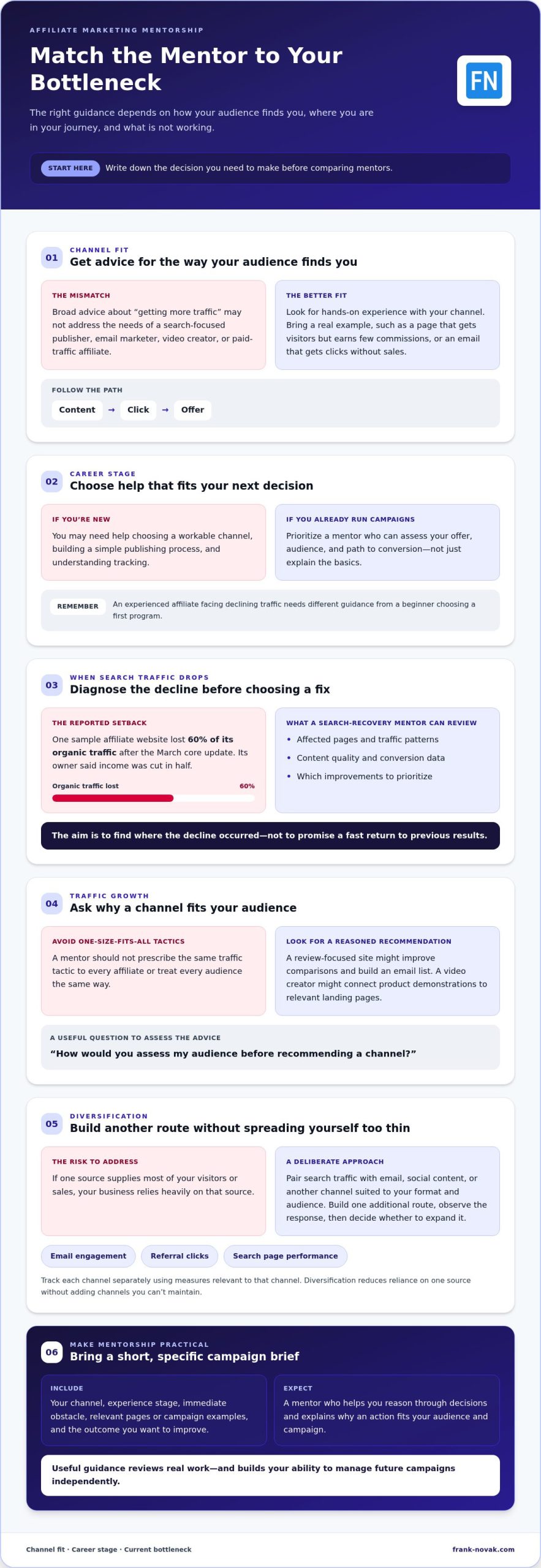
Choose a mentor who understands how your audience finds and responds to affiliate content. A search-focused publisher needs different guidance from a creator using email, video, or paid traffic. Match the mentor’s hands-on knowledge to your channel, then bring real examples: a page that attracts visitors but earns few commissions, or an email that gets clicks without sales. This makes the conversation more useful than broad advice about “getting more traffic.”
Your experience matters, too. If you’re new, look for help choosing a workable channel, building a simple publishing process, and understanding tracking. If you already run campaigns, prioritize someone who can assess the offer, audience, and path to conversion. An experienced affiliate facing declining traffic needs different guidance from a beginner choosing a first program. Write down the decision you need to make before comparing mentors.
After a search setback, avoid treating every lost visit as the same problem. One sample affiliate website lost 60% of its organic traffic after the March core update, and its owner said income was cut in half. A mentor experienced in search recovery can help you compare affected pages, traffic patterns, content quality, and conversion data. The aim is to find where the decline occurred and prioritize useful improvements, not promise a fast return to previous results.
For traffic growth, ask a potential mentor how they’d assess your audience before recommending a channel. A review-focused site might improve its comparisons and build an email list; a video creator might connect product demonstrations to relevant landing pages. Either way, trace the journey from content to click to offer. A mentor should explain why a proposed action fits that journey, rather than prescribe the same traffic tactic to every affiliate.
Consider diversification if one source supplies most of your visitors or sales. Search traffic can be paired with email, social content, or another channel that suits your format and audience. Track each channel separately using relevant measures, such as email engagement, referral clicks, or search page performance. Build one additional route deliberately, observe the response, then decide whether to expand it. This reduces reliance on a single source without spreading your effort across channels you can’t maintain.
Before selecting a mentor, summarize your channel, stage, and immediate obstacle in a short brief. Include a few relevant pages or campaign examples, plus the outcome you want to improve. If you’re planning a broader online business strategy alongside affiliate traffic, explore practical online business guidance as another way to organize your next steps.
Mentorship versus courses, masterminds, and forums
Choose a learning format that fits your immediate task. A course can provide structured lessons on tracking, content, or campaign setup. One-to-one mentorship is more useful when you’ve run campaigns, can describe what isn’t working, and want someone to review your decisions. A mastermind offers shared perspectives, while forums provide peer answers and practical discussion. These formats can complement each other, but they don’t offer the same kind of guidance.
A course provides a repeatable learning path, which can help when you’re building an online business. Study a lesson, apply it to an affiliate campaign, and revisit it when needed. But recorded lessons won’t necessarily explain why your specific offer or landing page isn’t converting. Choose material that addresses your current learning need, then use campaign results to identify where you still need individual feedback.
In a mastermind, affiliates discuss challenges and share perspectives. This group format can help you explore different approaches, such as how creators handle email follow-up or how review publishers organize product comparisons. Forums provide a wider range of peer experience, though advice may not always fit your situation. Bring a focused question and enough context to get useful responses. Gartner is cited as finding that mentored professionals reach career milestones five times faster than those learning alone, but the right format still depends on your goals.
Free mentorship can grow from a network manager, employer, business partner, or community member. It may be a good starting point if you’re learning affiliate program basics or need occasional direction. Paid mentorship is most useful after you’ve tested campaigns, can describe the obstacle, and want regular review. A one-to-one coach can examine the work itself, while recorded lessons alone are a different product. Wharton School is cited as finding a 600% return on investment for mentoring programs; that finding doesn’t establish the outcome of any individual affiliate arrangement.
Free and paid marketing are separate choices from free and paid learning. Organic search, email, and community participation take time and consistent effort; paid advertising requires spending on traffic. Neither replaces a suitable offer, clear tracking, or a useful landing page. Before paying for ads, define the action you want visitors to take and how you’ll measure the campaign. Before paying for guidance, identify the decision you need help making.
Use this decision path: choose a course for structured fundamentals, a forum for a targeted peer question, a mastermind for group discussion, or individual mentorship for ongoing campaign review. If you can’t describe a specific problem yet, learn the basics and gather campaign data first. If your question is clear and repeated testing hasn’t resolved it, direct feedback may be a better next step.
Finding mentors through affiliate networks and marketplaces
An affiliate network can be a useful starting point because it connects publishers, merchants, and network managers. Managers may give more time to affiliates who demonstrate serious testing. Bring a specific example, such as a campaign where clicks increased but conversions stayed flat. Explain what you tested, what changed, and what you’re trying to understand. That gives a potential mentor something concrete to respond to, rather than a general question about becoming successful.
Start with the affiliate programs you already use. Review their training materials, partner communications, and community spaces for people who share practical experience. A manager may not be your personal mentor, but can explain program terms or point you toward useful resources. If you’ve built a working relationship with a merchant or partner, ask a focused question about a challenge they know well. Make the discussion useful by sharing your traffic source, audience, and campaign goal.
Marketplaces and online business communities can also connect you with practitioners who offer structured guidance. Treat a profile as an introduction, not proof that someone is the right fit. Look for examples relevant to your channel, such as search-led publishing, email campaigns, or product reviews. Then compare their approach with the help you need. A platform can help you discover potential mentors, but your decision should depend on their ability to discuss real campaign work and explain their reasoning.
Start with a short, personalized message. Mention a specific piece of their work, describe your current obstacle, and ask whether they’re open to a brief conversation. If you suggest meeting, offer three different date and time options. For example: “I saw your breakdown of email traffic for software offers. I’m testing a similar route, but readers click without converting. Could I ask how you would assess the offer and landing page?” This respects their time and gives them enough context to respond.
Use the first exchange to test how well you work together. Share one campaign example, listen to how they analyze it, and consider whether their suggestions address your actual issue. A helpful mentor asks about your data and assumptions before recommending action. They should also explain what you can test yourself. Their guidance should strengthen your judgment, not make you dependent on ongoing answers.
Keep the relationship professional, whether it begins through a network, marketplace, or community. Follow up with a concise summary of what you tried and what happened. If the advice helped, explain the result; if it didn’t, describe what the evidence showed. That gives both of you a practical basis for the next discussion. Consistent testing and thoughtful communication can turn an initial contact into a valuable learning relationship.
What questions should I ask before choosing an affiliate marketing mentor?
Use an introductory conversation to understand how a mentor works, not just the results they promote. Ask for examples that match your traffic channel and current challenge. A mentor should be able to discuss a live campaign, including what isn’t working, and explain how they’d investigate it. If they speak only in broad promises, you won’t know how their guidance applies to your decisions.
Ask questions that reveal their process:
- “How would you review my offer, traffic source, landing page, and tracking?”
- “What information would you need before recommending a change?”
- “How do you help mentees make decisions independently?”
- “Can I speak with a past mentee about their experience?”
- “Will we review my actual campaigns, or focus on recorded lessons?”
Listen for specific answers. A good mentor asks about your audience, testing history, and campaign data before suggesting action. They should help you think independently rather than simply give instructions. Mentorship involves reviewing your work and explaining the reasoning; access to recorded lessons alone is a different format. A past mentee reference can help you understand how the mentor handles feedback, follow-up, and changing priorities.
Discuss expectations before agreeing to work together. Ask what to prepare for each session, how advice will be recorded, and what progress should look like for your campaign. A useful arrangement might involve reviewing the offer and landing page, choosing a test, then evaluating the result together. You provide your own budget and run your own tests. A mentor can’t make an unsuitable offer convert or run campaigns on your behalf.
Pay close attention to income claims. Guaranteed results, unrealistic earnings promises, or a system said to work regardless of the offer are warning signs. For example, a prospective mentor has said they shouldn’t teach others to make $3,000 per day when they don’t earn anywhere near that amount themselves. Ask how a success story relates to the person’s starting point, traffic channel, and work. Clear context is more useful than a headline figure.
Before deciding, write down your main goal and compare it with the mentor’s answers. Choose someone who can explain a practical review process, discuss limitations plainly, and help you build skills you can use after the arrangement ends. If the conversation centers on guaranteed outcomes or pressure to commit, pause and reassess.
Frank Novak: Online Success Coaching
Online Success Coaching is a natural next step if you’ve clarified your affiliate marketing challenge and want support thinking through your broader online business direction. It may suit you if you’re weighing a strategy, organizing your next steps, or considering how affiliate activity fits your goals. If you’re still building confidence in online business, Never Succeed Online is another offering to explore. Neither replaces the focused campaign review you may seek from a mentor, so choose the kind of support that matches your current need. A clear starting point is to write down your goal and the decision you’re working through. Visit frank-novak.com to learn more about Frank Novak’s offerings.
Turn Your Next Decision Into a Practical Step
Finding support is only the beginning. The value comes from applying what you learn to a real decision in your affiliate business, then noticing what the results reveal. Choose one next step you can take, such as refining a campaign goal or deciding which skill to build. You can move forward without trying to solve every challenge at once.
If you’re still considering how to find affiliate marketing mentors, focus on the guidance that fits your current needs. Frank Novak’s Online Success Coaching may suit you if you’re looking for broader support with your online business direction.
Progress can begin with one thoughtful decision and a willingness to learn from what you do next. Move at a pace that helps you build skills and confidence along the way.
Frequently Asked Questions
Where can beginners find reputable affiliate marketing mentors?
Beginners can look for mentors through affiliate networks, program managers, professional communities, and business groups where practitioners discuss real work. Join a community focused on your channel and ask a useful question about a campaign or content challenge. You can also ask an employer or partner for introductions. To assess fit, look for someone who explains their approach clearly and discusses examples relevant to your niche, rather than relying only on promotional claims.
How do I evaluate an affiliate marketing mentor’s experience and results?
Compare a potential mentor’s experience with the work you need help doing, then look beyond testimonials for supporting evidence. Review public case studies, talks, or campaign analyses to see whether they explain the starting point, actions taken, and outcome. Ask a past mentee about the feedback process and what they learned. A mentor’s strongest evidence is often their ability to reason through your situation, not a headline income claim.
How much do affiliate marketing mentors and coaching programs cost in the US?
The cost of mentorship varies with its format, scope, and frequency. Individual campaign reviews, recurring coaching, group masterminds, and recorded programs can offer different levels of access and support. Compare what’s included, such as live campaign feedback, session frequency, and follow-up resources. Before choosing, define the decision you need help with and assess whether the format addresses it. Don’t judge value by promotional income claims alone.
How can I find free affiliate marketing mentors or mentorship programs?
Free guidance may come from an affiliate network manager, employer, business partner, or community member. Start with a specific question about a program or campaign you’re already working on. For example, ask a manager to clarify a program’s tracking process, then apply the answer and report what happened. Community members can offer peer feedback, too. A thoughtful follow-up helps build a professional relationship without assuming someone can provide ongoing coaching.
What is the difference between an affiliate marketing mentor, coach, course, and mastermind?
A mentor shares experience and helps you think through decisions over time. A coach typically guides you toward defined goals through structured feedback. A course offers lessons to study independently, while a mastermind brings a group together to exchange ideas. For example, learn tracking basics in a course, then seek individual guidance if your campaign data still raises questions. The right format depends on whether you need instruction, personal review, or peer discussion.
How do I approach potential affiliate marketing mentors on LinkedIn or online communities?
Send a brief, personalized message that shows you understand the person’s work and names one relevant challenge. On LinkedIn, mention a post or topic they’ve discussed; in a community, join the conversation before sending a direct message. Explain your channel and what you’ve tried, then ask one focused question. Keep the first request modest, respect their response, and follow up with the result of any advice you apply.

Article by
Frank Novak
Frank Novak is an online marketing professional and coach who focuses on affiliate marketing and business automation. Through his website, frank-novak.com, he shares insights and strategies for leveraging social media platforms like Facebook to generate traffic and commissions.
Affiliate / Sponsored Content Disclaimer
This [website/post] contains affiliate links. If you click through and make a purchase, we may receive a commission at no additional cost to you. We only recommend products or services we believe will add value to our readers.