

What if your first affiliate commission didn’t require a website, paid ads, or an expensive course? If you’re wondering how to start affiliate marketing with no money, it’s understandable to feel stuck. There are plenty of platforms and products to choose from, but getting started can seem to require an audience you haven’t built yet.
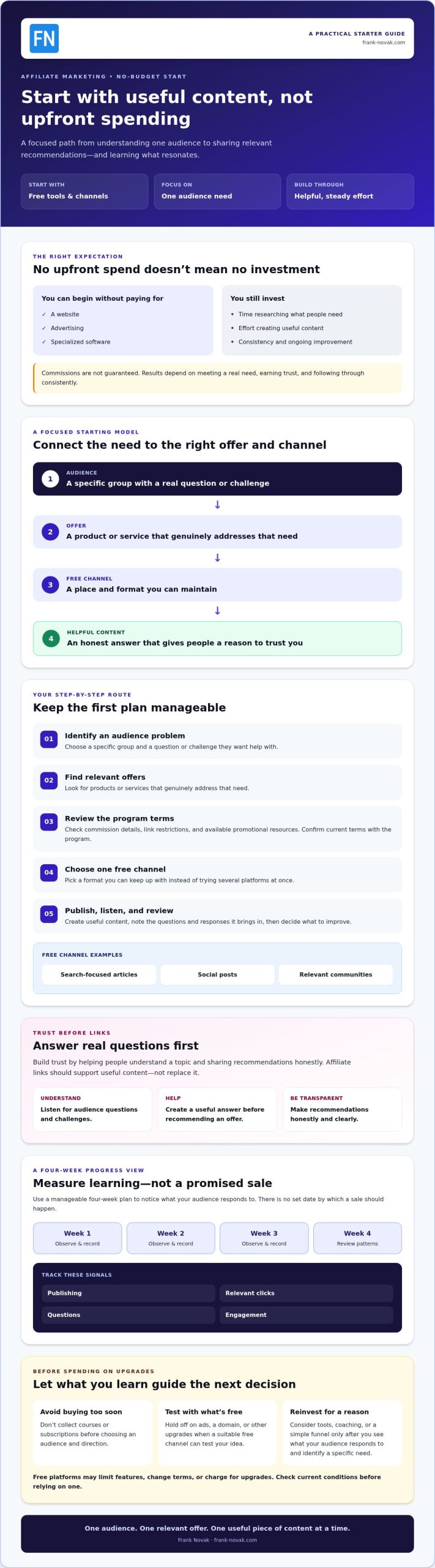
You can begin with free tools and a focused plan. You don’t need to try every platform or promote a long list of products. Start by choosing one audience, finding an offer that fits its needs, and creating helpful content that gives people a reason to trust your recommendations.
This guide walks you through the first steps: choosing a niche and affiliate offer, picking a place to publish without a website, and tracking your progress. You’ll also learn what to review before deciding whether to reinvest. The goal isn’t instant income. It’s to build a practical foundation, one useful piece of content at a time.
Key Takeaways
- Learn how to start affiliate marketing with no money by focusing on free tools, useful content, and steady effort.
- Match one audience need with a relevant offer and a content channel you can maintain.
- Build trust by answering real questions first, then use affiliate links to support your recommendations transparently.
- Follow a manageable four-week plan and track publishing, relevant clicks, questions, and engagement without expecting a sale by a set date.
- Learn how to decide whether optional tools, coaching, or a simple funnel could help once you’ve begun to see what your audience responds to.
Can You Start Affiliate Marketing With No Money? Set Realistic Expectations
Yes. A beginner can start affiliate marketing without paying for a website, ads, or specialized software. If you have access to an internet-connected device, you can use free publishing platforms and basic tools to learn the process. But “no money” doesn’t mean no investment. Researching an audience, creating useful content, and improving it all take time and consistent effort.
No-budget affiliate marketing means starting without upfront spending while investing your time in understanding an audience, creating helpful content, and improving steadily. Commissions aren’t guaranteed. Results depend on whether your content meets a real need, whether people trust your recommendations, and how consistently you follow through. For a neutral overview of how the model works, see this explanation of affiliate marketing.
Email can be one way to share useful information with an audience. This video introduces email marketing strategies for affiliate marketers:
What does starting with no money actually mean?
It means avoiding optional startup spending, not avoiding the work. You’ll still need to learn what your intended audience needs, choose a relevant offer, create content, and review how people respond. Free accounts and tools can help you begin, but they may limit features or usage, change their terms, or charge for upgrades. Check the current conditions before building your plan around a platform. First test whether your approach is useful, then consider paying for an upgrade only if a specific need emerges.
What should a beginner avoid paying for first?
If you’re learning how to start affiliate marketing with no money, focus first on audience research and original, helpful content. Publishing answers to common questions and listening to feedback can teach you more than collecting tools before you’ve chosen an audience or decided what to promote.
- Avoid buying several courses or subscriptions before choosing an audience and a direction.
- Don’t pay for advertising until you understand what content resonates and where your audience spends time.
- Hold off on a domain or other upgrades if a suitable free channel lets you test your idea.
Free doesn’t mean effortless. Treat learning, consistency, and honest evaluation as your early investments. Once you see which questions people respond to and which content earns relevant attention, you’ll have a stronger basis for deciding whether a paid option is worth considering.
Choose One Audience, Affiliate Offer, and Free Content Channel
A focused start is easier to manage than trying several niches, offers, and platforms at once. Use this process to turn a general interest into a testable plan:
- Identify an audience problem. Choose a specific group and a question or challenge they want help with.
- Find relevant offers. Look for products or services that genuinely address that need.
- Review the terms. Check how commissions work, where links can be shared, and what promotional materials are available.
- Choose one free channel. Pick a format you can maintain, such as search-focused articles, social posts, or thoughtful participation in relevant communities.
- Publish and review. Create useful content, then note the questions and responses it brings in before deciding what to improve.
How do you choose a niche without paid research tools?
Begin with a topic you understand or can research responsibly, then look for specific problems people are trying to solve. Search suggestions, public discussions, and direct questions can offer useful clues. Treat them as starting points, not proof of broad demand. A promising topic gives you room to answer questions helpfully and connect those answers to relevant offers without assuming what an audience wants.
How do you evaluate an affiliate offer?
Look beyond the commission. Review the product, intended audience, commission terms, link restrictions, and available promotional resources. Ask whether you can explain its value honestly and whether it fits the people you want to help. Program terms can change, so confirm current details directly with the affiliate program before sharing links. Don’t choose an offer just because its commission looks attractive.
Your channel should fit both the subject and your strengths. Search-focused articles can answer detailed questions and remain useful over time, while social posts can share concise tips and invite conversation. Community participation can help you understand recurring concerns, but contribute genuinely and follow each community’s rules rather than treating it as a place to drop links.
As you choose a channel, keep trust in view. The Federal Register’s Affiliate Marketing Rule concerns specific affiliate information-sharing practices, so don’t treat it as a general guide to affiliate-link disclosures. Check the rules relevant to your program and platform. For broader fundamentals, look for the guide Affiliate Marketing for Beginners: From Zero to Profitable. You can also explore Frank Novak’s affiliate marketing resources as you build your understanding.
Build Trust Before You Share Affiliate Links
People are more likely to value a recommendation when it helps them make a decision, not just click a link. Lead with the answer to a real question, explain your reasoning, and make an affiliate link a useful next step. A link can support strong content, but it can’t replace it.
If you’re learning how to start affiliate marketing with no money, begin with formats that don’t require special equipment or paid software. A tutorial can walk someone through a task, a comparison can clarify differences between options, and a problem-solving post can offer steps for a specific challenge. An honest product evaluation should explain what you know, what you don’t, and who the product may or may not suit. For a beginner-friendly overview of the model, see Rasmussen University’s What Is Affiliate Marketing?
What content can you create for free?
Start with one audience question, then make the answer practical. For example, if readers aren’t sure how to compare two tools, explain which criteria to consider and where each option may fit. Draft a simple article outline, record a short phone video, or write a clear social post. Use your own experience where you have it, and research carefully where you don’t. Never imply you’ve used a product or achieved a result if that isn’t true.
- Tutorials: Show a process in clear, manageable steps.
- Comparisons: Explain meaningful differences using accurate information.
- Problem-solving posts: Answer a focused question with practical suggestions.
- Product evaluations: Describe your basis for assessment and acknowledge limitations.
How should beginners disclose affiliate links?
Be open about your affiliate relationship. Use plain language to tell readers you may earn a commission if they buy through a link, and place the disclosure close to the recommendation so it’s easy to notice before someone engages with it. Don’t rely on a profile, footer, or vague wording to explain the connection.
Disclosure expectations can depend on the content and platform. Before publishing, check current Federal Trade Commission guidance and the rules of the platform and affiliate program you’re using. Make the disclosure understandable in the format you publish, whether that’s an article, video, or social post.
Once your content is helpful and transparent, you can expand how people find it. The guide How to Drive Traffic to Affiliate Links: The Strategic Guide for 2026 can help you explore channel-specific approaches. Keep the principle consistent: earn attention with useful answers, then offer relevant links as support.
Follow a Free 30-Day Plan and Measure Progress
Treat your first month as a structured test, not a deadline for earning. The goal is to create a manageable routine, publish useful work, and learn from the response. If you’re figuring out how to start affiliate marketing with no money, a simple plan can help you move forward without paying for tools before you know what you need.
What should you do during your first month?
Break the work into four practical stages. Adjust the pace to fit your schedule, but keep the steps in order so each stage builds on the last.
- Week one: Research and choose. Settle on one audience problem, check for a relevant affiliate offer, and choose one free publishing channel. Review the program’s current terms before planning content around it.
- Weeks two and three: Publish and listen. Create helpful answers to questions your audience may have. Invite genuine questions and pay attention to comments, replies, and conversations that reveal what needs explaining next.
- Week four: Review and adjust. Look at the signals available to you, then decide whether to improve your content, try a clearer format, or keep publishing on the same channel.
Track actions you can influence: how many useful pieces you publish, relevant clicks, audience questions, and engagement with your posts. Note which topics prompt meaningful responses. A simple spreadsheet or written log is enough to spot patterns without adding another tool to manage.
Leading indicators show whether you’re publishing and reaching the right people. Commissions are outcomes that may take time to appear or may not happen at all. If engagement is low, treat it as information rather than a verdict. Ask whether the content answers a specific need, whether the recommendation is clear, whether you’re publishing consistently, and whether the channel fits the audience.
When should you reinvest in tools or support?
Consider a paid tool only when you can name the bottleneck it would solve. For example, if a free platform’s limits are preventing a task you need to complete, compare those limits with the upgrade’s current features and terms. Don’t pay simply because a tool promises to make progress faster. First understand the work it would support and the value you expect from it.
As your publishing becomes more consistent, you may want to learn how a connected system can help manage follow-up. Automated Marketing Funnel: The 2026 Guide to Sustainable Business Growth explores that later-stage topic. A funnel or other paid resource isn’t a prerequisite for completing this first-month plan.
Use your review to choose one next step: improve a useful post, publish another answer to a recurring question, or continue testing your channel. If you want guidance applying the plan, explore Frank Novak’s online success coaching.
Turn Your No-Budget Start Into a Sustainable Affiliate Business
A sustainable affiliate business doesn’t require a complicated system from day one. Start with helpful content, a relevant offer, and a simple record of where you share links and what response you receive. As you learn what your audience needs, improve your process gradually instead of buying tools in anticipation of future success.
How can you grow without losing the no-budget discipline?
Track links and content manually at first, using a basic spreadsheet or notes. If a specific task becomes difficult to manage, identify the bottleneck before considering an upgrade. Compare the tool’s current limits with the task you need to complete, then decide whether the expected benefit justifies the cost.
As you publish more, keep the core work steady: provide audience value, make accurate recommendations, and disclose affiliate relationships clearly. An email list or simple funnel may be useful if you have a clear purpose, such as sharing follow-up resources with people who choose to hear from you. It isn’t a required first step. Add a system only when it supports a real need and you understand how you’ll use it.
This measured approach is central to how to start affiliate marketing with no money: test your ideas with accessible methods, learn from the response, and reinvest selectively rather than assuming that more software will create results.
Where can you get help with your next step?
You can keep learning and applying the process independently. If you’d benefit from structured guidance, Online Success Coaching may be worth exploring as an optional way to get support applying what you’ve learned. Before choosing any coaching, consider what you want help with, what the support covers, and whether it fits your needs.
The ClickBank Super Funnel is another resource to evaluate later, not a prerequisite for starting. Before deciding whether it fits your plans, verify its current features, eligibility, and costs. You can build your foundation without it.
For now, choose one next action you can complete: improve a piece of content, answer a question from your audience, or review how you’re tracking shared links. Small, considered steps can help you build a process that remains useful as your experience grows.
Take Your First Step Toward Sustainable Growth
A practical answer to how to start affiliate marketing with no money is to begin small: focus on one audience, choose an offer that fits its needs, and publish helpful content through a free channel. Then review what people respond to and use those signals to decide what to improve. A commission may take time, and it isn’t guaranteed, but consistent learning gives you a clearer foundation for your next move.
You don’t need to build a complicated system or purchase every tool before you begin. Keep your recommendations honest, make your content useful, and reinvest only when you understand what would help. Frank Novak focuses on affiliate marketing and business automation, and offers Online Success Coaching as an optional source of support. You can also continue learning independently at your own pace.
Your first step can be simple: choose one question you can help answer, then create something useful for the people asking it. Progress starts with that decision.
Explore Frank Novak’s online success coaching if you’d like structured guidance as you put your plan into practice.
Frequently Asked Questions
Can you really start affiliate marketing with no money?
Yes, you can begin without an upfront budget by using a free publishing channel and tools you already have access to. You’ll still invest time in learning about an audience, creating useful content, and reviewing what resonates. Free services may have limits or paid upgrades, so check their terms. Starting without spending doesn’t guarantee commissions, but it lets you test an idea before deciding whether to invest.
How do beginners make money with affiliate marketing?
Beginners can earn commissions by sharing tracked links to relevant products or services and helping an audience make informed choices. A commission is usually credited when someone completes an action defined by the affiliate program, such as making a qualifying purchase. Terms vary, so read them carefully. Focus on useful content and honest recommendations rather than treating every interaction as a sales opportunity. Earnings aren’t guaranteed.
What is the best free platform to start affiliate marketing?
There isn’t one best platform for everyone. Choose a free channel that suits your topic, audience, and preferred format. Search-focused articles can address detailed questions, social platforms can support short posts or videos, and relevant communities can help you understand what people are asking. Before publishing affiliate links, check both the platform’s rules and the affiliate program’s terms. Start with one channel you can use consistently.
Do you need a website to start affiliate marketing?
No, a website isn’t essential for getting started. Depending on the program’s rules, you may be able to publish content on social media or another free platform instead. A website can offer more control over your content, but it also takes time to maintain and may involve costs. Begin where you can reach your intended audience, and check the latest link-sharing requirements before choosing a channel.
How long does it take to make your first affiliate commission?
There’s no reliable timeline for a first commission. It depends on factors such as whether your content reaches the right audience, how well it answers their needs, and the affiliate program’s commission conditions. Some beginners may wait a while, and others may not earn a commission. Track actions you can influence, such as publishing useful content and relevant clicks, rather than treating a specific date as a promise.
Can you promote affiliate links on social media for free?
Often, social media provides free ways to publish content, but whether and where affiliate links are allowed depends on the platform and program. Check their current rules before posting, including any restrictions on link placement or account types. Make the content useful on its own, explain your connection to the offer clearly, and avoid repeatedly posting links where they aren’t welcome. Platform policies can change, so review them regularly.
Do you have to disclose affiliate links in the United States?
If you have a material connection to a brand, such as the possibility of earning a commission, U.S. Federal Trade Commission guidance calls for clear disclosure. Use plain language near the recommendation or link so readers can notice it before engaging. Don’t rely only on a profile or footer, or use wording that may be unclear. Check current FTC guidance and the rules of each platform you publish on.
What should you spend money on first when starting affiliate marketing?
You may not need to spend anything at first. Use available free tools to test whether your content helps an audience and whether your chosen channel fits. If you later face a specific bottleneck, compare the task you need to solve with the free option’s limits before considering an upgrade. Avoid buying multiple tools or courses without a clear purpose. Spend selectively, based on what you’ve learned, not on promised results.

Article by
Frank Novak
Frank Novak is an online marketing professional and coach who focuses on affiliate marketing and business automation. Through his website, frank-novak.com, he shares insights and strategies for leveraging social media platforms like Facebook to generate traffic and commissions.
Affiliate / Sponsored Content Disclaimer
This [website/post] contains affiliate links. If you click through and make a purchase, we may receive a commission at no additional cost to you. We only recommend products or services we believe will add value to our readers.