

The highest commission doesn’t automatically make a health and wellness affiliate program the best choice. In 2026, programs in this niche tend to offer commissions of 15% to 40%, and a cookie duration of 60 days or longer can give shoppers more time to research before a purchase is credited. Product quality, brand reputation, and clear promotion terms matter just as much as the rate.
If you’re comparing programs, you need a clear way to assess potential earnings without putting your audience’s trust at risk. In affiliate marketing in the health and wellness niche, the right fit depends on how commissions are calculated, how long referrals are tracked, and whether you can recommend the product responsibly.
This guide shows you how to assess program terms, choose content formats for your audience, and promote wellness products ethically. Market growth may create opportunities, but thoughtful recommendations and clear disclosures are essential to building a sustainable affiliate business.
Key Takeaways
- Compare programs by more than commission: weigh cookie duration, product quality, and brand reputation together.
- Understand how commission structures and referral windows affect potential earnings before choosing a program.
- Build trust with clear affiliate disclosures and careful, supportable health-product claims.
- Choose content formats that let you explain products clearly and fit how your audience prefers to learn.
- Use market growth as context, then focus your strategy on relevant recommendations and consistent, audience-centered content.
1. Choosing affiliate programs by commission, cookie duration, product quality, and brand reputation
Choose programs by weighing audience fit, commission terms, and confidence in the product. In affiliate marketing in the health and wellness niche, a high commission percentage means little if the product doesn’t suit your readers. Start by matching each offer to a need your content already addresses, such as home workouts, nutrition routines, or stress management.
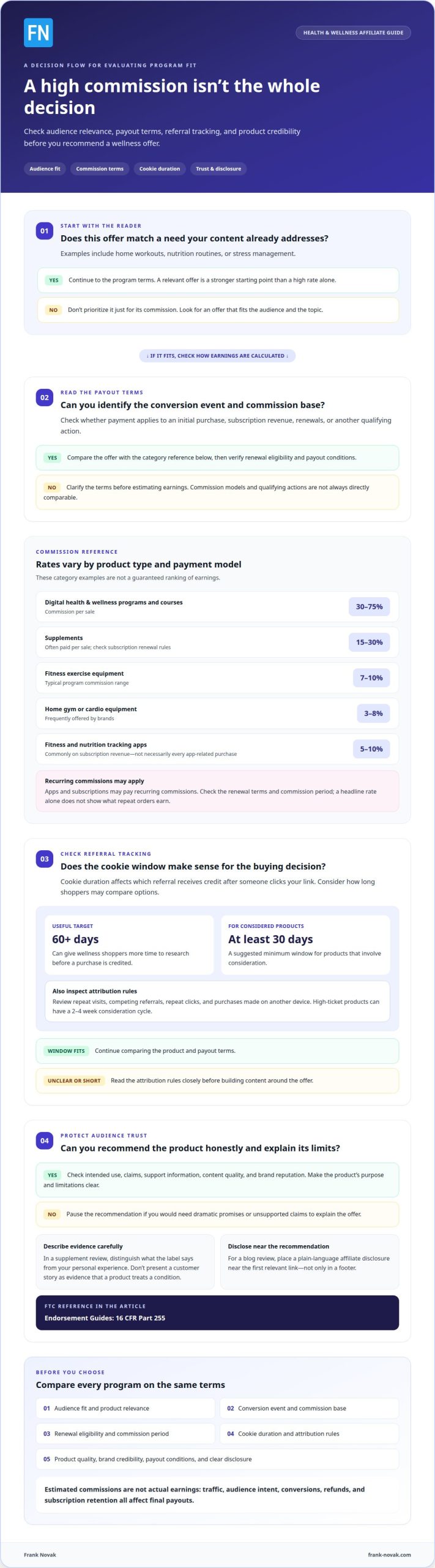
To choose profitable products, compare the commission, cookie duration, product quality, and brand reputation together. Digital health and wellness programs and courses commonly pay 30 to 75 percent per sale, while supplements commonly pay 15% to 30%. Fitness exercise equipment programs typically offer 7% to 10%, and home gym or cardio equipment brands frequently offer 3% to 8%.
These figures describe different product categories, not a guaranteed ranking of earnings. A supplement may offer a higher percentage than fitness equipment, but your audience may trust a practical equipment review more. Apps and subscriptions may offer recurring commissions, so assess renewal terms as well as the initial conversion.
Cookie duration matters when people compare options before buying. A 60-day-or-longer cookie is a useful target for health purchases that involve weeks of research; programs for considered products should also have at least a 30-day window. Read the program’s attribution terms, including how it handles repeat visits and competing referrals, before building content around it.
To assess quality, examine the product’s intended use, claims, support information, and brand reputation. Ask whether you could explain the offer honestly in a review without relying on dramatic promises. A credible recommendation makes the product’s purpose and limitations clear, particularly for supplements or programs focused on self-compassion and healing.
Audience fit also affects customer value over time. Readers following a beginner strength-training series, for example, may value equipment recommendations more than a meditation subscription. If they return for ongoing guidance, an app or subscription with recurring commissions may fit better than a one-time purchase. Compare customer retention and the commission period, not just the first sale.
Across supplements, fitness products, mental health programs, and wellness apps, the key differences are the product and its payment structure. Supplements and physical fitness products usually pay per sale, while apps and subscriptions may offer recurring commissions. Evaluate mental health and self-compassion programs as you would other digital offers: check relevance, content quality, brand credibility, and whether your coverage reflects what the program actually provides.
2. Affiliate commission rates and cookie durations
A commission rate only tells part of the earnings story. Compare the payout base, referral window, payment schedule, and qualifying actions before estimating what a program could generate. For example, fitness and nutrition tracking apps commonly pay 5% to 10% on subscription revenue, not necessarily on every app-related purchase.
That distinction matters when comparing offers. Ask whether commissions apply to the initial subscription, renewals, or both. Then check the terms for cancellations, refunds, minimum payout thresholds, and payment timing.
Programs also use different commission models. These examples aren’t directly comparable: referrals, patients, and product sales are different conversion events with different responsibilities.
High-ticket fitness affiliate commissions can range from single-digit percentages to 50% or more. The larger rate may apply to a particular offer or transaction, so identify exactly what qualifies before forecasting payouts. For supplements, distinguish a one-time sale from a recurring subscription; the renewal rules determine whether repeat orders create additional earnings.
Cookie duration affects which referral receives credit after someone clicks your link. High-ticket products can have a 2 to 4 week consideration cycle, so compare that buying window with the program’s attribution period. Review how the program handles repeat clicks, referral attribution, and purchases made on another device. These details can matter as much as the headline commission.
Build a simple comparison using the same criteria for every program: conversion event, commission base, renewal eligibility, cookie duration, and payout conditions. This keeps your calculations useful instead of treating unlike offers as equivalent.
Separate estimated commissions from actual earnings. Traffic, audience intent, conversion rates, refunds, and subscription retention all affect final payouts. Track clicks and approved conversions by content format, then identify which offers generate relevant sales, not just attention. Use those records to refine your program mix over time.
If you’re building a broader online business alongside affiliate promotions, Never Succeed Online resources can support your next steps.
3. Ethical health-product promotion and FTC disclosures
Before promoting a wellness product, check that its purpose and claims align with your content and values. In a supplement review, distinguish what the label says from your personal experience. Don’t present a customer story as evidence that a product treats a condition. A clear, specific description helps readers understand your recommendation without overstating its effects.
Disclosure belongs close to the recommendation. According to the U.S. Government Publishing Office, the FTC’s Endorsement Guides are codified at 16 CFR Part 255. For a blog review, place a plain-language affiliate disclosure near the first relevant link, not only in a footer. In a social post, make the relationship clear within the post itself so readers see it before acting.
Apply the same standard across formats. A video description, email, product comparison, and social caption each need a disclosure near the endorsement. For example: “I earn a commission if you apply through my link, but this does not cost you anything extra.” Avoid vague labels that readers may not recognize as affiliate disclosures.
Values alignment means looking beyond a brand’s wellness language. Consider whether the product’s intended audience, ingredients, claims, and sales approach fit your principles. If a supplement promotion relies on fear or promises dramatic change, don’t repeat those claims as your own. A genuine endorsement explains why you selected the item and who may find its stated purpose relevant.
Proprietary blends need particular care because the blend name may not reveal the amount of each ingredient. Review the product label and available brand materials, then describe only what they support. Don’t imply that a named blend proves effectiveness. If formula details are unclear, avoid ingredient-specific claims and don’t present speculation as fact.
Brand reputation and product quality matter when promoting responsibly. Read the product description, return terms, ingredient information, and customer-support details provided by the brand. Check that its marketing claims are consistent with the product information. If a landing page makes a stronger promise than the label, don’t repeat that promise in your review.
Keep a record of the information behind each recommendation. Save the product page, label, and program guidance when you publish. If the brand changes its claims or product details, update your content and notes. This helps keep older reviews aligned with the offer readers see now.
Separate personal experience from general advice. Saying “I found this routine convenient” describes your experience; it doesn’t show that the product will have the same effect for others. That distinction helps you promote wellness products honestly and lets your audience make informed decisions.
4. Affiliate content formats and earnings
Choose a format that answers your audience’s question. A comparison article can help readers choosing between fitness trackers, while a tutorial can demonstrate how to use a wellness app. A short social post might introduce a product and direct interested readers to a detailed review. Each format serves a different stage of the buying journey.
Reviews build credibility when they explain how you reached your conclusions. Describe the product’s intended use, what you assessed, and who may find it relevant. A resistance-training guide, for example, can compare equipment features and explain how each option fits a home routine. Place affiliate links near the relevant recommendations and disclose the relationship clearly.
Useful reviews don’t need sweeping claims. Include concrete details such as setup, available features, or how a product fits into a routine. Distinguish your experience from general information, especially when discussing wellness products. If you review a meditation app, describe the features you used rather than claiming every reader will have the same outcome.
You can combine formats without repeating the same message everywhere. A blog post might explain a product in depth, an email can share a concise use case, and a social post can answer one focused question. A series could introduce a fitness tool, compare options, and then show how it fits into a routine.
Influencers with specialized knowledge can make complex wellness topics easier to understand. Micro-influencers are described as having 5,000 to 50,000 followers, and campaigns featuring them yield higher conversion rates. Audience relevance matters: a creator focused on strength training can present fitness products in context, while a general lifestyle post may offer less product-specific guidance.
Earnings depend on visitors, audience intent, conversions, and the commission terms already discussed. Health and wellness creators with 10,000 to 50,000 monthly visitors typically earn $500 to $5,000 per month from affiliate programs. Treat that range as context, not a forecast for an individual channel. Track clicks and approved conversions by platform and content format to see which topics lead to relevant purchases.
A 10% commission rate alone doesn’t show whether a format is performing well. Compare the resulting conversions with the effort required to produce each piece. If a detailed review earns attention but few qualified clicks, clarify its recommendation and link placement. If a practical tutorial helps readers act, build related content around the questions it answers.
Consistency builds trust. Keep a record of published reviews, links, disclosures, and performance by platform. Update older content when product details change, and use audience questions to plan your next review or tutorial. This cycle makes your content more useful and ties recommendations to real reader needs.
5. Health and wellness affiliate market growth
To start a health and wellness affiliate website or social media business, choose one audience need, one primary platform, and a focused content theme. Publish consistently on that channel for 90 days, then use reader questions and engagement to guide your next topics. Build around useful information first, then add relevant affiliate recommendations.
The market’s scale helps explain why focused content can create opportunities. The global health and fitness industry was valued at $96.7 billion in 2022. The global health and wellness market is projected to exceed $7 trillion by 2027. These figures describe broad markets, not affiliate revenue, so they don’t predict what an individual creator will earn.
Growth projections also span different product categories. The global dietary supplements market was projected to reach $230 billion by 2027, while the health and wellness landscape was expected to grow by 8.6% per year through 2027. For a publisher, the practical takeaway is to choose a specific audience and explain how relevant products fit its needs.
Market growth can create opportunities for digital programs, physical products, apps, and subscriptions, but each calls for a different content approach. A fitness audience might need equipment comparisons, while readers exploring nutrition may value clear ingredient explanations. A recurring subscription can generate ongoing commissions; a one-time product sale follows a different revenue pattern.
Build reader relationships by making recommendations useful beyond the purchase. A beginner fitness site, for example, could pair a training guide with an equipment review and a follow-up article on setup. Track which topics lead to meaningful clicks and conversions, then develop related content instead of adding unrelated offers.
A 40% commission may look attractive, but market growth doesn’t make every offer appropriate. Check whether the product serves the audience, whether its claims fit the evidence presented, and whether the commission structure suits your content. Sustainable opportunities come from matching useful recommendations with clear explanations, not from chasing the largest percentage.
As your channel develops, use performance data to refine its direction. Compare how readers respond to reviews, guides, and social posts, then focus on formats that help them decide. A consistent publishing rhythm and a clear audience focus provide a stronger foundation than broad, scattered promotion.
Frank Novak
If you’re ready to give your online business a more structured direction, Frank Novak offers Online Success Coaching, ClickBank Super Funnel, Never Succeed Online, and Clickbank Profit Club. These offerings support people developing their knowledge and approach to online success, including those considering affiliate promotions as part of a broader business. Choose a next step that fits your current goals, whether you’re shaping your direction or developing your online activity.
Affiliate marketing still depends on your audience, product choices, and content. A clear business strategy can help connect those decisions instead of treating each promotion as a separate task. Explore Frank Novak’s offerings to consider how they fit your online goals, and contact Frank Novak to take the next step.
Choose a Sustainable Next Step
Your next move can be small and deliberate. Choose one audience need you understand, then plan content around the questions people ask before making a wellness decision. As you build affiliate marketing in the health and wellness niche, let audience trust guide the opportunities you pursue and how you present them. A focused direction helps keep recommendations relevant as your content develops.
If you’re ready to connect your affiliate ideas to a broader online strategy, Frank Novak’s offerings support people developing an online business. Explore a next step that fits your goals and current stage while keeping the practical work of serving an audience consistently in view.
Keep learning, make genuine recommendations, and build at a sustainable pace. Each useful piece of content can help you grow with greater clarity and confidence.
Frequently Asked Questions
Quick Answer: What Are the Best Health and Wellness Affiliate Programs?
The best programs fit your audience, content expertise, and product-quality standards. A fitness educator, for example, might focus on equipment or training apps, while a nutrition writer may consider supplement programs. Before applying, review the program’s approval rules, product information, and attribution terms. An offer you can explain accurately is usually a better fit than an unrelated program with an appealing headline rate.
How Much Can Creators Really Earn?
Earnings depend on qualified visitors, audience intent, the offer, and the number of referrals that become approved sales. A page with steady traffic may still earn little if readers aren’t ready to buy or the recommendation doesn’t meet their needs. Consider gross commissions separately from cancellations, refunds, and content creation time. Use your tracked clicks and approved conversions to assess performance instead of projecting from another creator’s results.
What is affiliate marketing in the health and wellness niche?
Affiliate marketing lets you earn a commission by referring readers to relevant health or wellness products through tracked links. A creator publishing home workout guides, for example, might recommend equipment suited to the routines discussed. The creator earns when a referral meets the program’s qualifying conditions. This model connects useful content with product discovery, so recommendations should be relevant and clearly distinguished from independent health guidance.
Which health and wellness affiliate programs are best in the United States?
The right program in the United States depends on your audience’s needs and what you can credibly cover. Compare digital programs, fitness products, apps, and supplements by intended users and program terms. A site about beginner exercise, for instance, may serve readers better with practical training resources than a collection of unrelated wellness offers. Review eligibility, promotional rules, and product details before creating content around a program.
What commission rates and cookie durations do wellness affiliate programs offer?
Rates and referral windows vary by program and product category, so check the specific terms rather than relying on a niche-wide average. Find out whether the commission applies to an initial purchase, a subscription renewal, or another qualifying action. Also check how long a referral remains attributable after a click and how repeat clicks are handled. These details explain why programs with similar headline rates can produce different results for the same audience.
What are the FTC disclosure rules for health and wellness affiliate marketing?
Make the financial relationship clear where readers encounter your recommendation. The FTC’s Endorsement Guides are codified at 16 CFR Part 255, according to the U.S. Government Publishing Office. A straightforward disclosure could say, “I earn a commission if you apply through my link, but this does not cost you anything extra.” Place it beside the relevant endorsement, and include it in each format where the affiliate relationship may not otherwise be obvious.
How can affiliates evaluate supplement safety, quality, and credibility?
Start with the product label, ingredient information, intended use, and the brand’s published claims. If the product contains a proprietary blend, don’t infer individual ingredient amounts from its name. Compare claims on the label and sales page, and avoid repeating promises that the materials don’t support. Record the product information used for your review so you can update it if the brand later changes the details.
What are the risks of promoting health and wellness products as an affiliate?
Key risks include damaging audience trust, repeating unsupported product claims, and leaving outdated information in older content. A social post, for example, may continue circulating after a product page changes, leaving your recommendation out of step with the current offer. Disclosures can also be missed if they’re separated from the endorsement. Keep claims measured, make affiliate relationships clear, and revisit published content when product information changes.

Article by
Frank Novak
Frank Novak is an online marketing professional and coach who focuses on affiliate marketing and business automation. Through his website, frank-novak.com, he shares insights and strategies for leveraging social media platforms like Facebook to generate traffic and commissions.
Affiliate / Sponsored Content Disclaimer
This [website/post] contains affiliate links. If you click through and make a purchase, we may receive a commission at no additional cost to you. We only recommend products or services we believe will add value to our readers.