

Did you know that the FTC can now impose civil penalties of up to $51,744 for a single undisclosed affiliate post? It’s a sobering reality that makes many creators hesitate when they consider automating social media for affiliate promotion. If you’ve ever felt the sting of a sudden Facebook account ban or spent hours manually posting links only to see zero engagement, you aren’t alone. Most marketers agree that while the dream of passive income is alluring, the technical hurdles and strict platform policies often feel like navigating a minefield without a map.
I’m here to show you that there’s a more reliable way to scale your efforts without losing your peace of mind. This guide will teach you how to build a professional, hands-off traffic engine that respects platform rules while driving consistent commissions. We’ll explore the latest 2026 automation tools and the specific funnel strategies that turn automated clicks into long-term growth. If you’re ready to move away from the daily grind of manual updates, you’ll find a clear roadmap here. We’ll cover everything from mastering Meta’s new Partnership Ads to setting up a ClickBank Super Funnel that works while you focus on the bigger picture of your online success coaching journey.
Key Takeaways
- Understand why the old manual posting methods are failing in 2026 and how a hybrid strategy of human oversight and machine execution can reclaim your time.
- Identify the essential features to look for when automating social media for affiliate promotion to ensure your software is both effective and platform-compliant.
- Master the use of “Bridge Pages” to safeguard your affiliate links and protect your Facebook accounts from the aggressive spam filters that often trigger bans.
- Learn how to move beyond generic AI prompts by training digital agents to capture your specific mentorship tone for more authentic audience engagement.
- Explore how to seamlessly link your automated traffic sources to the ClickBank Super Funnel for a professional, results-oriented conversion process.
The Shift from Manual to Automated Social Media Promotion
Back in 2019, an affiliate marketer could reasonably expect to see results by spending a few hours each day manually sharing links and engaging with groups. In the 2026 digital environment, that “manual grind” has become a recipe for burnout rather than a path to profit. High-speed algorithms and AI-driven feeds now prioritize a level of consistency and volume that a single person simply cannot maintain without help. If you’re still trying to do everything yourself, you’re likely finding that your reach is stagnant while your competitors seem to be everywhere at once.
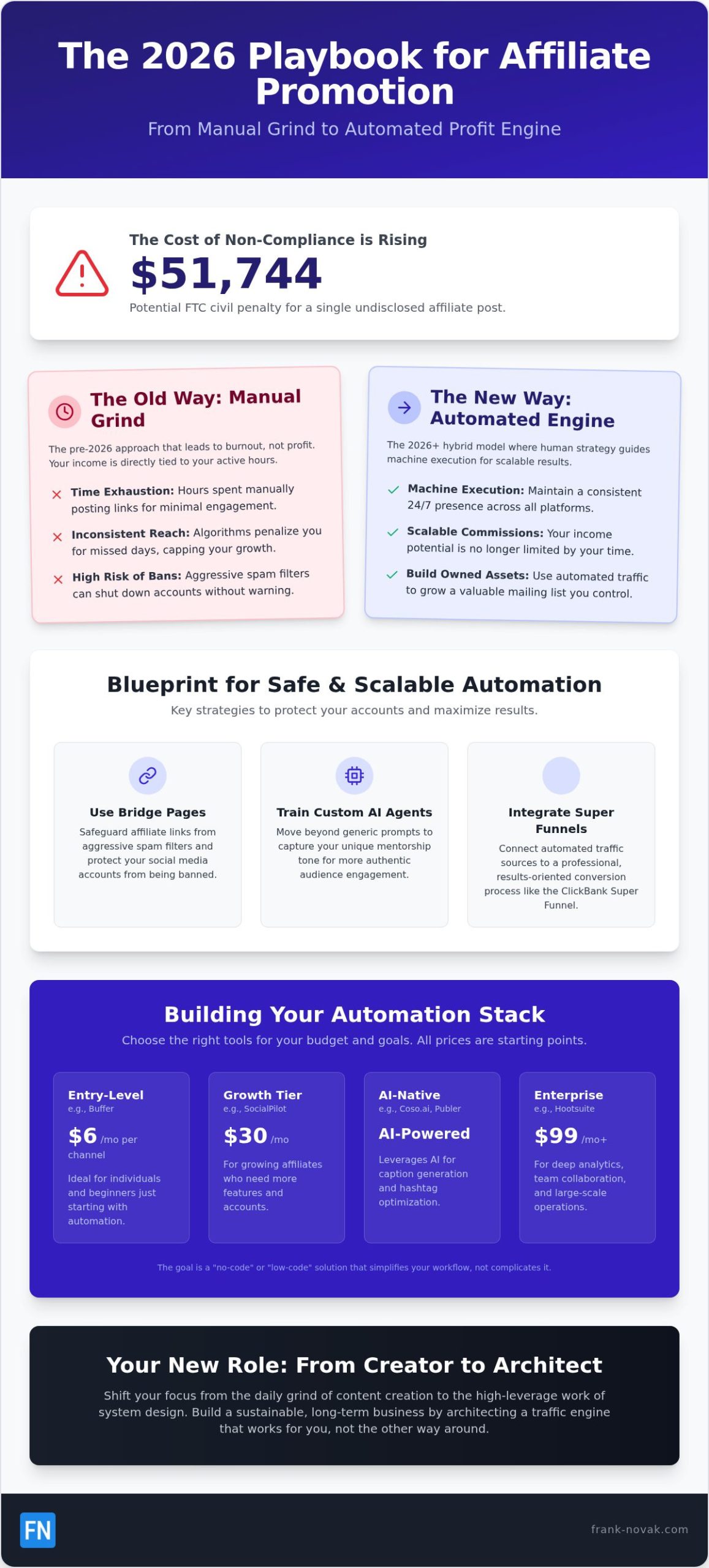
Modern success requires a shift toward a hybrid model. This isn’t about letting bots run wild; it’s about human strategy meeting machine execution. By automating social media for affiliate promotion, you position yourself as the architect of a system rather than a laborer in the digital fields. This approach treats social media marketing as a high-leverage “top of funnel” traffic source. Automation allows you to maintain a presence across multiple platforms simultaneously, ensuring you’re always visible to potential customers without needing a massive team to manage the workload.
The Problem with the Manual Affiliate Model
The most immediate issue with manual work is time exhaustion. You simply cannot manually post your way to a six-figure income because there aren’t enough hours in the day to reach the necessary audience size. Beyond physical limits, there’s the “ghosting” effect on social algorithms. If you miss a few days of posting because life gets in the way, platforms like Facebook and Instagram often penalize your future reach. This inconsistency creates a scalability cap, where your income is strictly tied to your active minutes. If you aren’t clicking, you aren’t earning, which is the opposite of the freedom affiliate marketing promises.
The 2026 Vision: Your Social Media as a Profit Engine
Transitioning to an automated system changes your daily role from content creator to system architect. Instead of worrying about what to post at 2:00 PM, you focus on the logic of your funnel and the quality of your leads. A core part of this vision involves using automated social traffic to build a mailing list. This ensures that even if a social platform changes its rules, you still own your audience data. This methodical approach aligns with the Online Success Coaching philosophy of building sustainable, long-term growth. When you view your social accounts as components of a larger engine, you gain the clarity needed to scale your commissions with significantly less active work.
Building Your Automation Stack: Tools and Frameworks
Choosing the right tools for your business is a balance between technical capability and your own comfort level. You don’t need a massive enterprise budget to start automating social media for affiliate promotion effectively. In fact, many successful affiliates begin with lean setups that grow alongside their commissions. When you evaluate software, your primary criteria should be platform compliance, ease of use, and the ability to include mandatory legal notices. For instance, ensuring your tools allow for clear placement of the FTC’s Affiliate Disclosure Rules is non-negotiable for long-term account safety.
Your budget will likely dictate your starting point. Entry-level tools like Buffer offer per-channel pricing from $6 per month, while more robust platforms like SocialPilot start at $30 per month. If you’re looking for enterprise-grade features, Hootsuite and Sprout Social offer deep analytics but come with higher monthly commitments starting around $79 to $99. The goal is to find a “no-code” or “low-code” solution that doesn’t require you to be a developer to see results. If a tool feels too complex, it will likely become another hurdle rather than a help.
Content Schedulers and API-Based Posting
API-based automation is a method where your scheduling software communicates directly with social platforms to publish your content automatically at a set time. This is the gold standard for efficiency. Schedulers like Buffer and Hootsuite are reliable choices, but 2026 has seen the rise of AI-native options like Coso.ai and Publer. These newer tools often include built-in AI for caption generation and hashtag optimization. While API tools save hours, some affiliates prefer manual-assisted posting for highly sensitive content to ensure every detail looks perfect before it goes live. This extra step can sometimes prevent the “robotic” feel that triggers platform spam filters.
No-Code Workflows: Connecting the Dots
If you want to move beyond simple scheduling, no-code platforms like Zapier or Make allow you to connect your affiliate dashboard to your social accounts. For example, you can set a trigger so that whenever a new offer is released on ClickBank, a draft post is automatically created in your scheduler. This creates a “content loop” where one piece of high-quality content is automatically repurposed and formatted for five different platforms. You can even automate the “link in bio” update process, ensuring your most current offers are always accessible. If you find yourself overwhelmed by these technical steps, seeking online success coaching can help you streamline your setup and focus on the strategies that actually move the needle.
Safe Automation: Navigating Facebook Compliance and Bans
The primary reason affiliate accounts face sudden bans is often misunderstood. It isn’t just the fact that you’re using software; it’s the pattern of “automated link spam” that triggers red flags. When you post the same raw affiliate link across multiple pages or groups in a short window, Facebook’s security systems identify you as a bot. To stay safe while automating social media for affiliate promotion, you must focus on appearing as a helpful creator rather than a link-sharing machine. This requires setting realistic posting frequencies that mimic human behavior. If a real person wouldn’t post fifty times an hour, your software shouldn’t either.
One of the most effective ways to protect your accounts is through the use of “Bridge Pages.” Instead of sending your automated traffic directly to an affiliate offer, you send users to a simple, high-quality landing page on your own domain. This adds a layer of authority to your links and provides a better experience for the user. It also allows you to capture email addresses, turning a single social click into a long-term asset. By prioritizing these human-like engagement patterns, you build trust with both your audience and the platform’s algorithm.
The 5-Step Compliance Checklist for Automated Posts
If you want to ensure your content stays live and your reach remains high, follow this simple checklist for every automated campaign:
- Step 1: Never post raw affiliate links directly in the caption. Always use your own domain or a bridge page.
- Step 2: Use AI to vary your “hook” and “call to action” for every single post so no two updates look identical.
- Step 3: Implement a significant “delay” between cross-platform shares to avoid triggering bot detection.
- Step 4: Include a unique image or video for each post to satisfy the algorithm’s preference for original content.
- Step 5: Always include a clear disclosure to comply with legal requirements and maintain transparency with your followers.
Bypassing the Facebook Ad Account Ban Trap
If you plan to run paid traffic, you’ll need to “warm up” your accounts first. Jumping straight into aggressive ads with a fresh account is a common mistake that leads to immediate bans. Use organic automation to build a history of normal, value-driven behavior. This establishes your account as a legitimate entity before you ever spend a dollar on ads. For those looking for a more detailed strategy on this process, you can refer to a Facebook Ads for Affiliate Marketing guide for deep-dive compliance. Additionally, be cautious with automated comments and messages. Ensure your replies are helpful and varied, as repetitive messaging is a fast track to a shadowban or permanent restriction. When you treat automating social media for affiliate promotion as a way to scale your mentorship rather than a shortcut to spam, your accounts will remain healthy and profitable.
Content Creation: Using AI Agents for Authentic Promotion
If you’ve ever experimented with AI, you likely know that generic prompts often result in robotic, uninspiring content. When automating social media for affiliate promotion, the goal isn’t just to produce volume; it’s to maintain the approachable mentorship that builds trust with your audience. Modern AI agents allow you to move beyond simple text generation by training them on your specific brand voice. By feeding your AI previous successful posts or your core business philosophy, you ensure that every automated update sounds like it came from a seasoned guide rather than a faceless corporation.
While the speed of AI is impressive, relying on a 100% hands-off approach is usually a mistake. A “Human-in-the-Loop” review process ensures that your content remains accurate and compliant with platform changes. Even a five-minute daily check can prevent the kind of minor errors that erode audience confidence. This balance allows you to enjoy the efficiency of automation while keeping the personal touch that characterizes professional Online Success Coaching programs.
Designing Your AI Content Agent
To get the best results, you should set clear parameters for an educational and supportive tone. Instead of asking for a “sales post,” ask the AI to explain the solution to a specific pain point while offering encouragement. Creating templates is another powerful strategy. You can build a structure where the AI fills in specific product data from your affiliate dashboard into a pre-approved, high-converting format. When you’re crafting your instructions, remember that a strong prompt for affiliate empathy should focus on acknowledging the reader’s current struggles before gently introducing a helpful resource as a logical next step. This shift in perspective turns a standard pitch into a piece of valuable advice.
Automating Visuals and Short-Form Video
Short-form video has become essential for reach, and tools like Canva Bulk Create or AI video suites make it easier than ever to produce. You can now generate dozens of Reels or TikToks using AI avatars and automated b-roll generators, allowing for maximum passive reach through “faceless” affiliate channels. If you use these tools, consistency in quality control becomes your main priority. By scheduling these assets across your platforms, you create a steady stream of visual content that captures attention without requiring you to be on camera every day. This systematic approach ensures your message reaches the right people while you focus on higher-level business strategy.
The Final Integration: Linking Social to Your Super Funnel
Generating a surge of visitors is a significant milestone, but traffic without a destination is simply a missed opportunity. If you’ve successfully implemented a system for automating social media for affiliate promotion, your next priority is ensuring that traffic lands somewhere designed to convert. Sending automated clicks directly to a sales page often results in low retention and lost leads. Instead, you should direct your audience into a professional environment like the ClickBank Super Funnel. This system acts as your automation partner, handling the complex tasks of lead nurturing and follow-up while you focus on maintaining your social engine.
To scale from your first $1,000 to a sustainable six-figure business, you must understand exactly which automated posts are driving your sales. By using unique tracking IDs or UTM parameters for different platforms, you can identify which content resonates most with your audience. This data allows you to double down on what works and phase out what doesn’t. When you treat your social media as a data-driven traffic source, you move away from guesswork and toward a predictable, scalable income model.
Capturing Leads on Autopilot
In 2026, the most effective strategy for “Social-to-List” conversion involves using automated DM responders. If a user comments on your post or sends a message, tools like ManyChat can instantly deliver a lead magnet or a link to your bridge page. This immediate interaction captures the lead’s attention while their interest is at its peak. By connecting these social triggers to your email autoresponder, you build a mailing list that grows 24/7 without your direct involvement. This creates a safety net for your business, ensuring you can reach your audience even if social algorithms change tomorrow.
Next Steps: Coaching and High-Ticket Growth
While automated systems are excellent for building a foundation, there often comes a point where you need personalized guidance to reach the next level. If you find yourself hitting a plateau or feeling overwhelmed by technical choices, an Online Success Coaching program can help you refine your automation stack. A coach provides the objective perspective needed to identify bottlenecks in your funnel and optimize your conversion rates for high-ticket growth. It’s about moving from a “set and forget” mentality to one of continuous improvement. If you’re ready to stop the manual grind and start building a professional traffic engine, now is the time to integrate these systems and secure your digital future.
Step Into Your Automated Future
Transitioning from a manual workflow to a streamlined, tech-driven system is the most effective way to reclaim your time while increasing your earnings. You’ve learned that success in 2026 relies on a hybrid approach where human strategy guides AI execution. By prioritizing Facebook compliance through bridge pages and using AI agents to maintain your unique voice, you can build a traffic engine that operates without constant supervision.
Automating social media for affiliate promotion isn’t just about speed; it’s about building a professional funnel that leads to sustainable growth. As a seasoned practitioner active online since 2018, I’ve designed these strategies to help you navigate complex platform rules with confidence. This approach provides the step-by-step mentorship needed to move from active daily work to a business trusted by entrepreneurs seeking a reliable digital future.
Ready to scale? Discover how the ClickBank Super Funnel automates your commissions today.
The path to a six-figure affiliate business is now clearer than ever. With the right tools and a solid strategy in place, you have everything you need to start building your engine today. I’m excited to see the progress you’ll make as you step into this new professional landscape.
Frequently Asked Questions
Will automating social media get my affiliate accounts banned?
Automating your social media won’t lead to a ban if you prioritize platform compliance and human-like engagement. Most bans occur when marketers use software to spam raw affiliate links, which triggers security filters. If you focus on providing value and use a bridge page for your links, you can scale safely. This methodical approach is a core part of the mentorship provided through Online Success Coaching to ensure long-term account health and stability.
Do I need to know how to code to automate my affiliate marketing?
You don’t need any coding knowledge to start automating social media for affiliate promotion. Modern no-code tools like Zapier, Make, and various content schedulers use simple visual interfaces to connect different platforms. If you can navigate a standard website, you can set up these workflows. Most successful affiliates focus on high-level strategy rather than technical programming, using ready-made systems like the ClickBank Super Funnel to handle the complex backend work.
What is the best social media platform for affiliate automation in 2026?
Facebook remains a primary traffic source for affiliate automation due to its robust advertising tools and community features. While other platforms like TikTok and Instagram are excellent for short-form video, Facebook’s algorithm rewards consistent, value-driven content that builds a community. By using a centralized automation stack, you can maintain a presence on multiple platforms simultaneously, but focusing your initial efforts on Facebook often yields the most predictable results for list building and sustainable growth.
How much does it cost to set up an automated social media system?
The cost of an automation system varies depending on the tools you select. Entry-level schedulers like Buffer start at approximately $6 per month, while more professional tiers for tools like SocialPilot begin around $30 per month. If you decide to add advanced AI video generators or no-code workflow builders, your monthly investment could increase. It’s often best to start with a lean setup and reinvest your initial commissions into more powerful software as you scale your business.
Can I use AI to write all of my affiliate social media posts?
While AI can generate a high volume of content, relying on it for every word without review is risky. The best strategy involves using AI to create drafts that you then refine to ensure they match your brand voice. This process maintains the authentic mentorship tone your audience expects. Automated posts should always feel personal and helpful rather than robotic, as this trust is what ultimately drives conversions and long-term growth in your business.
How do I promote ClickBank products using automated social media?
Promoting ClickBank products effectively requires more than just sharing links; you need a structured journey for your visitors. The most reliable method involves using automated social posts to drive traffic to a high-converting destination like the ClickBank Super Funnel. This system captures leads and automates the follow-up process, which is essential for maximizing commissions. By focusing on products that solve specific audience problems, your automated content will feel like a helpful recommendation rather than a sales pitch.
What is a “Bridge Page” and why is it necessary for automation?
A bridge page is a simple landing page that sits between your social media post and the final affiliate offer. It’s necessary because social platforms often flag direct affiliate links as spam, which can lead to account restrictions. By sending traffic to your own domain first, you protect your social accounts and gain the opportunity to capture email addresses. This extra step builds authority and ensures a much higher level of compliance with platform policies and regulations.
How often should I post on social media when using automation?
You should aim for a posting frequency that mimics human behavior to avoid triggering bot detection. For most platforms, posting one to three times per day is a safe and effective range. Consistency is more important than sheer volume, so it’s better to post daily than to flood the feed once a week. If you use automation to maintain this steady rhythm, the algorithms will likely reward you with better reach and more consistent engagement over time.

Article by
Frank Novak
Frank Novak is an online marketing professional and coach who focuses on affiliate marketing and business automation. Through his website, frank-novak.com, he shares insights and strategies for leveraging social media platforms like Facebook to generate traffic and commissions.
Affiliate / Sponsored Content Disclaimer
This [website/post] contains affiliate links. If you click through and make a purchase, we may receive a commission at no additional cost to you. We only recommend products or services we believe will add value to our readers.