

What if your next step in affiliate marketing isn’t building a better funnel, but deciding how to organize the business behind it? A clickbank affiliate marketing funnel can support your marketing operations, but it doesn’t answer whether an LLC fits your current stage. If you’re weighing liability, filing steps, or how to keep personal and business finances separate, it helps to understand the decisions before you commit.
This 2026 guide walks you through whether an LLC may suit your affiliate business, what to consider before filing, and how to plan practical next steps. You’ll get a state-aware formation checklist, ways to organize business records and finances, and a clear distinction between forming an LLC and deciding its tax treatment. An LLC does not automatically guarantee tax savings or complete personal liability protection.
You’ll also see how to connect your business setup to affiliate operations, including your ClickBank account, while keeping legal and tax questions with qualified professionals. Organize the foundation first, then build the marketing system that supports your business.
Key Takeaways
- Assess whether an LLC fits your affiliate business stage; earning commissions alone doesn’t automatically mean you need one.
- Consider LLC formation, tax classification, liability, and ongoing duties as separate questions before filing.
- Use a state-aware checklist to prepare for choosing a name, filing paperwork, and documenting how the LLC will operate.
- Connect your business organization to a clickbank affiliate marketing funnel while keeping legal setup distinct from audience, offer, and follow-up decisions.
- Identify which formation and tax questions require current state guidance or advice from a qualified professional.
What setting up an LLC for your affiliate business actually changes
An affiliate business relies on systems that work together but serve different purposes. A marketing funnel guides a potential customer from discovering an offer to taking action. An LLC is a legal business structure. Building a clickbank affiliate marketing funnel doesn’t create an LLC, and registering an LLC doesn’t build a funnel or generate commissions.
What an LLC is, and what it is not
An LLC is a business entity created under state law that can separate the business from its owner for certain legal and operational purposes. The exact rules and legal effects depend on the state, so this plain-language description isn’t a substitute for state-specific advice. The Limited Liability Company (LLC) on Wikipedia offers a broader overview of the structure and how it differs from other business forms.
Forming an LLC doesn’t guarantee protection from every business liability or remove the need to meet applicable responsibilities. The effect of the entity can depend on the facts and relevant law. If you’re unsure how a potential claim, contract, or ownership arrangement could affect you, discuss the situation with a qualified attorney.
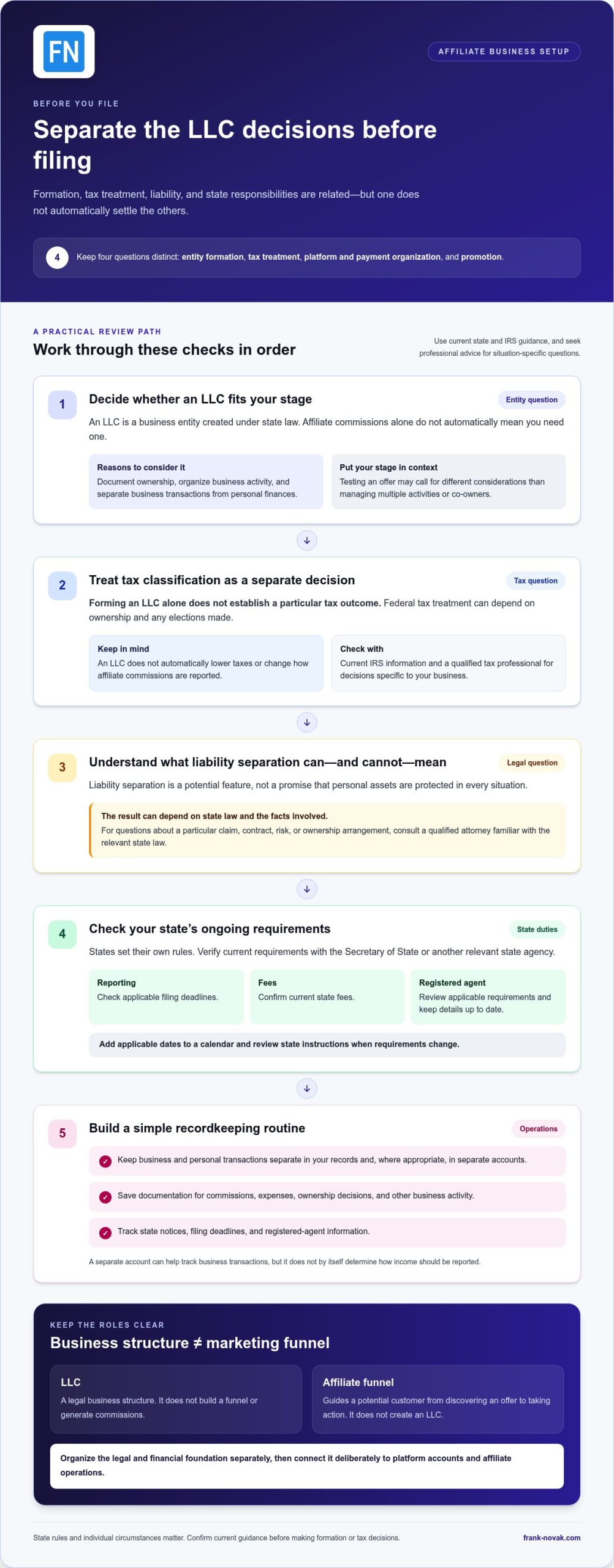
Keep four decisions distinct: whether to form an entity under your state’s rules, how the business is treated for tax purposes, how you organize platform and payment accounts, and how you promote affiliate offers. These decisions can affect one another, but one doesn’t automatically settle the others. Tax treatment can depend on circumstances and elections, so direct entity-specific questions to a qualified tax professional and consult current IRS guidance.
Why affiliate marketers consider forming an LLC
Affiliate marketers may consider an LLC to document ownership, organize business activity, and separate business transactions from personal finances. These goals can become more important as income, expenses, contracts, or collaborators become part of daily operations. They don’t mean every new affiliate needs to form an LLC immediately.
If you’re testing an offer without a consistent operation, your needs may differ from those of an established affiliate managing multiple activities or working with co-owners. Commissions alone don’t automatically require an LLC. Consider your circumstances, state requirements, administrative responsibilities, and advice from qualified legal and tax professionals before deciding.
An LLC isn’t a shortcut to commissions, traffic, or platform approval. Platform access and account details are separate operational matters, and promotions still depend on choosing an audience, presenting relevant offers, and communicating transparently. The ClickBank Super Funnel supports funnel operations, not legal formation. Keep the business foundation and marketing system in their proper roles, then connect them deliberately as your affiliate activity develops.
Understand LLC taxes, liability, and ongoing duties before filing
Before filing, separate three questions that are easy to blur together: what legal entity you’re creating, how that entity is classified for tax purposes, and what responsibilities apply in your state. An LLC can help organize business activity, but forming one doesn’t resolve every tax or liability question.
How LLC formation differs from tax treatment
Forming an LLC alone does not establish a particular tax outcome. Federal tax treatment depends on factors such as the LLC’s ownership and any elections made. The IRS explains LLC classifications and related filing considerations in its IRS guidance on LLC taxation. Because rules and individual circumstances can change the answer, use current IRS information and consult a qualified tax professional about decisions for your business.
An LLC doesn’t automatically lower taxes or change how affiliate commissions are reported. If you start as a solo affiliate and later add an owner, elect a different tax classification, or develop other income sources, the relevant questions may change. Keep records of commissions and business expenses, and make sure your tax reporting reflects your actual structure and circumstances. A separate account can help you track business transactions, but it doesn’t by itself determine how income should be reported.
What liability separation and ongoing administration mean
Liability separation is a potential feature of an LLC, not a promise that personal assets are protected in every situation. The result can depend on state law and the facts involved. Don’t assume that forming an entity removes personal responsibility for every act, debt, or obligation connected to the business. For guidance about a particular risk, consult a qualified attorney familiar with the relevant state law.
There can also be work after formation. States set their own rules, so check the Secretary of State or other relevant state agency for current reporting deadlines, fees, and registered-agent requirements. Missing a filing or allowing required details to become outdated can create administrative problems. Add applicable dates to a calendar and review state instructions when requirements change.
A simple recordkeeping routine can make ongoing management clearer:
- Keep business and personal transactions separate in your records and, where appropriate, in separate accounts.
- Save documentation for income, expenses, ownership decisions, and other business activity.
- Track state notices, filing deadlines, and registered-agent information.
- Review your setup when ownership, income sources, or business operations change.
These habits support organized operations, but they don’t guarantee a legal or tax result. They’re also separate from marketing work: a clickbank affiliate marketing funnel structures audience and promotion activity, while an LLC’s tax classification and state duties require separate attention. For strategic guidance on the marketing side, explore Online Success Coaching resources. Coaching is not legal or tax advice.
LLC or another structure: compare options for an affiliate business
No single business structure fits every affiliate marketer. Your ownership plans, state rules, business risks, and goals all affect the decision. Use the comparison below to identify questions to investigate, not as a substitute for legal or tax advice.
| Structure | Ownership | Setup considerations | Administration | Questions for professional advice |
|---|---|---|---|---|
| Sole proprietorship | One individual operates the business. | May be simpler to evaluate when starting alone. Local registration or other obligations may still apply. | Keep clear business records and understand how personal and business activity are treated. | What local requirements apply? How could contracts or business risks affect you personally? |
| Single-member LLC | One owner. | Created through a state process, with requirements that vary by location. | May involve state filings, records, and other ongoing tasks. | How does state law apply to your situation? What tax treatment fits your circumstances? |
| Multi-member LLC | Two or more owners. | Owners need to consider how responsibilities, contributions, and decision-making will be documented. | Clear operating arrangements and consistent records can help owners manage the business. | How should ownership, distributions, decision rights, and tax matters be handled? |
When a sole proprietorship may be simpler to evaluate
If you’re the only owner and are testing whether affiliate activity will become an ongoing business, a sole proprietorship may be a straightforward structure to examine. That doesn’t make it the right choice for everyone. Consider how you’ll handle business transactions, what local obligations apply, and whether your activities involve risks that call for legal advice.
Think beyond today’s commissions. Review the contracts you may enter, the activities involved in promoting offers, and whether anyone else will own or manage part of the business. A solo marketer building a clickbank affiliate marketing funnel may have different organizational needs from a business with partners, employees, or ongoing contractual commitments.
When an LLC may merit closer consideration
An LLC may be worth evaluating if you want to document ownership, establish formal arrangements with co-owners, or organize business operations under an entity. Those reasons don’t mean an LLC is always safer, more credible, or more tax-efficient. Its legal effects and administrative requirements depend on state law and the details of your business.
Use this decision framework: if you’re operating alone with a limited, exploratory project, map your obligations and risks; if you expect co-owners, clarify decision-making and ownership terms; if your operations or income sources are changing, ask a qualified tax professional how that affects your choices. In each case, verify current state requirements and seek legal advice about liability or ownership questions. Choose deliberately rather than forming an entity simply because a marketing platform or funnel makes it possible.
How to set up an LLC for your affiliate business step by step
LLC formation is a state process, and procedures, documents, and ongoing requirements vary by location. Start with the state where you plan to establish the business, then follow its current instructions instead of assuming every state uses the same steps. This checklist helps organize the work while keeping legal formation separate from affiliate marketing operations.
Prepare and file the state formation documents
- Identify the relevant state authority. Start with the Secretary of State or the state agency responsible for business entities. If you’re considering forming somewhere other than your home state, research how that choice could affect your responsibilities and get legal advice if the implications aren’t clear.
- Check the proposed business name. Search the state’s business-name database and read its naming instructions. Availability rules and additional registration steps can differ, so don’t rely on a search result alone to confirm that a name meets all requirements.
- Review registered-agent rules. Find out whether the state requires an agent, what qualifications apply, and how the agent’s address and information must be provided. Keep the state’s instructions handy so you can maintain accurate details after filing.
- Complete the required formation filing. Use the formation document and submission method specified by the state. Review names, addresses, ownership details, and other requested information for accuracy, then save the filed documents and any state notices.
Organize the business after formation
- Document how the LLC will operate. An operating agreement can record ownership and decision-making arrangements, including for a business with one owner. Its role and any state-specific requirements vary, so check current state guidance and seek legal advice about its terms.
- Set up records and tax administration. Plan how you’ll track income, expenses, and business decisions separately from personal activity. Check current IRS guidance to determine whether you need a federal tax identification number for your circumstances. Tax classification is separate from LLC formation, so consult a qualified tax professional about how your structure should be handled.
- Review accounts and platform details. Once your entity and financial arrangements are in place, review your affiliate platform profile and payment details against current platform requirements. Update information where appropriate and keep the relevant business records. Check current FTC guidance on promotional disclosures and the rules for the platforms where you publish.
Before treating the formation work as complete, verify filing, name, registered-agent, and ongoing-report requirements with the relevant state authority. Review federal identification and tax questions using current IRS guidance or a qualified tax professional, then check platform and disclosure requirements separately. With the administrative foundation organized, you can focus on the marketing system, such as building a clickbank affiliate marketing funnel.
Connect your LLC to a ClickBank affiliate funnel without mixing the two
Once you’ve organized the business side, treat marketing as a separate workflow that can operate within it. An LLC doesn’t create your ClickBank account, select offers, or design a customer journey. Likewise, an affiliate account or a clickbank affiliate marketing funnel doesn’t form a legal entity. Keeping these roles distinct makes it easier to manage records and understand which requirements apply to each part of your business.
Keep formation, platform accounts, and funnel operations distinct
Think in three tracks. State registration establishes the entity under applicable state rules. ClickBank account setup and profile details follow the platform’s current requirements. Funnel operations determine how you attract an audience and present an offer. Handle each track deliberately, then keep its related records organized. For example, save formation documents with business records and track platform activity and commissions in your business recordkeeping system. This supports clear bookkeeping without determining a particular tax result.
Affiliate disclosures and platform policies are separate from LLC formation requirements. Review current FTC guidance on disclosures and the relevant platform rules for account use and promotion. An LLC filing doesn’t satisfy those obligations, and following platform procedures doesn’t replace state or tax responsibilities.
Build the marketing system after the business foundation
A practical funnel moves through clear stages. Start with an audience whose needs align with the offer, then create a path that helps people evaluate it. Make each step useful and transparent.
- Choose the audience and offer. Define who you intend to reach and why the offer is relevant to them. Check the offer’s terms and the promotional rules that apply to your channels.
- Select a traffic source. Decide how people will discover your content, such as through a channel you can maintain consistently. Match the message to the audience instead of sending unrelated traffic into the journey.
- Create a relevant landing experience. Explain what visitors will find, make the next step clear, and place affiliate disclosures where they’re easy to notice. Help visitors make an informed decision rather than obscuring the commercial relationship.
- Plan follow-up and review performance. If you collect email addresses, make follow-up relevant to the original interest and follow applicable requirements. Review available performance information to see where people engage or leave, then refine the message or journey thoughtfully.
This structure connects the business foundation to daily marketing without treating them as the same thing. The ClickBank Super Funnel is a resource for funnel implementation. Online Success Coaching can support broader business strategy, while legal and tax questions belong with qualified professionals.
Choose your next step with confidence
Choose one business question to resolve first, then map the marketing work that follows. If you’re still weighing structure, get qualified guidance on legal or tax questions before committing. If your foundation is in place, focus on one part of your clickbank affiliate marketing funnel, such as how clearly your landing page connects an audience’s needs with an offer.
Frank Novak focuses on affiliate marketing and business automation. The ClickBank Super Funnel is a resource for the funnel-building stage, and Online Success Coaching offers strategic support for building an online business. Keep that guidance separate from legal and tax advice, and choose a next step that fits your business.
You don’t need every decision settled at once. Start with the question that will help you move forward with greater clarity.
Frequently Asked Questions
Is an LLC necessary for a ClickBank affiliate business?
No, joining ClickBank or earning affiliate commissions doesn’t automatically require an LLC. Whether one suits you depends on your ownership plans, state rules, risk considerations, and circumstances. Platform participation and legal formation are separate decisions: an account lets you use the platform under its terms, while forming an entity involves state procedures. If you’re unsure how contracts, business activities, or personal exposure affect your choice, discuss them with a qualified attorney and tax professional.
Can I start affiliate marketing before forming an LLC?
Some people begin affiliate marketing before forming a business entity, but that doesn’t remove obligations that may apply to their activities. For example, publishing affiliate content can raise disclosure questions even if you haven’t registered an LLC. Check current state and federal requirements, along with platform terms, before acting. As your commissions, expenses, partnerships, or promotional activity grow, revisit your structure with qualified legal and tax professionals rather than assuming your initial setup still fits.
How do I choose the state for my affiliate business LLC?
Your location and the way you operate are useful starting points, but they don’t automatically settle which state is appropriate. Forming in a different state may create additional filings or responsibilities, depending on your circumstances. Compare current instructions from the relevant state business authority, including rules that could apply where you live or conduct business. If you’re weighing multiple states, a qualified attorney or tax professional can help you understand the implications without relying on a one-size-fits-all answer.
What happens if I mix personal and business money after forming an LLC?
Mixing transactions can make it harder to identify which income and expenses belong to the business, especially when reviewing platform payouts or preparing records. It may also weaken the practical separation you intended to maintain, though the consequences depend on the circumstances and relevant law. Record transactions accurately, avoid using one account as a catch-all, and ask a qualified professional how to handle past commingling. Organized records make it easier to explain what happened.
Does an LLC automatically reduce taxes on affiliate commissions?
No. Forming an LLC and determining its tax treatment are separate questions, and tax outcomes depend on elections, income, ownership, and individual circumstances. For example, the answer for a single-owner business may differ from the answer for a business with multiple owners or a tax election. Review current IRS guidance and consult a qualified tax professional before making decisions. Don’t assume the LLC itself creates a tax saving or changes how commissions should be reported.
Do I need an EIN for my affiliate business LLC?
Whether you need an Employer Identification Number depends on your structure and circumstances, so check current IRS requirements rather than assuming every LLC follows the same rule. An EIN is a federal identification number; it isn’t the state filing that creates an LLC, and it doesn’t replace accurate affiliate-platform profile information. Before applying or updating accounts, clarify which business details are needed for your situation using IRS guidance or advice from a qualified tax professional.
What records should I keep for an affiliate business LLC?
Keep an organized record of business income, expenses, agreements, platform activity, and formation documents. For example, save payout records alongside related account statements and retain contracts or ownership decisions with your business files. The records you need and how long to keep them can depend on your circumstances, so avoid relying on a universal retention period. Good bookkeeping supports administration, but it doesn’t replace legal or tax advice.
Can I use a ClickBank funnel before my LLC is formed?
A clickbank affiliate marketing funnel is a marketing system, so planning its audience, offer, and customer journey is separate from forming an LLC. Whether you can use a particular platform account or campaign depends on current platform terms and other applicable requirements. A funnel doesn’t provide legal protection or guarantee sales. If you start building before choosing an entity, keep business activity organized and review state, tax, disclosure, and platform obligations as your plans develop.

Article by
Frank Novak
Frank Novak is an online marketing professional and coach who focuses on affiliate marketing and business automation. Through his website, frank-novak.com, he shares insights and strategies for leveraging social media platforms like Facebook to generate traffic and commissions.
Affiliate / Sponsored Content Disclaimer
This [website/post] contains affiliate links. If you click through and make a purchase, we may receive a commission at no additional cost to you. We only recommend products or services we believe will add value to our readers.