

You can build an affiliate marketing business without appearing on camera. Affiliate marketing without showing your face works best when your content gives people a clear reason to trust your recommendations. A personal brand is one way to connect with an audience, but useful guidance and transparent communication matter just as much.
If you’d rather stay behind the scenes, you may wonder whether readers will still trust your advice. Trust depends less on showing your face than on explaining your recommendations, disclosing affiliate relationships, and helping people decide whether a product suits their needs.
This guide will help you decide whether a faceless approach fits your goals and working style. You’ll learn how email and landing pages can support an audience relationship, how to disclose affiliate links clearly, and how consistent, useful content builds credibility. It also covers the trade-offs of staying off camera, so you can choose a format you can sustain.
Key Takeaways
- Use an email list and focused landing page to give interested readers a clear next step beyond a single post or video.
- Faceless YouTube videos and AI voiceovers can support an affiliate strategy when the content is useful, clear, and relevant to the audience.
- Make affiliate relationships easy to understand by placing a clear disclosure where readers can see it before they act.
- Decide whether appearing on camera fits your comfort and content style; trust can also grow through consistent, helpful recommendations.
- Build credibility by explaining why a product may suit someone, acknowledging its limits, and keeping your advice focused on the reader’s needs.
1. Email lists and landing pages
Yes. You can do affiliate marketing without showing your face through email newsletters, written reviews, comparison pages, screen recordings, and landing pages. These formats let you explain a recommendation without appearing in a video. For example, a home coffee newsletter could share brewing tips and explain which grinder may suit a beginner.
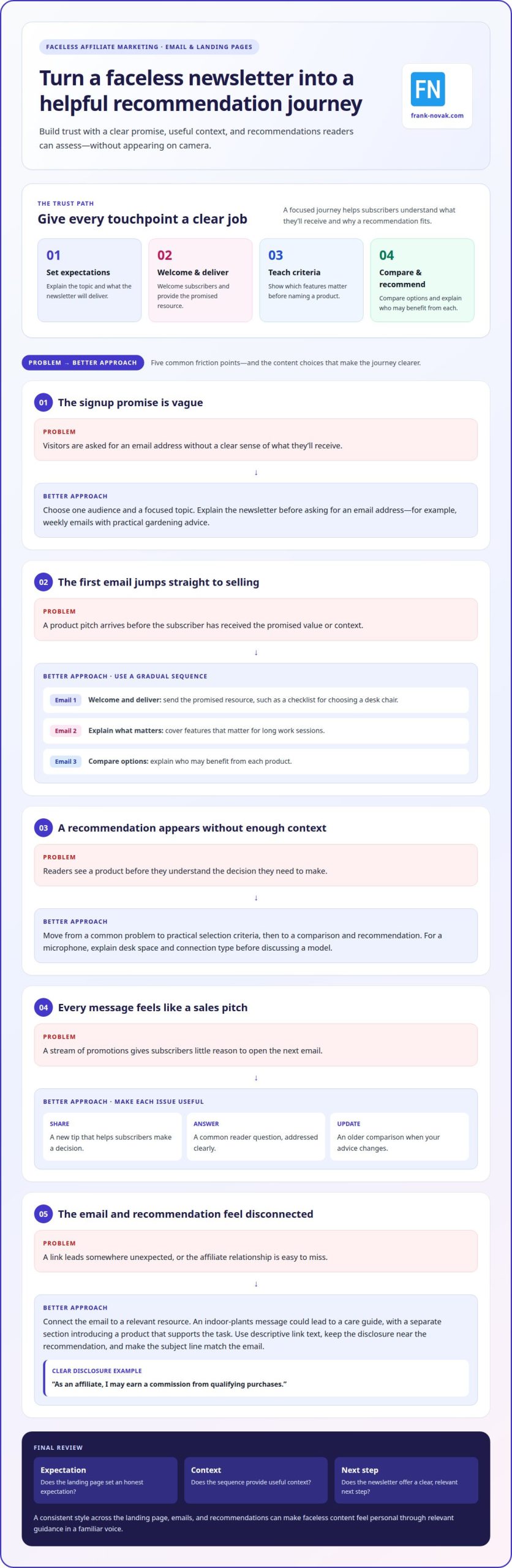
Start with one audience and a focused topic. A landing page should explain what visitors will receive, such as a weekly email with practical gardening advice. Add a clear signup form and describe the newsletter before asking for an email address. If you promise product comparisons, make sure the emails deliver them instead of switching to unrelated promotions.
After signup, use an email sequence to introduce your approach gradually. The first message can welcome subscribers and deliver the promised resource, such as a checklist for choosing a desk chair. A later email might explain which features matter for long work sessions. Then a product-focused message can compare options and explain who may benefit from each.
Give each email a distinct purpose. A useful sequence might move from a common problem to practical selection criteria, then to a comparison and recommendation. Someone choosing a microphone, for instance, may need to understand desk space and connection type before considering a model. This progression makes the recommendation easier to assess.
Once the sequence ends, a regular newsletter can keep the relationship active. Share a new tip, answer a common reader question, or update an older comparison when your advice changes. Keep each issue focused on helping subscribers make a decision. If every email is a sales pitch, readers have little reason to open the next one.
Connect each email to a relevant landing page or resource. A message about indoor plants could link to a care guide, with a separate section introducing a product that supports the task. Use descriptive link text so readers know where it leads. Place affiliate disclosures near recommendations, and make sure the subject line reflects the email’s contents.
Review the journey from signup to recommendation as a whole. Does the landing page set honest expectations? Does the sequence provide useful context? Does the newsletter offer a clear next step? A consistent style across these touchpoints can make faceless content feel personal, because subscribers receive relevant guidance in a familiar voice.
2. Can You Do Affiliate Marketing Without Showing Your Face?
Yes. Faceless affiliate marketing can use written content, screen recordings, product demonstrations, and narrated videos. On YouTube, affiliate links can appear in video descriptions and direct viewers to merchant websites. The key is making each piece useful, not relying on a camera-facing personality.
Faceless YouTube videos can show a product, a screen walkthrough, or simple visuals while a voiceover explains the subject. An AI voiceover is another option, but clear writing still matters: use accurate details, a natural pace, and examples that help viewers assess the recommendation. Synthetic narration should not replace a careful explanation.
For a US beginner, YouTube is one option, while TikTok and Instagram support short-form affiliate videos of 15 to 60 seconds. Written pages designed for search are another route. ClickBank is a program to consider; many digital products on ClickBank pay affiliates commissions of 50% to 75% per sale. Choose a product that fits your audience and content, rather than choosing by commission alone.
There’s no single startup cost for this approach. Expenses depend on the tools you choose, such as recording equipment, editing software, a website, or email services. Start with a simple format and add tools only when they solve a real production or publishing need. Software purchases cannot substitute for useful content.
To get started, choose a focused subject, find an affiliate product that fits it, and select a format you can produce consistently. Create a helpful video or written guide, include an affiliate link where it supports the content, and disclose the relationship clearly. Then review audience responses and improve your next piece. Master one or two formats before expanding.
How much can you earn, and how quickly? It depends on audience interest, relevant views, conversion, and the offer’s payout, so no example guarantees a result. One illustration uses a $50 payout, 5,000 monthly content views, and a 0.1% conversion rate to show $250 in monthly sales. Treat that calculation as an example, not a forecast; assess your approach after 90 days.
YouTube, TikTok, and Instagram can carry faceless videos, while search-friendly written pages can help people find guides and comparisons. Choose a channel that suits your strengths. If writing is your best format, build around useful pages. If you explain products well, try narrated demonstrations.
3. Affiliate disclosure and compliance
A clear affiliate disclosure tells readers that a recommendation may earn you a commission. Keep it direct, readable, and close to the recommendation. For example: “As an affiliate, I may earn a commission from qualifying purchases.” This explains the relationship without expecting readers to infer it from a link or review.
Placement matters. In a written comparison, put the disclosure before or beside the first affiliate link, not at the bottom after several product claims. In a newsletter, place it near the recommendation. For a TikTok video, make the relationship clear in the video or accompanying text, where viewers can see it while considering the product.
Match the disclosure to the format. A short video has limited time, so use plain language and readable on-screen text if viewers may watch without sound. A product roundup can use a brief statement near the introduction, followed by clear context beside individual links. If a page includes several recommendations, make the disclosure easy to find without making readers search through unrelated material.
Be as careful with product claims as with disclosures. If you recommend a microphone, explain what you observed or what its stated features mean for a particular use. Don’t claim to have tested it if you haven’t. Separate facts from opinions and avoid promising results. For example, say a feature may suit a home recording setup rather than promising better sales.
Review every channel before publishing. Check that the disclosure is visible on mobile, easy to understand, and close to the affiliate link. In a YouTube description, place it near the recommendation rather than among unrelated links. In a newsletter, check both the message and the link destination. Readers should understand the relationship before clicking.
Disclosure also supports trust over time. If a subscriber later discovers a hidden affiliate relationship, even useful writing can feel less credible. Clear language gives readers context, while specific product explanations help them judge a recommendation on its merits. Apply the same standard to blog posts, emails, TikTok videos, and product guides.
Before publishing, review the content from the audience’s perspective. Can readers identify affiliate links? Is the disclosure easy to understand? Does the recommendation explain who may find the product useful? These editorial checks make transparency part of the content, not an afterthought.
For educational recommendations, keep lessons in slide decks and e-books under 10 minutes to encourage higher completion rates. Use that concise format to present the disclosure and relevant product context plainly, without obscuring the relationship.
4. Benefits and drawbacks of showing your face
Showing your face can make a recommendation feel more personal. In a product review, viewers can connect your voice, expressions, and explanation with your advice. Appearing on camera can also help you demonstrate a product, such as showing how a kitchen tool fits in a small drawer. It takes preparation, though, and may not suit every creator.
A visible creator can add context that a product image cannot. You could explain why a particular microphone works for your recording setup and show its controls. Viewers can see who is speaking, which may help them recognize you across videos. But this format also requires planning your appearance, setting, lighting, and camera framing.
Faceless content offers a different kind of flexibility. A screen recording can demonstrate software while narration explains each step. A written comparison can focus on features and use cases without showing the author. These formats can protect privacy, but the content still needs a distinct point of view. Generic footage and broad claims give readers little reason to trust a recommendation.
Risks in faceless affiliate marketing include misleading offers, poor recommendations, and platform restrictions on links or content. A polished voiceover or anonymous account doesn’t prove that a program is trustworthy, so examine the product and its claims before promoting it. Read the relevant platform’s current rules, since an approach that works in one format may not suit another.
Scams may target creators with claims of easy commissions or guaranteed income. Treat promises of certain results as a warning sign, especially when they depend on recruiting others or paying for access. A program that emphasizes earnings but provides little detail about its product gives you weak grounds for a responsible recommendation. Focus your content on verifiable product information.
Showing your face also involves privacy and boundaries. A creator filming at home might reveal identifying details in the background, while a faceless screen recording could expose account names or personal messages. Review the frame before publishing and remove information that doesn’t belong in the video. You can also choose voiceover, hands-only demonstrations, or written content.
Choose a format that supports your message and feels comfortable. If a product needs visual explanation, demonstrate it and consider whether your face adds useful context. If the recommendation depends on comparison or research, a written guide may serve readers better. Either way, consistent explanations, honest limits, and transparent affiliate links matter more than appearing on camera.
A described study found 13 out of 15 participants invested more money with computer-generated faces perceived as trustworthy. Participants invested 42% more money with identities featuring faces perceived as trustworthy.
5. Building audience trust and credibility
Without a visible face, your audience needs other reasons to trust your recommendations. A focused topic, clear explanations, and consistent content help readers understand your expertise. For example, a home coffee site can build credibility by explaining grind size, brewing methods, and equipment choices instead of promoting unrelated products.
Show your reasoning, not just your conclusion. If you recommend a desk lamp, explain which workspace it suits and which features informed your choice. Distinguish product details from your own assessment, and don’t imply hands-on testing unless you actually tested it. This gives readers context to decide whether your advice applies to them.
Accuracy builds trust, too. Check product names, descriptions, and claims against information from the seller or manufacturer. If you compare two microphones, explain the differences and avoid calling one best for everyone. Describe the use case, such as recording voice in a quiet home office, and note when another option may be more suitable.
A consistent editorial approach can make anonymous or brand-led content recognizable. Use the same tone in blog guides, newsletters, and product comparisons. Answer recurring audience questions directly, then update older content when product details or recommendations change. Readers can follow the logic of your advice when they see consistent guidance across formats.
Trust also grows when you acknowledge trade-offs. A compact keyboard may save desk space, but its smaller layout may not suit someone who prefers full-size keys. Explaining both sides shows you’re considering the reader’s needs rather than pushing one product. Clear affiliate disclosures provide context, while useful explanations help readers assess the recommendation.
Make each recommendation easy to evaluate. Connect the product to a specific need, explain the relevant feature, and say who may not benefit. For example, a beginner-friendly camera guide can distinguish basic controls from advanced features and explain who might value each. This structure helps readers make their own judgment instead of relying on broad praise.
Invite useful feedback through comments, email replies, or audience questions. If readers repeatedly ask whether a product suits a particular situation, address it in a follow-up guide. Don’t treat every question as a sales opportunity. A thoughtful answer, including a clear limitation or alternative use case, can make future recommendations more credible.
Review your draft from the reader’s perspective before publishing. Is the recommendation supported by a reason? Are its limitations clear? Can the content help someone decide, even if they don’t buy? These checks make faceless content a reliable resource through quality and transparency.
Frank Novak
Frank Novak can help you think through whether a faceless affiliate approach fits your goals and how to build a practical online business around it. If you’re unsure how to turn useful content into a consistent strategy, Online Success Coaching can provide guidance as you consider your next steps. Never Succeed Online is another option to explore as you learn about building an online business.
Consider Online Success Coaching when you want guidance connecting your content format, audience, and affiliate business direction. Whether to appear on camera is your choice. The next step is to develop a clear approach you can sustain.
Choose a format you can sustain
Choose one content format that suits your strengths, then create a useful first piece for a specific audience. If affiliate marketing without showing your face fits your preferences, make the quality of your guidance the reason people return. Refine your approach as you learn which topics readers respond to and where they need more clarity.
Give yourself room to build steadily. A clear point of view, careful recommendations, and transparent communication can support credibility without requiring you to become the public face of a brand. If you’re deciding how to shape your online business or what direction to take next, Frank Novak’s Online Success Coaching can help you explore your options.
Start with a manageable approach, keep learning from your audience, and take your next step with confidence.
Frequently Asked Questions
So… Can You Do Affiliate Marketing Without Showing Your Face?
Yes, you can earn affiliate commissions without appearing on camera. A cooking channel, for example, could publish overhead recipe demonstrations and explain which pan or ingredient it uses. A software creator could record a screen walkthrough. Choose a format that lets you explain the product clearly, and give viewers useful information beyond an affiliate link.
Why Not Keep It Private?
You can keep your personal identity private while being open about your recommendations. Use a brand name, avoid identifying details in backgrounds, and review screen recordings for private information before publishing. Privacy doesn’t mean hiding an affiliate relationship. Readers can make informed decisions when they know a link may earn you a commission, even if they don’t know your identity.
How does faceless affiliate marketing work?
Create useful content about a subject, connect a relevant product to it, and share an affiliate link where it helps your audience. If someone makes a qualifying purchase through the link, the affiliate program may record the referral and pay a commission. For example, a gardening guide could explain how to choose a watering timer and link to a suitable product.
What are the FTC disclosure rules for affiliate links in the US?
Explain the commission relationship in plain language near the recommendation or affiliate link. For example: “As an affiliate, I may earn a commission from qualifying purchases.” In a product comparison, place the disclosure where readers encounter the recommendations, rather than relying on a distant note or unclear label. Readers should understand the connection before deciding to click.
How do affiliate marketers create faceless videos with AI, voiceovers, or stock footage?
Start with an original script that answers a specific viewer question, such as how to compare two kitchen scales. Record a product demonstration or screen walkthrough, then add narration and relevant visuals. AI narration or licensed stock footage can support the edit, but shouldn’t replace accurate product details or a useful explanation. Review the finished video for misleading imagery and disclose affiliate links clearly.

Article by
Frank Novak
Frank Novak is an online marketing professional and coach who focuses on affiliate marketing and business automation. Through his website, frank-novak.com, he shares insights and strategies for leveraging social media platforms like Facebook to generate traffic and commissions.
Affiliate / Sponsored Content Disclaimer
This [website/post] contains affiliate links. If you click through and make a purchase, we may receive a commission at no additional cost to you. We only recommend products or services we believe will add value to our readers.