

You’ve spent weeks building your site and selecting products you believe in, only to open your inbox and find a vague, automated rejection email. It’s a discouraging moment that makes many newcomers feel like their platform isn’t “good enough” or that they’ve been permanently blacklisted. If you are feeling stuck, please know that even the most successful digital entrepreneurs faced these same hurdles when they were starting out. Learning what to do when your affiliate application is rejected is simply the first step in shifting your approach from a casual observer to a professional partner that brands are eager to work with.
It’s completely normal to feel confused by the lack of feedback, but we can treat this rejection as a helpful diagnostic tool rather than a final verdict. In this 2026 recovery guide, you’ll learn how to identify the specific reasons behind a denial, whether it’s related to site quality or the latest FTC disclosure requirements. We’ll walk through a clear checklist to fix your site, a template for a professional appeal, and a strategy to get approved by high-quality programs. This guide provides the building blocks you need to move past the uncertainty and build a high-conversion infrastructure that affiliate managers can’t say no to.
Key Takeaways
- By analyzing the shift toward original content, you’ll understand why AI-heavy sites are often flagged for rejection in 2026.
- If you’re looking for a clear path forward, we’ll show you what to do when your affiliate application is rejected using a 10-point professionalism audit.
- To improve your chances of approval, you’ll learn why structured funnels provide a stronger professionalism signal than traditional blogs.
- By diversifying your portfolio, you’ll discover how to find low-barrier programs that align with your current traffic.
- Since growth is a continuous journey, you’ll see how professional coaching can turn rejection into a helpful diagnostic tool.
Why Affiliate Applications Get Rejected in 2026
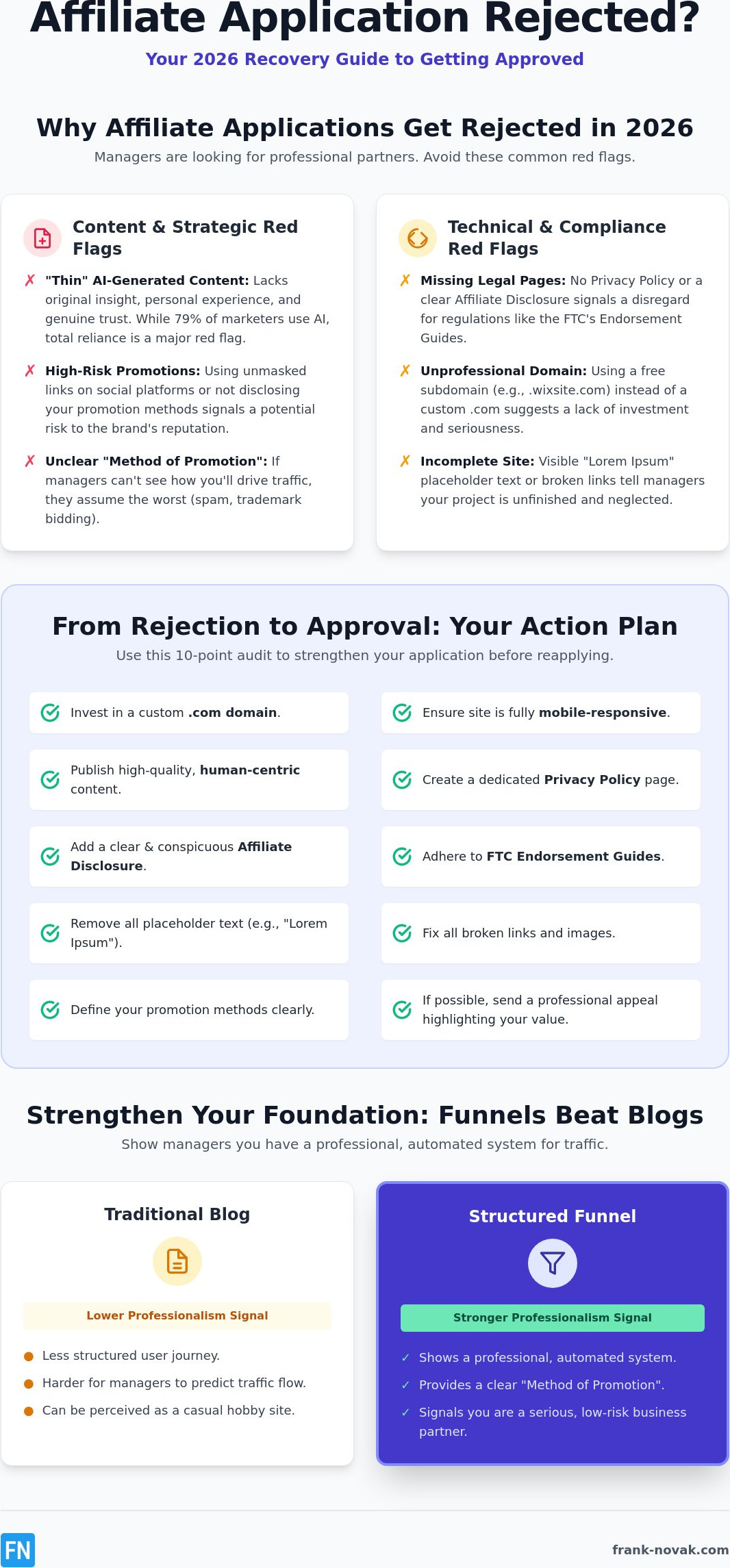
The practice of Affiliate marketing has matured into a multi-billion dollar industry, and with that growth comes a higher standard for entry. In 2026, affiliate managers are no longer just looking for traffic; they are looking for sustainable business partners who protect their brand reputation. If you find yourself wondering what to do when your affiliate application is rejected, it’s often because a manager spotted one of several evolving red flags during their manual review process.
While nearly 79% of affiliate marketers now use AI-driven tools, the primary reason for instant rejection is the rise of “thin” content. If your site consists entirely of generic, AI-generated product descriptions without original insight or personal experience, managers will likely view your platform as a low-value asset. They want to see a human touch that builds genuine trust with an audience. Additionally, your risk profile matters. If you are promoting unmasked links on social platforms like Facebook, you might be flagged as a high-risk partner before a human even looks at your site.
To better understand this concept, watch this helpful video:
Common Technical Red Flags
A professional appearance is your first line of defense against rejection. If your site is missing essential legal pages, such as a Privacy Policy or a clear Affiliate Disclosure, it signals a lack of professionalism and a disregard for current regulations. Managers also look at your infrastructure. Using a free subdomain, like a .wixsite.com address, suggests you aren’t ready to invest in a custom .com domain for your business. To ensure your platform reflects a professional business from the start, TechKnowPhobia offers specialized coaching for those over 55 building their first income-generating website. Before you apply, ensure you’ve removed all “Lorem Ipsum” placeholder text and fixed any broken links, as these small errors suggest an incomplete and neglected project.
Strategic Red Flags for Managers
Managers need to see a clear “Method of Promotion” to feel confident in your application. If you don’t explain exactly how you plan to drive traffic, they may assume you’ll use high-risk tactics like spamming groups or trademark bidding. This is why using a structured system like the ClickBank Super Funnel can be so effective; it shows you have a professional, automated journey for your customers. Understanding these shifting standards is the first step in knowing what to do when your affiliate application is rejected. Affiliate Compliance is the baseline for 2026 approvals, requiring strict adherence to brand standards and FTC disclosure rules to prove you are a low-risk partner.
The Immediate Response: How to Audit and Appeal Your Status
Receiving a denial doesn’t mean your journey is over. When you are deciding what to do when your affiliate application is rejected, your first move should be a calm, objective analysis of the feedback provided. While many rejection emails feel generic, they often contain “hidden” clues. Look for specific phrases like “content relevance,” “site traffic,” or “compliance issues.” If an email mentions policy violations, it’s a direct signal that your site may not be meeting the legal standards required in 2026.
Before you even think about hitting the “reapply” button, you must perform a 10-point professionalism audit. This involves checking for a custom .com domain, verifying that your site is mobile-responsive, and ensuring you have high-quality, human-centric content. A major part of this audit involves legal transparency. You should review the FTC’s Endorsement Guides to ensure your disclosures are clear and conspicuous. If a brand sees that you understand these regulations, they are much more likely to trust you with their products. If you feel overwhelmed by these technical requirements, seeking Online Success Coaching can help you identify these gaps quickly.
The 2026 Affiliate Appeal Template
If the program provides a contact email for their affiliate manager, a professional appeal can often reverse a rejection. Your goal isn’t to complain, but to highlight the “Value Add” you bring to the brand. In your email, focus on your specific promotional strategy rather than just your current traffic numbers. Even if your audience is small, you can provide social proof by showing your email list growth or your engagement rates on social media. Mentioning that you use professional infrastructure, such as the ClickBank Super Funnel, proves to the manager that you have a structured customer journey in place. This level of preparation signals that you are a serious business owner who understands the mechanics of conversion.
When to Wait and When to Walk Away
Patience is a critical skill in this industry. Reapplying ten minutes after a rejection without making changes is a guaranteed way to get permanently blacklisted. Most networks have a “cooling off” period; for instance, CJ Affiliate automatically deactivates new accounts if they don’t earn a commission within the first 90 days. If you’ve been rejected, take at least two weeks to implement the necessary fixes before trying again. However, you should also know when a program simply isn’t a fit. If your traffic source is primarily short-form video and a brand only wants long-form bloggers, it’s better to walk away and find a program that aligns with your strategy. Following a “Three Strikes” rule for major networks like Amazon or ClickBank can prevent you from wasting time on a door that is temporarily closed while you build your foundation elsewhere.
Strengthening Your Foundation: Why Funnels Beat Blogs
While most advice centers on writing more blog posts, the reality of 2026 is that affiliate managers are looking for conversion-ready systems. If you’re wondering what to do when your affiliate application is rejected, the answer often lies in your infrastructure. A generic blog often feels like a hobby, but a structured funnel signals that you are a professional marketer with a clear plan for every visitor. Managers are increasingly wary of “content sites” that lack a clear path to purchase, preferring partners who can demonstrate a controlled customer journey.
A clean landing page serves as a powerful “Professionalism Signal” that you aren’t just throwing links at a wall. By using an automated system like the ClickBank Super Funnel, you show that you have a sophisticated method of promotion already in place. This setup protects the brand’s reputation while giving the manager confidence that your traffic will actually convert into sales. It moves the conversation away from “How much traffic do you have?” toward “How high is your conversion rate?”
The Anatomy of an Approvable Funnel
A funnel that wins over managers usually includes three core elements. First, a Lead Magnet shows that you are building a business asset by collecting emails rather than just “renting” traffic from social media platforms. Second, a Bridge Page acts as a pre-sell tool. It introduces the product and explains its benefits before the user ever clicks your affiliate link, which significantly improves the Earnings Per Click (EPC) the manager expects from you. Finally, you must ensure your funnel meets Facebook ad compliance standards. Showing a manager that your landing pages are compliant with major ad networks proves you are a low-risk partner who understands the rules of the game.
List Building as Your Secret Weapon
In the “Promotion Method” section of your application, mentioning a specific, engaged audience is your strongest leverage. Telling a manager, “I have an email list of 500 targeted subscribers in this niche,” is often an instant “Yes” because it represents a predictable source of revenue. You don’t need thousands of followers to be taken seriously; you just need to show that you are actively growing a list. Documenting your list-building process allows you to use that data as “Experience” even if you haven’t made a sale yet. Integrating this strategy into your application helps you stand out as a partner who is invested in sustainable growth. This shift in focus from broad traffic to a controlled audience is often the most effective thing you can do when your affiliate application is rejected.
Strategic Alternatives: Finding the Right Fit for Your Niche
If you’ve received a rejection from a major network, it’s easy to feel like your niche is the problem. However, diversifying your affiliate portfolio is one of the smartest moves you can make. Relying on a single program is risky. By spreading your efforts across multiple partners, you protect your income and discover which brands actually value your traffic. When you’re figuring out what to do when your affiliate application is rejected, remember that some programs are simply more exclusive than others. You might find more success by starting with low-barrier programs before moving toward high-barrier options that require more established data.
Many of the most lucrative opportunities are “Shadow Programs.” These are private affiliate offers that aren’t listed on major networks like ShareASale or CJ. You can often find these by looking at the footer of software products or digital services you already use. These companies often prefer a smaller group of dedicated partners over a massive network of unvetted affiliates. Transitioning your focus from low-ticket physical goods to high-ticket digital services can also change your approval odds. Digital products often have higher margins, which means companies can afford to pay you more for every lead you generate.
Exploring Different Traffic Sources
Sometimes, the rejection isn’t about you; it’s about your platform. If your website was the reason for a denial, you should consider how to drive traffic to affiliate links through alternative channels like YouTube or organic social media. Many brands in 2026 are shifting their focus from “Publishers” to “Influencers.” If you can show a manager that you have an engaged community on a specific platform, they may overlook a lack of a traditional blog. It’s all about matching your traffic source to the program’s specific audience needs.
The High-Ticket Pivot
High-ticket programs, such as those for business coaching or specialized digital tools, often involve a more “human” vetting process. While this might seem intimidating, it’s actually an advantage. You have the opportunity to speak directly with a manager and prove your worth. Promoting high-ticket digital funnels instead of $5 gadgets allows you to earn more with fewer sales. This shift requires you to position yourself as a brand “Ambassador” rather than just a “Referrer.” By taking this professional approach, you build long-term relationships that lead to higher commissions and better support. If you’re ready to stop guessing and start scaling, our Online Success Coaching provides the roadmap you need to secure these premium partnerships. Learning exactly what to do when your affiliate application is rejected often starts with aiming for higher-quality offers that appreciate your unique promotional style.
From Rejection to Scale: The Role of Mentorship
Shifting your perspective on a denial is the final piece of the puzzle. Instead of viewing a “no” as a personal failure, you can treat it as valuable “Market Feedback.” If a brand declines your partnership, the industry is simply telling you that your current business infrastructure needs a professional adjustment before it can scale. This data is precious because it highlights exactly where your setup is leaking credibility. When you understand what to do when your affiliate application is rejected, you stop reacting emotionally and start making the logical upgrades required for long-term success.
Building a sustainable business means you aren’t dependent on the whims of a single affiliate manager or network. While your first approval feels like a major milestone, developing a resilient success mindset is far more important than that initial “Yes.” This mental fortitude allows you to stay focused on the mechanics of growth even when you face temporary setbacks. By focusing on the systems you’ve built—like your funnel and your email list—you create an asset that remains valuable regardless of which specific programs you are promoting at the moment.
Why You Shouldn’t Go It Alone
The journey from a beginner to a high-earning partner is much faster when you have a seasoned guide. Having a mentor to audit your funnels and applications before you submit them can save you months of trial and error. This professional oversight helps you avoid the Never Succeed Online cycle, where entrepreneurs repeat the same mistakes without realizing why they are being turned away. A coach also brings a significant advantage through their own professional network. In many cases, a mentor’s recommendation can help you get “Fast-Tracked” into exclusive, high-ticket programs that are otherwise closed to the general public.
Your Next Steps for 2026
As you prepare to re-apply, ensure your foundation is solid by following this final checklist. You need a custom .com domain, a structured funnel that includes a bridge page, full legal compliance with FTC and ad network standards, and an active list-building strategy. Once these pieces are in place, you can move forward with a level of confidence that managers will find hard to ignore. If you’re ready to remove the guesswork and build a platform that brands are eager to partner with, discover how Online Success Coaching can help you build an unrejectable affiliate business. Taking this professional step is the most effective thing you can do when your affiliate application is rejected, as it transforms your approach from a hopeful applicant into a strategic business partner.
Building Your Path to Professional Approval
A rejection email is simply a signal that your business foundation needs a professional upgrade before you can scale. By treating these moments as diagnostic data, you can pivot from a casual blogger to a serious partner who utilizes high-conversion funnels and strictly follows compliance standards. You’ve learned that having a clear method of promotion and a growing email list are the keys to winning over affiliate managers in 2026. Learning exactly what to do when your affiliate application is rejected allows you to stop the cycle of trial and error and start building a sustainable asset.
If you’re ready to bypass common hurdles and implement a system that works, you don’t have to navigate this journey alone. Our proven strategies for 2026 traffic and automated marketing systems are designed to help you succeed. You can scale your affiliate business with the ClickBank Super Funnel and benefit from personalized Online Success Coaching that removes the guesswork from your applications. Your potential is vast; with the right infrastructure in place, you’ll be well on your way to securing the high-quality partnerships you deserve. Keep moving forward with confidence.
Frequently Asked Questions
Can I reapply to an affiliate program after being rejected?
Yes, most programs allow you to reapply once you have addressed the specific reasons for your denial. It’s best to treat the initial rejection as a diagnostic signal rather than a final verdict. Ensure you have updated your content, improved your site design, and added all required legal disclosures before you submit a second application to show you are a professional partner.
How much traffic do I need to get approved for most affiliate programs?
There is no universal traffic requirement, but many established programs look for a consistent flow of at least 500 to 1,000 monthly visitors to verify your reach. However, engagement and niche relevance often matter more than raw volume. If you can demonstrate a highly targeted audience or a growing email list, many managers will approve your application even with lower overall traffic numbers.
Do I need a website to be an affiliate marketer in 2026?
While a traditional website is no longer strictly required, having a professional landing page or structured funnel is essential for your credibility. Many brands now accept applications from influencers on platforms like YouTube, TikTok, or Instagram. If you don’t have a blog, you must provide a clear link to your primary social channel where you intend to promote their products to prove your influence.
Why do affiliate programs ask for my ‘Method of Promotion’?
Managers ask for your “Method of Promotion” to ensure your marketing tactics align with their brand safety and compliance standards. They want to know if you will use email marketing, paid ads, or organic social traffic to drive sales. Providing a detailed answer proves you have a professional strategy and helps them predict the quality and sustainability of the leads you will send.
What should I do if my ClickBank application is rejected?
If your ClickBank account or specific offer application is rejected, you should first verify that your profile is complete and your contact information is accurate. ClickBank often flags accounts that lack a clear promotional plan or appear to be using high-risk traffic sources. Implementing a professional system like a super funnel can help demonstrate your legitimacy as a marketer and improve your chances during a manual review.
Is it worth appealing an affiliate rejection?
Yes, it is absolutely worth appealing if you have made significant improvements to your platform since the initial denial. A polite, professional email to the affiliate manager can often lead to a manual review of your status. In this message, explain what to do when your affiliate application is rejected by highlighting the specific fixes you have implemented and the unique value you bring to their brand.
How long should I wait before reapplying to a program?
You should wait at least two to four weeks before reapplying to give yourself enough time to implement meaningful changes to your infrastructure. Rushing the process usually leads to an instant second rejection, which can be permanent on some networks. Use this time to audit your site for broken links, update your legal pages, and add fresh, human-centric content to your primary platform.
What are the most ‘beginner-friendly’ affiliate networks?
Networks like Amazon Associates, ShareASale, and Impact are generally considered the most beginner-friendly due to their lower entry requirements and vast product selections. These platforms provide access to thousands of brands across various niches, making them ideal for those starting out. Learning what to do when your affiliate application is rejected on these networks will prepare you for more exclusive high-ticket programs as your business grows.

Article by
Frank Novak
Frank Novak is an online marketing professional and coach who focuses on affiliate marketing and business automation. Through his website, frank-novak.com, he shares insights and strategies for leveraging social media platforms like Facebook to generate traffic and commissions.
Affiliate / Sponsored Content Disclaimer
This [website/post] contains affiliate links. If you click through and make a purchase, we may receive a commission at no additional cost to you. We only recommend products or services we believe will add value to our readers.