

Affiliate sites commonly see their first meaningful SEO commissions 3 to 9 months after launch, while consistent publishing and link building may take 6 to 12 months to build organic traffic into a steadier source of commissions. SEO for affiliate marketing blogs is a long-term process, not a quick fix, and the timeline depends on factors such as competition, content quality, and how well each page meets searchers’ needs.
If you’re investing time in articles but not seeing results, it’s natural to wonder whether you’re targeting the right topics or formats. A clear strategy gives every post a purpose: answer a question, help readers compare options, or support a decision.
This guide explains what affects how long affiliate SEO takes, which formats suit different searches, and how to match keywords to reader intent. You’ll also find practical ways to improve titles, headings, internal links, and disclosures so your content serves readers and is easier for search engines to understand.
Key Takeaways
- Choose reviews, comparisons, lists, or how-to guides based on the decision a reader is trying to make.
- Build your niche and publishing platform around topics you can cover consistently and serve with relevant affiliate content.
- Use keyword intent to decide whether a page should inform, compare options, or help readers take action.
- Make titles, headings, and internal links clarify how each page fits into your site, and place affiliate disclosures where readers can see them.
- Improve your pages by focusing on useful content, mobile usability, loading speed, and realistic competition for your target terms.
1. Affiliate content formats: reviews, comparisons, lists, and how-to guides
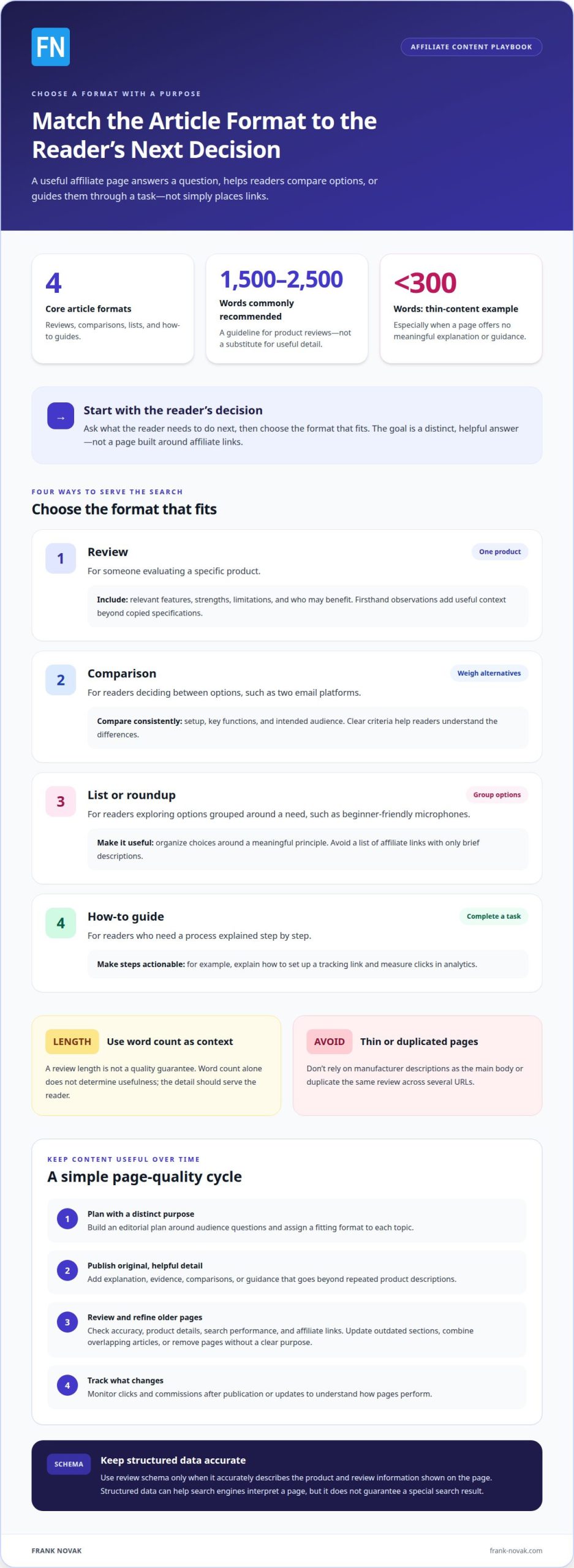
Choose a format by matching the page to the reader’s next decision. A review suits someone evaluating one product, while a comparison helps weigh alternatives, such as two email platforms. A list can group options by need, such as beginner-friendly microphones, and a how-to guide can explain a process step by step. Product reviews are commonly recommended at 1,500 to 2,500 words, but useful detail matters more than reaching a target length.
Every format needs evidence and a clear purpose. In a review, explain relevant features, strengths, and limitations, then say who may benefit. Compare options using consistent criteria, such as setup, key functions, and intended audience. Organize roundups around a useful principle rather than listing affiliate links with brief descriptions. For a how-to, provide steps readers can follow, such as setting up a tracking link and measuring clicks in analytics.
Google’s helpful content and spam policies focus on whether affiliate pages provide useful, original value rather than simply repeating product descriptions. A review with firsthand observations and clear comparisons, for example, gives readers more to consider than copied specifications alone.
Consistent publishing works best when each article adds a distinct answer to the site. Create an editorial plan around audience questions, assign a format to each topic, and track clicks and commissions after publication. Avoid thin pages: affiliate pages with fewer than 300 words are identified as an example of thin content. Word count alone doesn’t determine usefulness, but a short page that adds no meaningful explanation, comparison, or guidance gives readers little reason to stay. Don’t reuse a manufacturer’s description as the main body or duplicate the same review across several URLs.
Audit older pages to find content that no longer helps readers. Check accuracy, product details, search performance, and affiliate links. Then update outdated sections, combine overlapping articles, or remove pages with no clear purpose. You might refresh an old comparison with current product information and clearer criteria, then use analytics to see whether clicks and commissions changed.
Use review schema markup only when it accurately describes the product and review information shown on the page. Keep the markup consistent with the article. Structured data can help search engines interpret a page, but it does not guarantee a special search result.
2. What Is an Affiliate Blog Post?
An affiliate blog post helps readers understand a topic, choose a product, or complete a task, and may include tracked links to relevant products. If a reader clicks a link and makes a qualifying purchase, the publisher may earn a commission through the affiliate program. A post about choosing a home coffee grinder, for example, could explain key features and link to suitable models. The post should meet a real audience need, not simply place links.
Choose a niche where readers have recurring questions and products fit naturally. Home coffee, personal finance, and hiking gear are examples, each requiring different knowledge and content. Consider whether you can develop useful ideas beyond a single product and whether readers need guidance before buying. A niche that supports tutorials, product education, and email marketing gives you more ways to attract traffic and promote relevant offers over time.
Define your audience and the problems your blog will address. A hiking gear site, for example, might serve new hikers deciding what to pack for a day trip. That focus can guide article topics, affiliate products, and the language you use. Keep the subject focused enough to build topical depth, but allow room for related questions about clothing layers, navigation tools, and food storage.
Choose a publishing platform that fits your comfort with site management and content creation. WordPress is a common option for building a blog, while hosted platforms can combine publishing tools with site hosting. Compare the editing workflow, design flexibility, and post organization before deciding. Clear categories, such as beginner guides and gear advice, help readers find related pages and make it easier to expand your content.
Choose a domain name that is easy to spell, pronounce, and associate with your niche. Avoid names tied to one product, such as “BestModelXReviews,” if you may cover a broader category later. Treat that figure as the domain-registration cost, not a complete estimate of website expenses. Make sure the name is memorable and still fits as your content expands.
After launch, use a consistent process: publish useful articles, connect related posts, and track traffic, clicks, and commissions. An email list can help readers return to new guides, while analytics can show which topics attract engaged visitors. For a structured perspective on building an online business, explore online business guidance.
3. Commercial, transactional, and informational keyword intent
Keyword intent shows what readers expect from a search. Informational searches seek an answer, such as “how to clean a coffee grinder.” Commercial searches compare options, such as “best burr grinder for home.” Transactional searches suggest readiness to act, such as “buy a burr grinder.” Match each keyword to a page that meets that expectation. Intent is central to SEO for affiliate marketing blogs because it shapes each page’s format and purpose.
Start keyword research with questions your audience asks, then group phrases by topic and intent. Google Search suggestions and related searches can show how people phrase their questions. Inspect the results for each phrase: product roundups suggest comparison intent, while step-by-step guides indicate informational intent. Record the keyword, likely intent, suitable format, and affiliate program fit in a spreadsheet. This keeps your research connected to reader needs.
A suggested affiliate SEO mix is 60% to 70% commercial, 10% to 15% transactional, and 15% to 25% informational keywords. Treat these proportions as a planning guide, not a fixed formula. Commercial content can connect readers with relevant products, while informational posts build topical coverage and attract organic traffic earlier in the decision process. Transactional pages serve readers ready to choose or purchase.
Build a keyword strategy around the reader journey, not just search volume. A page on “how to choose a hiking backpack,” for example, can link naturally to a comparison of pack sizes. A separate review can target a specific model, while a buying guide helps readers compare brands. Give each URL one main purpose and avoid publishing several pages that answer the same question. A sound strategy for SEO for affiliate marketing blogs gives every page a distinct role.
Commercial affiliate pages typically convert at rates 5 to 10 times higher than informational pages. That doesn’t mean informational keywords should disappear from your plan. A tutorial can earn trust and introduce relevant products where they genuinely help. Assess a keyword by intent, competition, fit with your content, and whether the associated affiliate program offers products suited to readers.
Google Search Console can show queries and clicks reaching your existing pages, while Google Trends helps compare interest over time. Add a paid keyword platform if you need features such as difficulty estimates or competitor analysis. Costs vary by subscription tier, tracked keywords, and reporting features, so choose a tool based on the research tasks you’ll use regularly.
After publishing, use analytics to compare impressions, clicks, and conversions with each page’s intent. If a comparison page attracts informational queries, add clearer decision criteria or create a separate guide. If readers click but do not convert, review product relevance and how clearly the page explains trade-offs. This feedback makes keyword research an ongoing process rather than a one-time list.
4. On-page titles, headers, internal links, and disclosures
Write a title that names the page’s subject and signals its value. For a comparison, “Burr Grinder A vs. Burr Grinder B: Features Compared” sets clear expectations. Use the main topic naturally, then make the wording specific enough to distinguish the page. Organize the article with descriptive headings: an H1 for the page title, followed by H2 sections and H3 subsections where useful. A reader scanning “Grinding settings” should quickly find that information.
Use a simple category structure so related pages are easy to find. For example, a coffee equipment blog might group guides under “Grinders,” “Brewing,” and “Buying Advice.” Keep URLs short and readable, such as “/grinder-comparisons/,” and avoid changing them without a clear reason. Link related articles using descriptive anchor text, such as “compare burr grinders,” rather than generic phrases. Affiliate sites are advised to add 3 to 5 internal links from established content to each new article.
Internal links help readers find related, useful pages. If a brewing guide attracts organic traffic, link to a grinder comparison where it answers a natural follow-up question. Use Google Search Console or site analytics to identify pages with steady impressions and clicks, then add links only when the destination supports the reader’s next step. Don’t link to a newer page just to promote it.
Place affiliate links where they support a specific recommendation. In a review, link the product name near an explanation of a relevant feature. In a tutorial, link equipment where readers need it for that step. Use clear anchor text and avoid repeating the same affiliate link after every mention. Look for relevant opportunities on high-performing pages, while preserving each page’s purpose and keeping recommendations on topic.
Affiliate marketers in the United States must disclose their affiliate relationships. Put the disclosure near the top of the page, before the first affiliate link, and use plain language. For example, state that the page contains affiliate links and that the publisher may earn a commission from qualifying purchases. A clear disclosure lets readers understand the relationship before following a recommendation.
Before publishing, review the page title, heading order, URLs, internal and affiliate links, and disclosure. Make sure every link works and leads to the named product or resource. Then read the page on a mobile screen: comparison tables should be understandable, and the disclosure should appear before any affiliate links. These checks help keep the page clear for readers and organized for search engines.
5. SEO optimization for affiliate blogs
Start with the target query and the reader’s task. Review the title, opening, headings, and product details together. If a page targets “best hiking backpacks,” its comparisons should explain useful differences, not just list product names. Add original guidance, explain who each option suits, and remove claims that no longer reflect current products. This keeps the content aligned with its purpose in search.
Use search difficulty as one planning signal, not a ranking promise. Affiliate sites targeting keywords with a difficulty score of 0 to 15 may rank with strong on-page SEO and a handful of links. Keywords with a difficulty score of 30 or higher generally need systematic link acquisition. For each target, compare the ranking pages and identify an unmet reader need your article can address.
Answer a specific question clearly near the relevant heading. A concise response can help search engines understand the page and may support a featured snippet; pages with a featured snippet can earn 54.4% of search traffic for a term. Longer articles can cover related questions, but length alone doesn’t make a page useful. The page recommends long-form articles of 3,000 words or more to support voice-search potential.
Mobile usability deserves a separate editing pass. A reported 92.3% of internet users access the web on mobile phones. Open each important page on a phone and check whether text is readable, links are easy to tap, and product tables fit the screen. Confirm images remain clear without pushing key information far down the page. A smooth mobile experience helps readers assess recommendations before deciding whether to click.
Loading speed can affect whether visitors stay. Website bounce rates can increase by up to 50% when a page takes more than 2 seconds to load, and affiliate sites with load times over 3 seconds can lose half their visitors. Compress large images and videos, use browser caching, and consider a content delivery network. Retest pages after changes, especially product comparisons with large tables or images.
Measure more than rankings. Track organic visits, affiliate link clicks, and whether those clicks lead to revenue. If a page attracts traffic but few clicks, make its product recommendations clearer and more relevant. Social media can help distribute updates, while genuine relationships with readers can encourage return visits. Use performance data to decide which articles need edits, fuller explanations, or updated product information.
Frank Novak
Frank Novak offers Online Success Coaching for aspiring entrepreneurs developing an online business. If you understand how keyword intent, useful content, and on-page improvements work together but need help applying them to a broader business plan, coaching may be a useful next step. Never Succeed Online is another resource for readers exploring online business education. These offerings complement the practical work of building an affiliate blog, from choosing a direction to creating a consistent publishing approach. Choose based on your goals: Online Success Coaching provides personalized guidance, while Never Succeed Online is an educational resource. To discuss your online business goals, contact Frank Novak.
Build a steady publishing rhythm
You don’t need to overhaul your entire site to get started. Choose one upcoming article and clarify its purpose before drafting: what should readers understand or decide after reading? Use the answer to guide your research, structure, and recommendations. A repeatable process makes SEO for affiliate marketing blogs easier to manage as your content library grows. Record what you change and learn so future decisions build on experience, not guesswork.
As your plans take shape, consider what support would help you move forward. Frank Novak’s Online Success Coaching and Never Succeed Online offer different ways to learn, while ClickBank Super Funnel is another resource for developing an online business. Choose the option that fits your current priorities, and take practical steps at a sustainable pace.
Every useful article is an opportunity to serve readers better. Keep learning, refining your approach, and giving your strategy room to grow.
Frequently Asked Questions
How long does affiliate SEO take to work?
Affiliate SEO can take months to produce meaningful commissions. Affiliate sites commonly see their first meaningful SEO commissions 3 to 9 months after launch, while consistent publishing and link building may take 6 to 12 months before organic traffic compounds into meaningful commissions. These describe different milestones: early commission activity can appear before traffic becomes a steadier source of income. Competition, content quality, and how well pages meet search intent all affect progress.
What Is an Affiliate Blog Post?
An affiliate blog post offers useful information and may link to a product or service through a tracked affiliate link. An article about preparing for a home loan, for example, could explain common steps and point readers to relevant resources. If a reader clicks an affiliate link and completes a qualifying action, the publisher may earn a commission. Put the reader’s question first and make sure any recommendations fit the subject.
How do I do keyword research for an affiliate marketing blog?
Start with a specific audience question and identify the intent behind its wording. “How to choose a hiking backpack” calls for guidance, while “best hiking backpacks” suggests a product comparison. Review search results to see which formats meet each need, then group related phrases by topic. Track each keyword, intent, planned page, and relevant affiliate program in a spreadsheet to help prevent articles from competing for the same query.
What on-page SEO best practices help affiliate product reviews rank?
Make the review’s purpose clear in its title and opening, then organize sections around reader concerns such as fit, setup, and limitations. Include original observations or comparisons instead of relying on manufacturer descriptions. Keep product claims accurate, use descriptive headings, and link to related guides where they help. Add a clear affiliate disclosure near the top, before the first affiliate link, so readers understand the relationship before following a recommendation.
What content types and review formats perform best for affiliate SEO?
Choose a format based on what the searcher needs to decide. A review suits someone evaluating one product; a comparison helps weigh alternatives; a roundup organizes options by need; and a how-to explains a process. “Best beginner investment apps” fits a roundup, for example, while “how to set up a budget” calls for instructions. Deliver the answer readers expect, then make the article more useful with clear selection criteria.
How can affiliate blogs build backlinks safely and effectively?
Create something worth referencing, such as an original report, study, or practical resource with unique insights. For a software-focused affiliate blog, a small analysis of product features can support a useful guide or data-led article. Reach out to relevant resource pages with a concise explanation of why the content helps their readers. Resource-page outreach response rates for affiliate sites are typically 5% to 10%, so focus on relevance and genuine value rather than volume.
What FTC disclosure rules apply to affiliate links in the United States?
In the United States, affiliate marketers must disclose their affiliate relationships. Put a clear disclosure near the top of the page, before the first affiliate link, and use plain language. For example: “I may earn a commission if you buy through links on this page.” Make it easy to notice, not buried in unrelated text or available only after clicking a link.
How can I optimize affiliate blog pages for Core Web Vitals and mobile SEO?
Test important pages on mobile, checking loading, layout stability, and responsiveness. Compress large product images, reduce unnecessary scripts, and make sure tables, buttons, and affiliate links work on smaller screens. Since many people access websites by phone, test a review page and comparison table on an actual device. Recheck performance after design or plugin changes, as added widgets can affect page speed and interactions.

Article by
Frank Novak
Frank Novak is an online marketing professional and coach who focuses on affiliate marketing and business automation. Through his website, frank-novak.com, he shares insights and strategies for leveraging social media platforms like Facebook to generate traffic and commissions.
Affiliate / Sponsored Content Disclaimer
This [website/post] contains affiliate links. If you click through and make a purchase, we may receive a commission at no additional cost to you. We only recommend products or services we believe will add value to our readers.