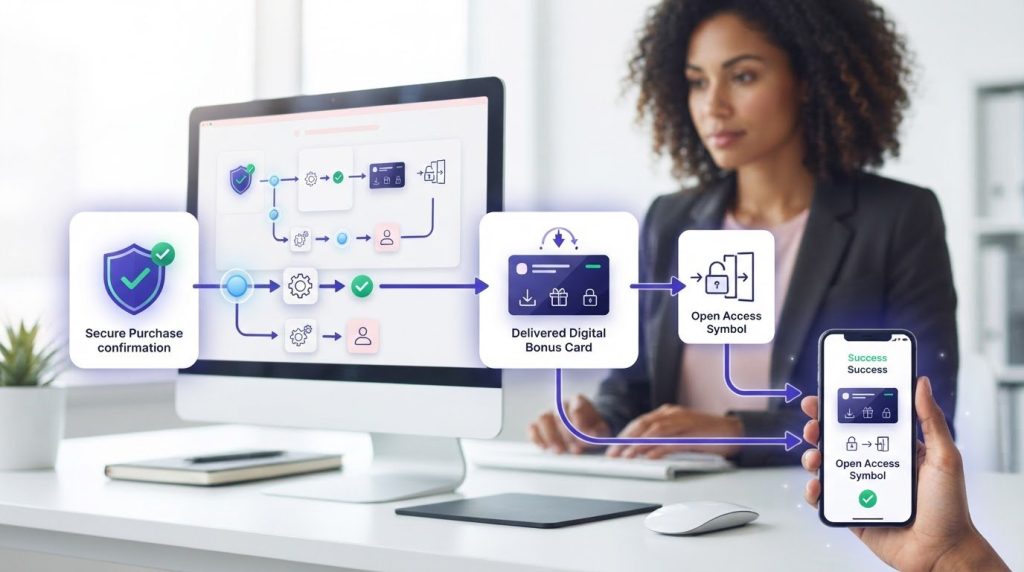

What makes bonus delivery dependable is not the number of tools in your workflow. It is whether each purchase is verified and every eligible buyer knows how to access the promised resource. Bonus delivery automation for affiliates can reduce repetitive follow-up, but only when the steps from purchase confirmation to access are clear.
If you spend time sending bonuses manually, following up on missing emails, or answering access questions, a more organized process can help. Automation will not fix unclear instructions or an untested workflow. This guide compares manual, semi-automated, and automated approaches, then shows how to map the steps, connect purchase verification to delivery, and troubleshoot common access problems. You’ll also learn how to test and improve the process without expecting software to solve every issue.
I’m not giving personalized financial advice.
Key Takeaways
- Bonus delivery automation for affiliates connects verified purchase information to clear bonus access. It is separate from recruiting partners or calculating commissions.
- Map each step from offer disclosure to buyer access, and account for how the offer’s tracking and integrations affect the delivery trigger.
- Choose manual, semi-automated, or automated delivery based on how reliably you can confirm a purchase and how complex the offer is, not for automation’s sake.
- Document the bonus promise, prepare clear delivery instructions, and test both eligible and ineligible purchase scenarios before relying on the workflow.
- Use access issues and support questions to find friction, then improve repeatable steps while keeping eligibility and buyer support easy to understand.
What Bonus Delivery Automation for Affiliates Actually Means
Bonus delivery automation for affiliates is a process that uses verified purchase information to give eligible buyers clear access to a promised bonus. It connects a qualifying purchase to the buyer-facing instructions, such as an email that identifies the resource and explains how to access it. The goal is not simply to send more messages automatically. It is to make the bonus promise clear and fulfillment dependable.
This is different from automating an affiliate program as a whole. Affiliate marketing describes a relationship in which a partner promotes a business and may earn compensation for resulting actions. Bonus fulfillment focuses on the buyer who purchases through that promotion. Keeping the two processes separate helps you identify which one needs improvement and what information it requires.
Before planning the delivery steps, consider whether the bonus is clear and useful to the intended buyer. This video discusses building an offer with bonuses in mind:
How bonus delivery differs from affiliate program automation
Program-management automation handles work such as recruiting or onboarding affiliates, assigning campaigns, tracking activity, and administering commissions. Platforms such as ZINFI and HighLevel illustrate this wider program-management context, where workflows organize partner operations. Those tasks can support an affiliate program, but they do not necessarily deliver a promised resource to an individual buyer after a purchase.
Bonus fulfillment is buyer-facing: it connects a qualifying purchase to delivery and access instructions. Automation moves information between steps, but it cannot make vague offer terms accurate. Before purchase, explain what the resource is, who qualifies, and how access works. Otherwise, a fast delivery message may simply automate confusion.
What a buyer should experience after an attributed purchase
A clear buyer journey follows a simple sequence: the customer makes a purchase, the sale is attributed or otherwise confirmed, a delivery message is sent, and that message explains how to access the bonus. For example, the email can name the promised resource and give the buyer a direct next step. The precise trigger depends on the offer, tracking arrangement, and available integrations.
Set expectations before the buyer enters payment information. State what the bonus includes, any eligibility conditions, and where access instructions will arrive. Affiliate networks do not all provide the same purchase details or confirmation options. Design your process around the information you can verify, and make the next step clear if confirmation is delayed.
How an Affiliate Bonus Delivery Workflow Moves from Purchase to Access
A dependable workflow links the offer terms to a verified sale and then to a clear buyer experience. The trigger depends on the affiliate offer, tracking arrangement, and available integrations, so do not assume every network provides the same purchase data. For background on the relationship between promotion and resulting actions, see this Affiliate marketing guide.
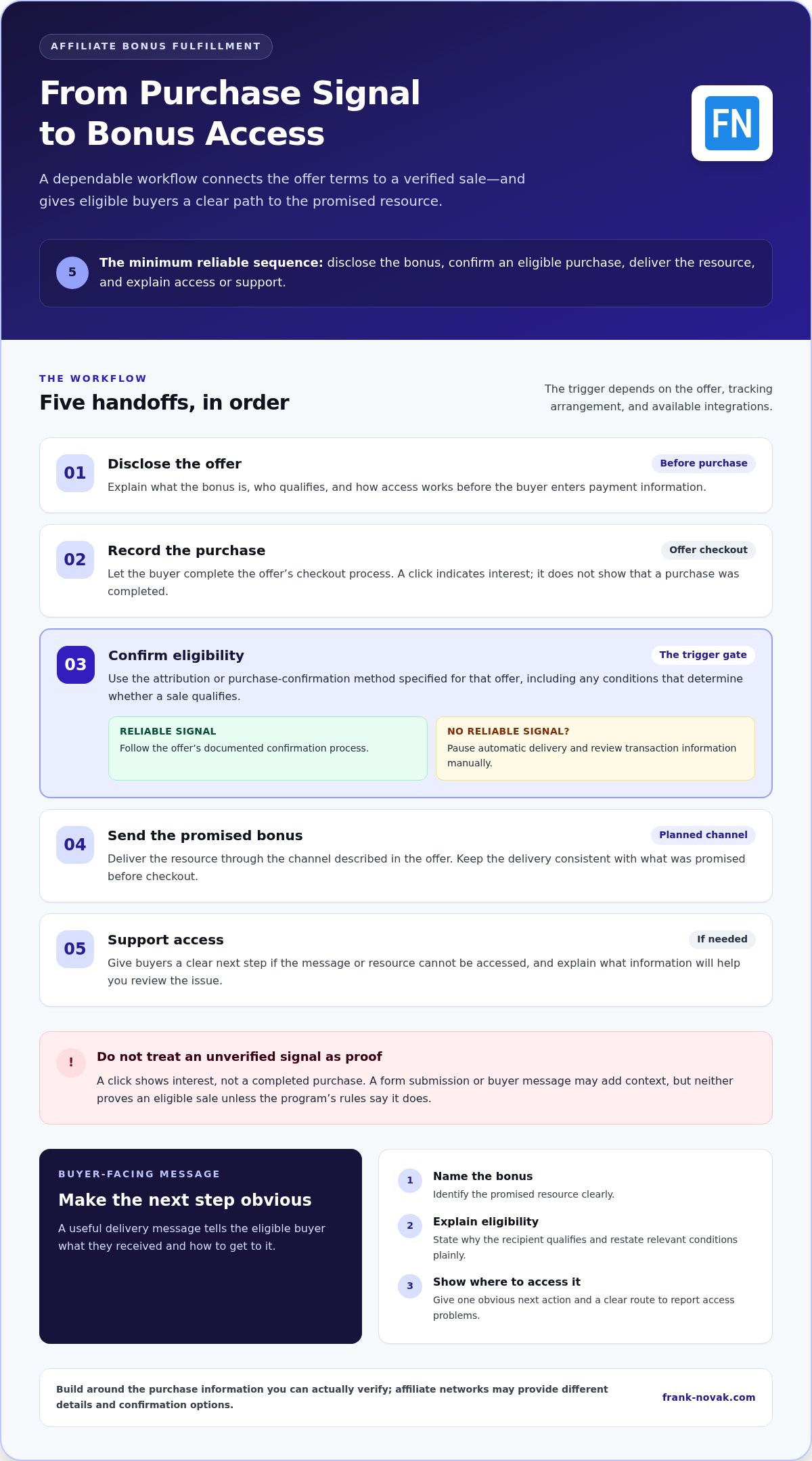
The minimum reliable sequence is: disclose the bonus, confirm an eligible purchase using the offer’s documented process, deliver the promised resource, and explain how to access it or get help. That is the practical core of bonus delivery automation for affiliates. A click shows interest, not a completed purchase. A form submission or buyer’s message can provide context, but neither should count as proof of an eligible sale unless the program’s rules say it does.
Map the purchase signal and delivery trigger
Before setting up an automation, identify what evidence your affiliate arrangement treats as a confirmed, eligible purchase. Follow the program’s documented attribution process, including any conditions that determine whether a sale qualifies. If there is no reliable purchase signal, pause automatic delivery and review the available transaction information manually. This reduces the chance of sending a bonus based only on an unverified click or claim.
Then map the handoff in order:
- Disclose the offer: Explain the bonus and its eligibility terms before purchase.
- Record the purchase: Let the buyer complete the offer’s checkout process.
- Confirm eligibility: Use the attribution or confirmation method specified for that offer.
- Send the bonus: Deliver the promised resource through the planned channel.
- Support access: Give the buyer a clear next step if the message or resource cannot be accessed.
Make the bonus message and access path clear
A useful delivery message names the bonus, explains why the recipient is eligible, and gives one obvious next action. Tell the buyer where to open or retrieve the resource. Avoid competing routes or delivery promises that are not part of the offer. If access fails, explain how to report the problem and what information will help you review it.
Keep the message consistent with what you promised before checkout and with the materials you provide. If the offer has conditions, restate the relevant details plainly rather than relying on buyers to remember fine print. For practical affiliate-marketing guidance to support your wider process, explore Frank Novak’s affiliate marketing resources.
Manual, Semi-Automated, or Automated Bonus Delivery: How to Compare
The right approach depends on two practical questions: how confidently can you verify an eligible purchase, and how complicated is the offer? Bonus delivery automation for affiliates does not have to remove every human check. A process that fits the purchase evidence and the buyer’s needs is more useful than adding automation simply because it is available.
| Approach | Benefits | Limitations | Suitable use |
|---|---|---|---|
| Manual | Direct oversight and room to review each case. | Requires repeated hands-on work and a consistent checklist. | Low volume or purchase information that needs human review. |
| Semi-automated | Can automate repeatable steps while retaining a human approval point. | Requires setup and attention to how information passes between steps. | Some reliable purchase data, with eligibility still reviewed manually. |
| Automated | Can handle routine delivery steps after a defined purchase trigger. | Needs dependable confirmation, testing, and ongoing maintenance. | Repeatable offers with a clear, reliable purchase signal. |
The approaches differ in how much work a person handles versus a connected workflow, not in whether the buyer deserves clear instructions. Any of them can cause confusion if the offer terms are vague or the access message does not explain what to do next.
When manual or semi-automated delivery may be more practical
If sales are occasional or purchase details do not clearly establish eligibility, manual review can help prevent delivery to the wrong person. Use a checklist to record the evidence reviewed, the eligibility decision, delivery status, and any access issue. That makes the process more consistent, though it still takes time and may become burdensome as volume grows.
A semi-automated process can keep a person in the loop. Review the purchase against the offer terms, then approve eligible cases for an automated delivery message. The system handles a repeatable email step while a person makes the judgment when purchase information is uncertain.
When a more automated workflow may make sense
Consider fuller automation when the offer is consistent and the purchase signal reliably identifies eligible buyers. Before relying on it, plan for setup, testing, and maintenance, including what happens if information is delayed, incomplete, or changed. Automation can reduce repetitive work, but you still need to check that the trigger and access instructions match the current offer.
Bonus fulfillment is one part of the buyer journey. If delivery sits within a broader funnel, map how the offer, purchase confirmation, and access message connect so each step feels consistent. Frank Novak’s affiliate marketing resources offer guidance for thinking through that wider process.
How to Set Up and Test Affiliate Bonus Delivery Automation
Preparation can prevent a setup error from becoming a buyer’s access problem. Before connecting tools, write down what the workflow should do, what counts as an eligible purchase, and what happens when information or delivery goes wrong. This gives you a clear standard to test against, whether your process is manual, semi-automated, or automated.
Build a delivery checklist before connecting tools
Start with the buyer promise, then map each fulfillment step to it. Record the bonus contents, eligibility conditions, confirmation method, delivery message, access route, and support instructions. Check these details against the affiliate offer’s terms and the wording used to describe the bonus. If the offer promises one resource, make sure the message and materials point to that resource, not an outdated or different version.
Keep a readable record of the process so you can review it later or handle an exception without guessing. A checklist might include:
- The evidence used to verify eligibility and the decision made.
- The message sent, including the bonus name and access instructions.
- Whether the buyer successfully accessed the resource, if that can be confirmed.
- The support route for a missing message, failed access, or eligibility question.
Decide what happens when confirmation is delayed. Hold delivery until the required purchase signal appears, or route the case for human review instead of treating a click or buyer claim as confirmation. If access fails, provide one clear way to report the issue. If the same event could trigger another message, define how you will identify and review duplicates before launch.
Test common failure cases before launch
Test the workflow against different outcomes. Confirm that an eligible purchase produces the intended message and that its access instructions lead to the promised resource. Then simulate delayed confirmation and an unverified purchase. The delayed case should follow your chosen waiting or review process; the unverified case should not be treated as eligible without the evidence required by the offer.
Also check what happens if the same confirmation arrives more than once. Look for duplicate emails, conflicting instructions, or records that make it hard to tell whether delivery has already happened. Once the process is in use, review buyer questions and access issues. If the same point causes confusion, revise the instructions or workflow and test the change before relying on it.
The ClickBank Super Funnel is a related affiliate-marketing resource. You can explore it alongside the practical guidance on Frank Novak’s website.
Build a Trustworthy Bonus Delivery System and Choose Your Next Step
A trustworthy system does not need to automate every decision. It should handle repeatable steps while keeping the bonus promise, eligibility rules, and support route easy to understand. As your process evolves, make sure buyers know what they were offered, what happens after an eligible purchase, and what to do if access does not work.
Keep buyer trust central as the workflow evolves
Review the buyer’s experience from the offer through the delivery message. Does the message match the promised bonus? Is the next action clear? If you find a broken link, outdated instruction, or ambiguous eligibility statement, correct it wherever buyers see the offer or delivery details.
Be careful with timing claims. Do not promise instant delivery unless the confirmation and delivery process supports that expectation. If purchase confirmation can be delayed, explain what the buyer should expect rather than letting silence create doubt. Accurate wording can set expectations without suggesting that automation prevents every delay or access problem.
Turn the workflow into a repeatable affiliate process
Use practical indicators to see where the process needs attention. Review confirmed access issues, eligibility questions, reports of missing delivery messages, and repeated requests for instructions. Look for patterns: if buyers regularly ask where to find a resource, make the access route more prominent. If confirmation delays cause confusion, clarify the timing information. These signals can guide improvements without assuming every question points to a software failure.
Keep a human-readable record of the current steps, the purchase signal used, the buyer-facing message, and the support route. When an offer or bonus changes, compare the new promise with that record and retest the affected steps. This helps you catch old instructions or triggers that no longer fit. Bonus delivery automation for affiliates works best as a process you can understand and review, not a set-and-forget system.
Frank Novak’s ClickBank Super Funnel is a related affiliate-marketing resource. For more practical guidance, browse Frank Novak’s affiliate marketing resources and choose one manageable improvement, such as clarifying an access message or documenting a fallback step.
Make Your Next Improvement Count
Your next step does not need to be a full system overhaul. Choose one point in the buyer journey to improve, such as clarifying eligibility or revising a confusing access instruction. When your offer changes, revisit that step so your bonus delivery automation for affiliates stays aligned with what buyers are promised.
Frank Novak shares practical affiliate-marketing guides and tutorials, and the ClickBank Super Funnel is one related resource. Use the guidance as a starting point, then adapt your process to the offer and purchase confirmation you work with.
Steady, thoughtful improvements can make the buyer experience clearer. Start with the change that feels manageable, then build from there.
Frequently Asked Questions
Is bonus delivery automation the same as affiliate program automation?
No. Affiliate program automation can handle partner-focused work, such as assigning a campaign or recording commission activity, while bonus fulfillment concerns a buyer’s access to a promised resource. For example, a workflow might track an affiliate’s referred sale without sending that customer a bonus. Treat these as separate processes, then check whether any shared information genuinely connects them.
Can I automate bonus delivery if my affiliate network does not confirm purchases instantly?
Possibly, but do not send gated access based only on a pending signal. You can record the buyer’s status as awaiting confirmation, then release delivery once the sale meets the program’s eligibility rules. If confirmation arrives late or remains unclear, route the case for review rather than guessing. Any message sent while the buyer waits should not imply that the purchase has already qualified.
How can I prevent a buyer from receiving duplicate bonus delivery emails?
Keep a delivery record tied to a unique transaction or order reference, where available, and check that record before sending another message. If the same purchase signal appears twice, use the existing delivery status instead of treating it as a new sale. Review resend requests manually too, so a helpful follow-up does not create conflicting access instructions.
What happens if a buyer cannot access an affiliate bonus after purchase?
Give the buyer one clear support route and ask for enough information to identify the purchase and resource, without requesting sensitive payment details by email. Check whether the delivery went to the address used at checkout, whether the access link or instructions are current, and whether the purchase qualifies. After resolving the issue, record the cause so you can spot repeated problems and improve the process.
Can I deliver an affiliate bonus before a purchase is verified?
For a bonus limited to eligible buyers, wait for the confirmation required by the offer before granting access. You can send a neutral acknowledgment that explains the next step, if that matches the terms, but do not present it as proof of eligibility. This distinction matters when someone submits a form or reports a purchase before the affiliate program records a qualifying transaction.
Do affiliate bonus delivery emails need an affiliate disclosure?
A message that only provides a promised resource is different from an endorsement. If an email includes an affiliate recommendation or link, make the relationship clear near that content. Use direct wording rather than a vague label. For example: “I earn a commission if you apply through my link, but this doesn’t cost you anything extra.” I’m not giving personalized financial advice.
How often should I test an automated bonus delivery workflow?
Test before launch, then retest after a change to the offer, eligibility rules, message, access destination, or connected workflow. Review the process when a buyer reports a problem or repeated questions suggest that instructions are unclear. Include both successful and unsuccessful purchase scenarios. This is practical operational guidance, not personalized financial advice.

Article by
Frank Novak
Frank Novak is an online marketing professional and coach who focuses on affiliate marketing and business automation. Through his website, frank-novak.com, he shares insights and strategies for leveraging social media platforms like Facebook to generate traffic and commissions.
Affiliate / Sponsored Content Disclaimer
This [website/post] contains affiliate links. If you click through and make a purchase, we may receive a commission at no additional cost to you. We only recommend products or services we believe will add value to our readers.